
There is a specific kind of quiet that follows a truly devastating movie, the kind where the credits roll, the lights stay dim, and you’re left staring at a blank screen, wondering how a stranger’s performance just ripped your heart out.
For many of us, Andrew Garfield is the architect of that silence. Whether he’s mourning on a subway in Tick, Tick… Boom! or grappling with the weight of mortality in We Live in Time, Garfield has become the internet’s unofficial “Empathy-in-Chief.”
He is the man who spoke to Elmo about grief and made the entire world sob into their morning coffee. But as it turns out, while we are busy projecting our deepest emotional needs onto him, Andrew Garfield is doing exactly what you’re doing right now.
He’s sitting in the dark, the blue light of a smartphone illuminating his face, spiraling down a digital rabbit hole he knows he should climb out of.
In a surprisingly candid revelation that feels like a glitch in the “perfect celebrity” matrix, Garfield recently admitted that despite his lack of a verified, blue-checked Instagram or X (formerly Twitter) account, he is very much “one of us.” He isn’t just observing the digital age from a distance; he’s living a double life.
The “Creeper” in the Machine
For years, the narrative around Andrew Garfield was that he was the ultimate digital monk. In an era where every B-list actor has a TikTok strategy, Garfield’s absence from social media felt like a radical act of self-preservation.
He told Esquire late last year that he would “never, and won’t ever, speak about or confirm or deny anything” about his personal life. He treated his privacy like a fortress. But the fortress has a back door.
In a recent conversation with the Associated Press, Garfield confessed to owning what he calls “creeper accounts.” These are the anonymous, egg-profile-pic handles that allow him to lurk in the shadows of the internet without the burden of being “Andrew Garfield.”
“I’m just as bad as everyone else,” he admitted, with that self-deprecating grin we’ve come to know. “Because I’m a human, and they’ve somehow managed to tap into our human addictive responses. So no, I’m not immune to it.”
It’s a jarring image: the man who just gave a masterclass in presence and “living in the moment” on the big screen is, in his off-hours, succumbing to the dopamine-loop of doomscrolling.
He’s navigating the same swamp of outrage, memes, and algorithmic noise that we all are. But for Garfield, this “double life” serves a dual purpose. It’s a way to stay connected to the cultural conversation without being consumed by the “violation” (his word) of his private world.
The Science of Why Even Spider-Man Can’t Stop
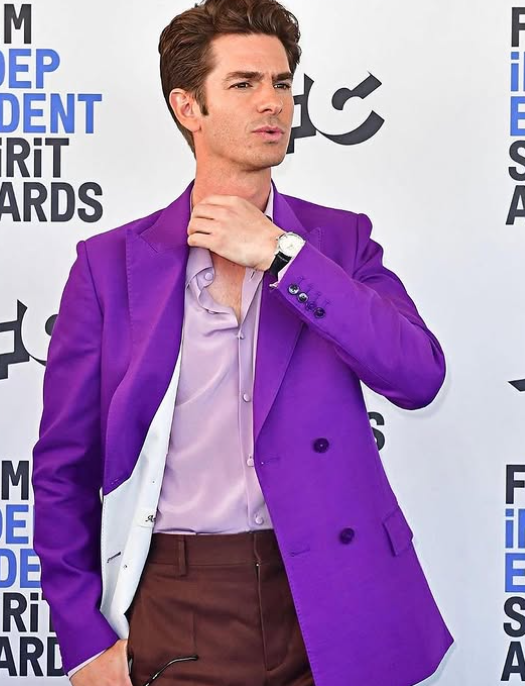
If you feel a sense of relief hearing this, you aren’t alone. There is something deeply validating about knowing that a man with access to the world’s best therapists, retreats, and creative outlets still finds himself stuck on a 2:00 AM scroll through “Threads” or TikTok.
The data backs up why this is so hard for him… and us, to quit. According to recent neurobiological studies on digital consumption, “doomscrolling” isn’t just a bad habit; it’s a survival mechanism gone haywire.
Our brains are hardwired to look for threats. In the ancestral past, that meant looking for predators. In 2026, it means scrolling through news of climate shifts, political unrest, and celebrity scandals to “prepare” ourselves for the worst.
When Garfield says he has to be “very, very disciplined” with himself, he’s fighting a literal chemical war. The “double life” he leads online is his attempt to bridge the gap between being a “public person” and a private human. He wants the information, but not the eyes.
The “Florence Pugh” Factor
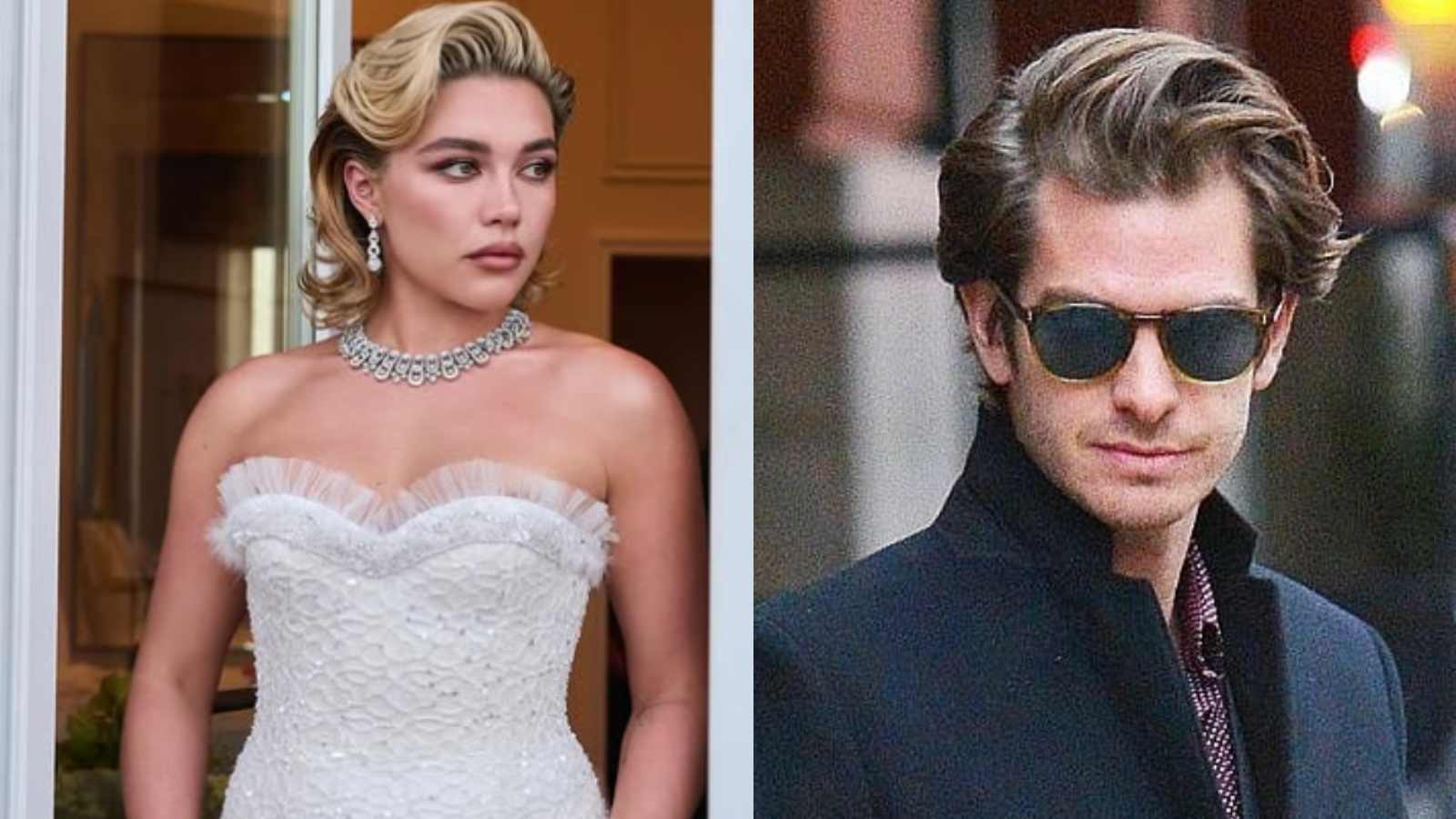
Interestingly, this isn’t the first time Garfield’s digital footprint has been stepped on. During the press tour for We Live in Time, his co-star and professional chaos agent, Florence Pugh, accidentally let the cat out of the bag during a Vanity Fair “Lie Detector” style segment.
Pugh teased him about his “twits,” noting that while he doesn’t have a public profile, he definitely consumes the content. Garfield’s reaction at the time was a frantic, “I’ve never tweeted!” A technical truth that hid a larger reality. He may not be posting, but he is watching.
This “lurker” status is actually a growing trend among the Hollywood elite. Sources within the industry suggest that “ghost accounts” are the new standard for A-listers. They use them to see what fans are saying about their projects, to keep tabs on competitors, and, most relatably, to look at home decor and cooking videos.
Is the “Lurker” Life Actually Worse?

Now, here is where we need to have a slightly uncomfortable conversation. We often praise celebrities like Andrew Garfield for “staying off social media.” We view it as a sign of mental health and superior boundaries. But is having a “creeper account” actually healthier than having a public one?
Hear me out, there is a specific kind of psychological tax that comes with “lurking.” When you have a public account, there is a level of accountability. You are a participant. When you are a “creeper,” you are an invisible voyeur. You are consuming the room’s energy without contributing any of your own.
For someone like Garfield, who is famously sensitive and deeply attuned to human emotion, spending hours anonymously consuming the internet’s unfiltered thoughts might actually be more damaging than having a team-managed Instagram account.
On a public page, you see the “likes” and the curated love. In the shadows of a “creeper” account, you stumble upon the Reddit threads, the cruel memes, and the unsolicited critiques that were never meant for your eyes.
By living this “double life,” Garfield isn’t just avoiding the spotlight; he’s potentially subjecting himself to the “Uncanny Valley” of fame, seeing how the world talks about him when they think he isn’t in the room. There is a risk that this “secret” digital life doesn’t protect his “inner world,” but rather poisons it with the very noise he’s trying to escape.
The Humanity in the Scroll
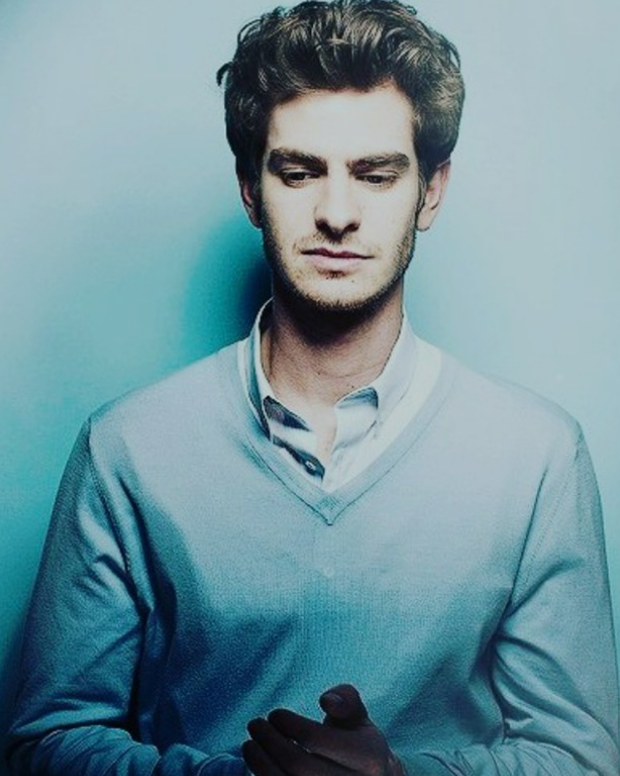
Ultimately, Andrew Garfield’s admission reminds us that the “celebrity” is a mask, but the “human” is a mess. We want our stars to be ethereal, wise, and disconnected from the trivialities of our glowing rectangles. We want them to be the characters they play. But Garfield is giving us something better: the truth.
He is a man who can recite poetry about the dignity of weeping in one breath and admit to being “addicted” to a screen in the next. He isn’t a digital monk. He’s a guy in his early 40s trying to figure out how to exist in a world that wants every piece of him, while he just wants to see what the “twits” are saying.
The next time you find yourself at 1:00 AM, three hours deep into a rabbit hole of “unexplained mysteries” or “slow-motion glass blowing,” take a breath. Somewhere out there, Peter Parker is probably doing the exact same thing. And maybe, in this hyper-connected, hyper-isolated world, that’s the most “human” connection we’ve got left.