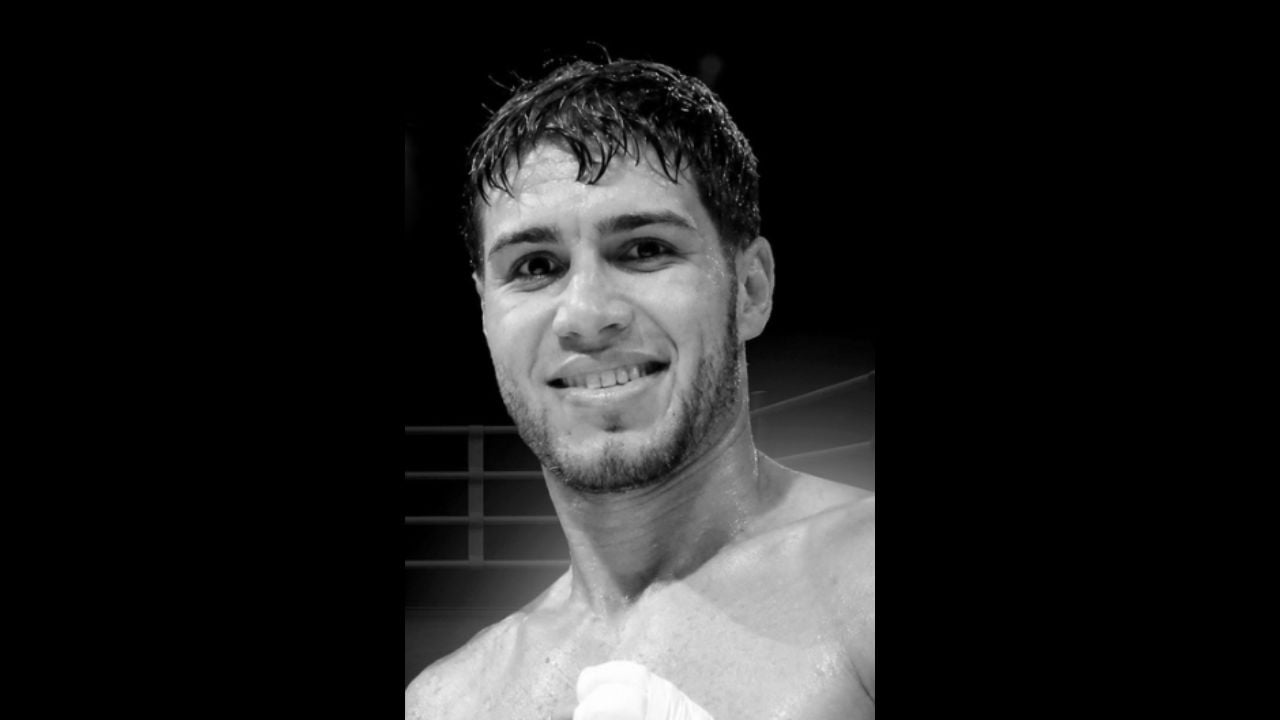
Former professional boxer Prichard Colón has died at 33, nearly 11 years after a catastrophic brain injury ended one of boxing’s most promising young careers.
Colón’s father and former trainer, Richard Colón, announced his son’s death on Aug. 13. “I regret to inform you of the passing of my son Prichard from this earthly world,” he wrote in Spanish, according to TMZ, while thanking supporters for years of love and prayers.
Richard also said he had hoped to fulfill his son’s wish of taking another vacation to Puerto Rico but had been unable to do so. Colón’s mother, Nieves Meléndez, separately thanked the people who had supported her son and family throughout his lengthy recovery.
No cause of death has been publicly announced. Colón had lived with severe disabilities since suffering a traumatic brain injury during his Oct. 17, 2015 fight against Terrel Williams in Fairfax, Virginia.
Colón Entered His Final Fight With a 16-0 Record
Colón was 23 and considered a rising prospect when he faced Williams at EagleBank Arena. He entered the 10-round welterweight fight with a 16-0 professional record and 13 knockouts.
During the bout, Colón repeatedly complained about punches landing behind his head. Premier Boxing Champions’ contemporary account shows that referee Joe Cooper deducted one point from Williams in the seventh round after a punch to the back of Colón’s head. Earlier, Cooper had deducted two points from Colón for an intentional low blow.
The ninth round brought two knockdowns. After the round ended, Colón’s corner began removing his gloves because they mistakenly believed the scheduled fight was over. When they tried to put them back on, officials ruled that Colón had failed to answer the bell for the 10th round and disqualified him.
The consequences quickly became far more serious than the result on his record. Colón had complained of dizziness, and after returning to the dressing room he vomited, collapsed and was rushed to the hospital. Doctors found a severe brain bleed, and he underwent emergency surgery. Colón subsequently spent 221 days in a coma, according to ESPN. He never boxed professionally again.
His Family Supported Years of Rehabilitation
Colón required extensive care after the injury, with his parents becoming central figures in his daily life and rehabilitation. His recovery eventually brought him to Brooks Rehabilitation in Florida. According to a Brooks account of his treatment, Colón began working with the organization’s outpatient programs after an evaluation in late 2017 and made progress through physical, occupational and speech therapy.
Therapists discovered that he could use his eyes to communicate through an augmentative and alternative communication device. Over time, Brooks documented improvements that included increased movement in his arms and legs, assisted standing and walking and the ability to communicate wants and needs.
Luke Davidson, an outpatient center manager at Brooks Rehabilitation, told ESPN after Colón’s death that the former boxer continued making “slow but steady progress” physically. “Prichard was and continues to be an inspiration for every patient and therapist who knew him at Brooks,” Davidson said, remembering his sense of humor, love of music and willingness to challenge therapists during exercises.
The 2015 Fight Was Investigated After Colón’s Injury
The circumstances surrounding Colón’s final fight became the subject of scrutiny well beyond the boxing ring. A Virginia state investigation examined the officiating, medical response and other events surrounding the bout. According to ESPN, the 2016 investigative report concluded that while Colón’s condition was tragic, there was no single action “so apparent and/or egregious” that investigators believed responsibility could be placed on one person.
In 2017, Colón’s parents filed a lawsuit seeking more than $50 million from ringside physician Richard Ashby and promoters connected with the event. The lawsuit alleged failures involving Colón’s medical care and the safety measures surrounding the fight. Williams and referee Cooper were not named as defendants in that lawsuit.
The case focused renewed attention on key moments during the bout, including Colón’s repeated complaints about punches behind the head, his report of dizziness and the medical decision that allowed him to continue fighting. PEOPLE reported after Colón’s death that the lawsuit remains unresolved.
Colón’s Recovery Became a Fight of Its Own
Brooks Rehabilitation said that when Colón first arrived for treatment, doctors and family members had struggled to determine how much he understood about what was happening around him.
Speech-language therapist Alisha Russell later used eye-gaze technology to establish that he could answer yes-or-no questions in both English and Spanish. Brooks said that provided evidence that Colón was aware and capable of communicating.
Physical and occupational therapy brought other gains. Brooks documented Colón progressing from having little voluntary movement to moving parts of his body and standing with assistance. His mother remained deeply involved throughout that process.
Boxing Organizations Paid Tribute After His Death
View this post on Instagram
World Boxing Organization president Gustavo Olivieri praised Colón’s courage and perseverance after his injury. “Prichard’s life was defined by courage, perseverance, and an extraordinary fighting spirit,” Olivieri said in a statement reported by ESPN. “His story transcended the ring and deeply touched the boxing community.”
The World Boxing Council and World Boxing Association also issued tributes, each remembering Colón as a “true warrior.” The WBC had previously honored him as an honorary champion in 2021.