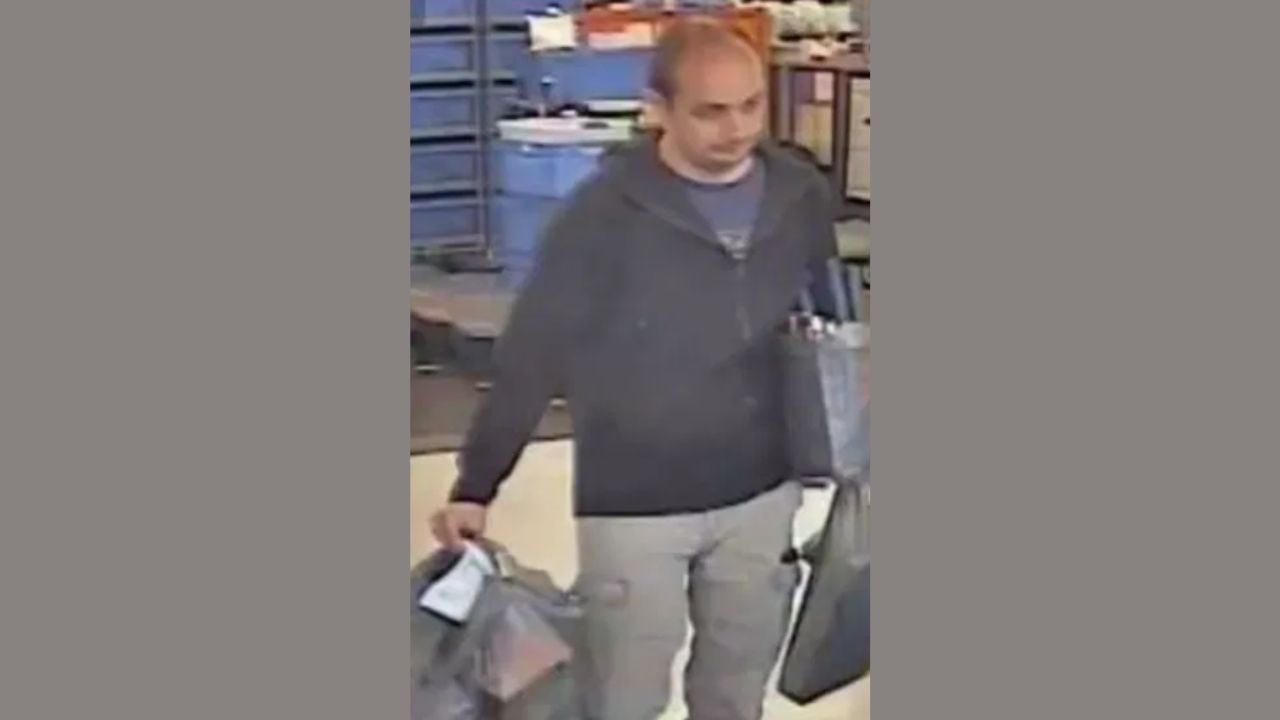
A former captain of a volunteer rescue organization in Southwest Virginia pleaded guilty to embezzlement and credit card fraud after prosecutors said he used crew money to buy a truck that he titled in his own name.
David Matthew Lineberry, 34, of Sugar Grove, also used a Sugar Grove Lifesaving Crew credit card for personal purchases while serving in a position of trust. The Smyth County Sheriff’s Office investigated the financial misconduct.
Smyth County Circuit Court records show that Lineberry pleaded guilty to two felony counts on Oct. 7, 2026. Prosecutors discontinued two additional charges during the same proceedings, leaving one embezzlement conviction and one credit card fraud conviction.
Lineberry is scheduled to return to court Dec. 16 at 9 a.m. for sentencing proceedings. Commonwealth’s Attorney Phillip “Bucky” Blevins said he faces a maximum possible sentence of 25 years in prison.
Crew Funds Bought a Truck Titled to Lineberry
The truck purchase was a central part of the prosecution’s case. According to the Commonwealth’s Attorney, money belonging to the Sugar Grove Lifesaving Crew was used to buy the vehicle, but Lineberry placed its title in his own name rather than the organization’s.
Virginia’s embezzlement law applies when someone fraudulently uses or disposes of money or property received through employment, office or another position of trust.
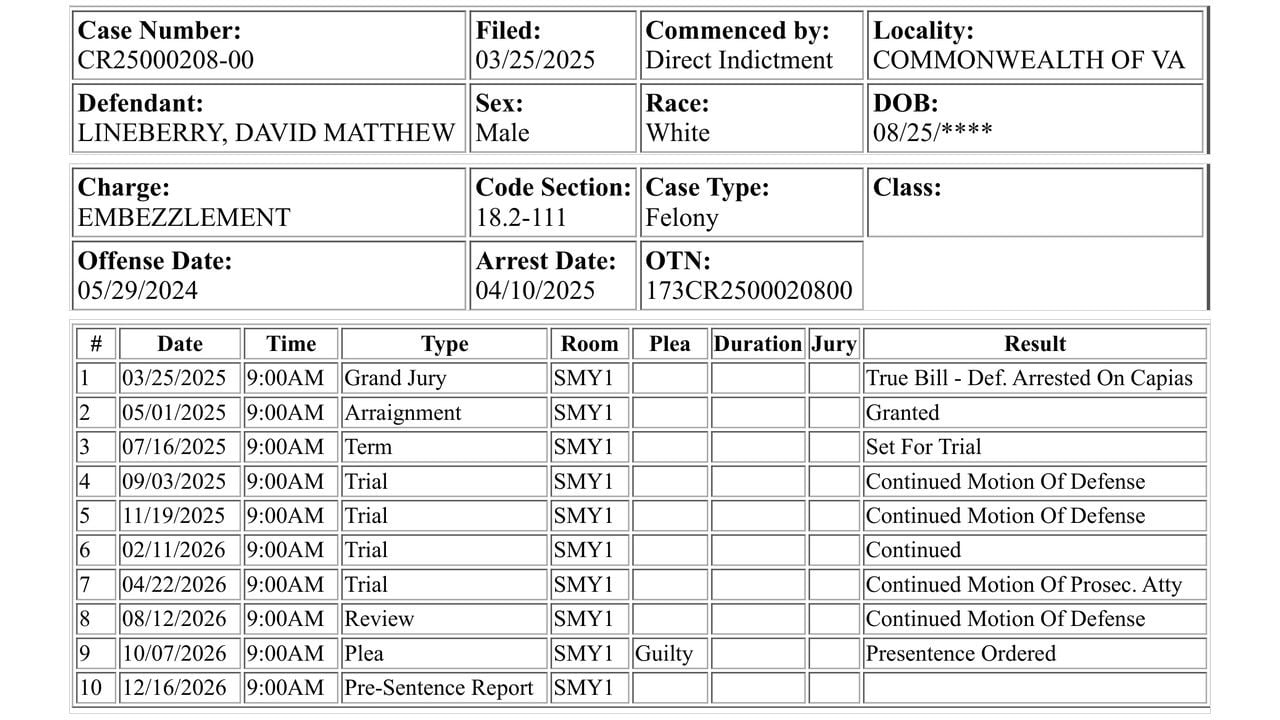
The Smyth County Circuit Court record for case CR25000208-00 lists a felony embezzlement charge under §18.2-111, with an offense date of May 29, 2024. The docket confirms that Lineberry entered a guilty plea on Oct. 7 and that a presentence report was ordered.
Lineberry Also Used the Crew’s Credit Card for Personal Purchases
The truck was not the only financial misconduct described by prosecutors. Lineberry also used a Sugar Grove Lifesaving Crew credit card for personal purchases, according to the Commonwealth’s Attorney’s account of the case.
Virginia’s credit card fraud statute addresses fraudulent use of credit cards to obtain money, goods, services or other things of value. The law classifies qualifying offenses involving at least $1,000 in a six-month period as Class 6 felonies.
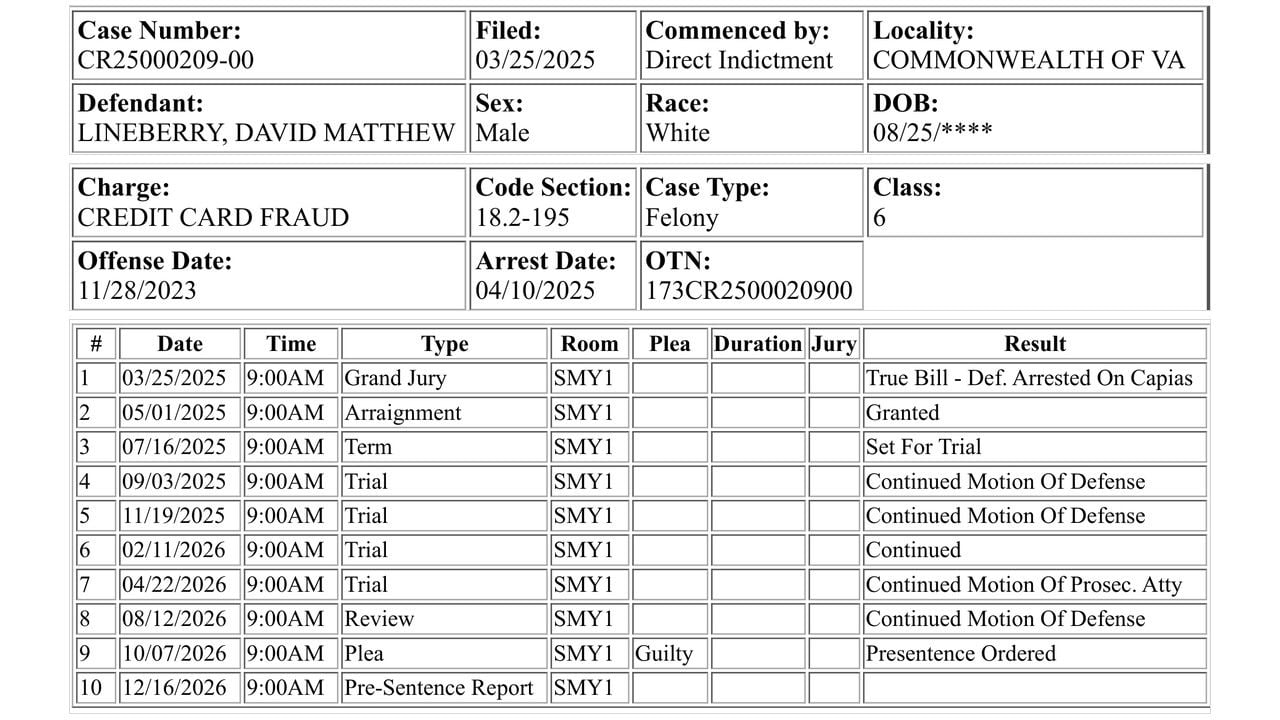
Court records identify Lineberry’s surviving credit card fraud conviction as case CR25000209-00, under Virginia Code §18.2-195. The docket lists Nov. 28, 2023, as the offense date and confirms his Oct. 7 guilty plea. The court also ordered a presentence report for that conviction.
Four Original Charges Narrowed to Two Guilty Pleas
Lineberry’s prosecution began with four direct indictments filed in Smyth County Circuit Court on March 25, 2025. They comprised two embezzlement cases, CR25000207-00 and CR25000208-00, and two credit card fraud cases, CR25000209-00 and CR25000210-00, with alleged offense dates in November 2023 and May 2024.
Prosecutors discontinued the charges in cases CR25000207-00 and CR25000210-00 on Oct. 7. The court recorded both as “nolle prosequi,” meaning the prosecution did not proceed with those counts.
The grand larceny penalties applicable to felony embezzlement can reach 20 years in prison, while Virginia’s Class 6 felony penalties can reach five years. The Commonwealth’s Attorney reported a maximum combined exposure of 25 years. That figure is not a sentence already imposed; the judge will determine Lineberry’s punishment at sentencing.
Prosecutor Says Crew Funds Could Have Supported Equipment and Emergency Calls
The Sugar Grove Lifesaving Crew provides volunteer emergency medical services in Smyth County. The organization relies heavily on donations and public support to maintain its operations and serve residents who need assistance.
Blevins emphasized that embezzlement from a volunteer rescue organization affects the wider community. Money diverted for personal benefit is money that could otherwise support emergency equipment, staff training, fuel and responses to calls for help.
The Commonwealth’s Attorney also recognized the work of volunteer crew members who devote their time to helping neighbors during emergencies. The criminal case followed an investigation by the Smyth County Sheriff’s Office into Lineberry’s financial conduct while serving in a leadership role.
Volunteer Organizations Can Reduce the Risk of Unauthorized Spending
Small volunteer organizations may have only a few people managing accounts, equipment purchases and credit cards. When one person controls spending without independent review, unauthorized transactions can be more difficult to identify.
The National Council of Nonprofits recommends financial controls that separate responsibility for authorizing purchases, recording transactions and reviewing account statements. These controls help ensure that spending is independently checked rather than relying solely on the person making purchases.
Vehicle purchases warrant additional oversight because paying for a vehicle and legally owning it are separate matters. Organizations can require written approval for significant purchases and verify that invoices, registrations and vehicle titles identify the intended owner.
Credit card expenses can be reviewed through monthly statements, purchase receipts and written spending policies. The Internal Revenue Service also emphasizes maintaining financial records supporting organizational income and expenditures. Independent reviews of those records can help identify questionable payments or ownership discrepancies.