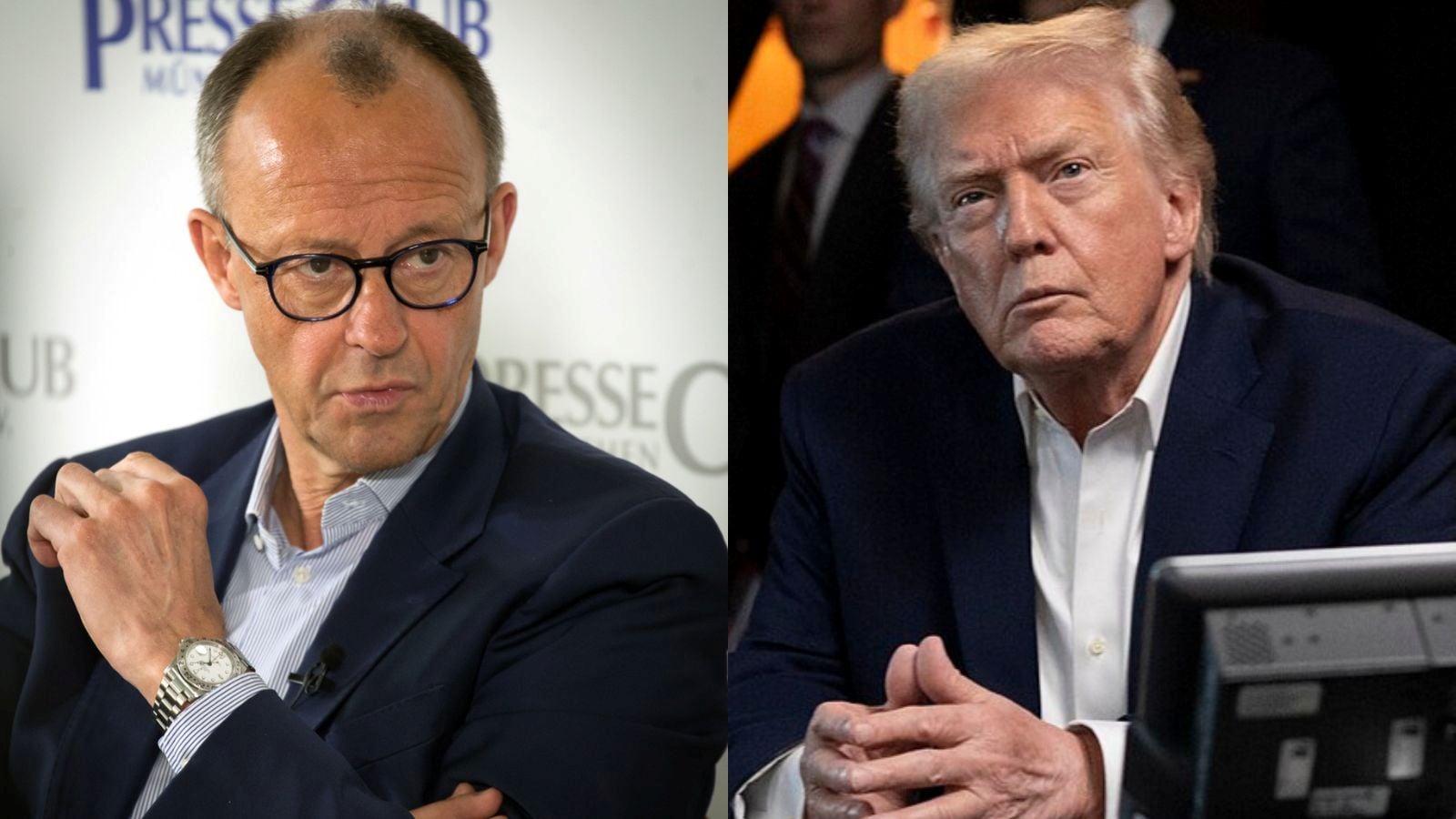
Friedrich Merz did not get ambushed. Germany’s own defense minister called the loss of 5,000 U.S. troops “foreseeable” after the Pentagon confirmed Friday the withdrawal would happen over the next six to twelve months. If it was foreseeable, Merz knew the risk when he told students on Monday that Iran was humiliating the United States and that Washington had no visible exit strategy. Four days later, the bill arrived.
Trump spent the week saying Merz did not know what he was talking about, told him to fix his “broken Country” and stop interfering over Iran. Merz tried to cool things by stressing a “trusting” transatlantic partnership. It changed nothing. By Friday, the Pentagon made it official.
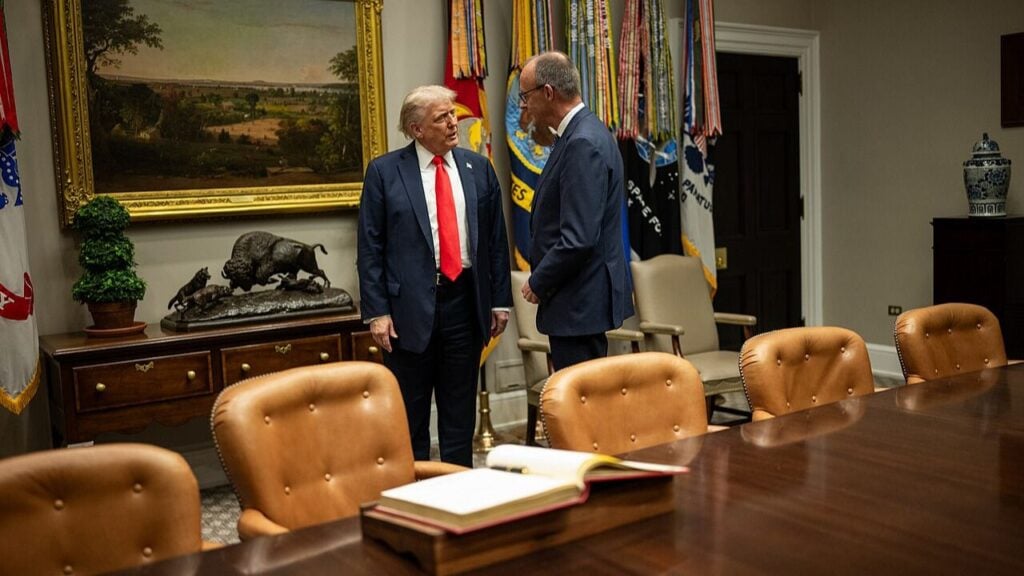
Merz picked this fight
Merz’s first mistake was thinking he could separate the insult from the dependency.
He told students in Marsberg that the Iranians were humiliating the Americans in talks, questioned Washington’s exit strategy, and compared the war to Afghanistan and Iraq. These were not private complaints slipped into diplomatic channels. They were public blows aimed at a president who treats alliance politics like a loyalty test with flags. Berlin knew who was in the White House. It spoke anyway.
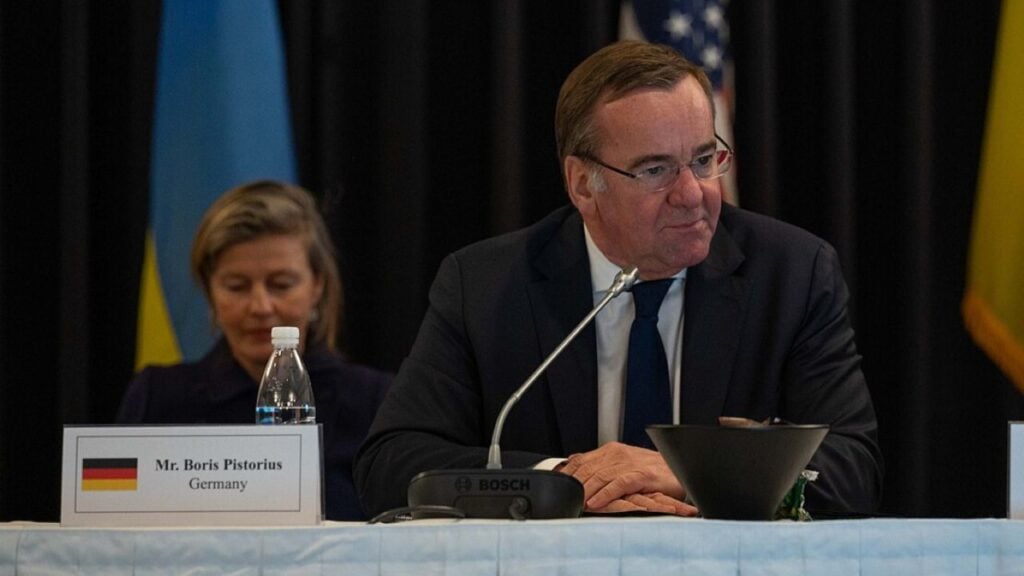
The sequence strips away the easy excuse. Trump did not wake up on Friday and invent a new grievance. He threatened a review earlier in the week. Merz moved into damage control on Wednesday, telling reporters that his personal relationship with Trump was “still good.” The Pentagon followed through anyway. Germany was not standing in shock, wondering how this happened. Boris Pistorius killed that pose when he called the move foreseeable. It says Berlin saw the risk and ran the play anyway.
Germany still hid behind America
Berlin cannot claim it was heckling from a safe distance.
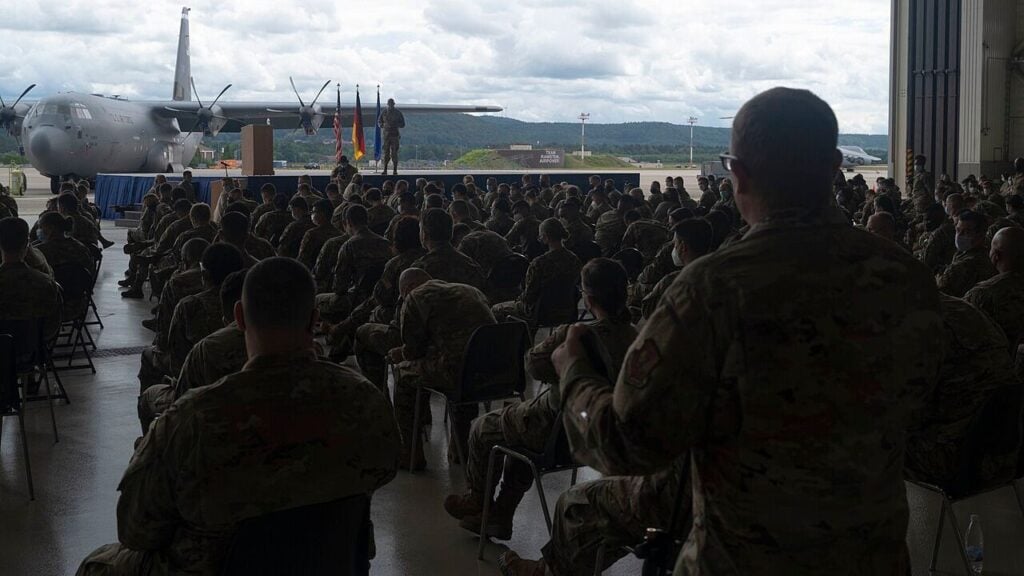
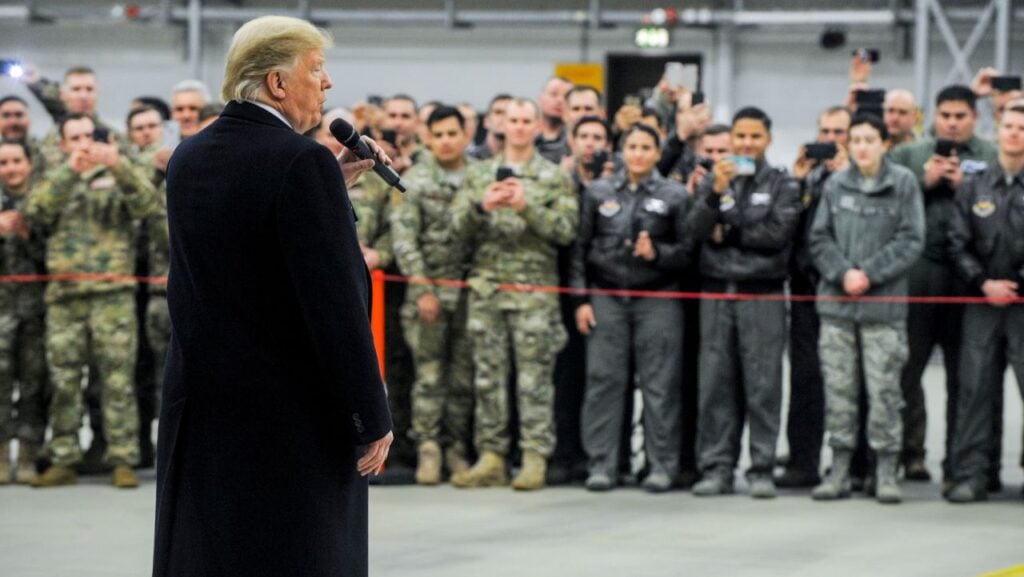
Germany hosts roughly 35,000 American troops — more than anywhere else in Europe — along with Ramstein Air Base and a major U.S. military hospital in Landstuhl. Germany granted base access and overflight permissions for U.S. operations even while not joining the war directly.
Merz was critiquing U.S. war strategy while sitting inside the military architecture that gives Germany the room to do it. Berlin wanted the European upside of sounding tougher and more skeptical than Washington. It also wanted the American shield to stay exactly in place. If Berlin wants to talk like a country that can afford distance from Washington, it may have to start living like one.
Trump finally got his excuse
Trump has wanted fewer troops in Germany for years.
He tried to cut about 12,000 at the end of his first term, and the plan never took effect before Joe Biden halted it. Berlin had expected for more than a year that U.S. forces added after Russia’s full-scale invasion of Ukraine would be the first to go when the moment arrived. Merz was not poking at some taboo nobody had ever tested. He was pressing an old bruise on a president who has never once hidden his contempt for NATO freeloading or European moralizing delivered from behind American hardware.
The domestic political logic for Merz was obvious. Germany is absorbing an energy shock from a war it was not consulted on and did not join directly. Criticizing Washington’s strategy plays well at home and across a European audience exhausted by the conflict. It costs nothing in a classroom in Marsberg. It cost something in Washington.
The truth Berlin does not like
Merz was not wrong.
The Americans traveled to Pakistan and left without a result. The Strait of Hormuz is still closed. The war has no public exit ramp. Europe is being asked to absorb the economic fallout of a military operation it was shut out of before it started. That frustration is real, and the concern about another open-ended Middle Eastern war is legitimate and widely shared.
None of that made Monday’s speech smart.
Berlin made a calculation. It had reasons to be furious. But when Trump answered with a troop cut, Germany’s own defense minister said everyone should have seen it coming. A senior Pentagon official was less diplomatic: “The president has been very clear about his frustrations about our allies’ rhetoric and failure to provide support for U.S. operations that benefit them.”
Merz did not misplace a diplomatic comma. He took a political gamble and got punished. Germany can say Trump is reckless, vindictive, and corrosive to the alliance. Plenty of people in Washington agree with parts of that. But if Berlin knew the cost and said it anyway — what exactly was the plan? Principle or just a bad read on how much leverage Germany actually has?