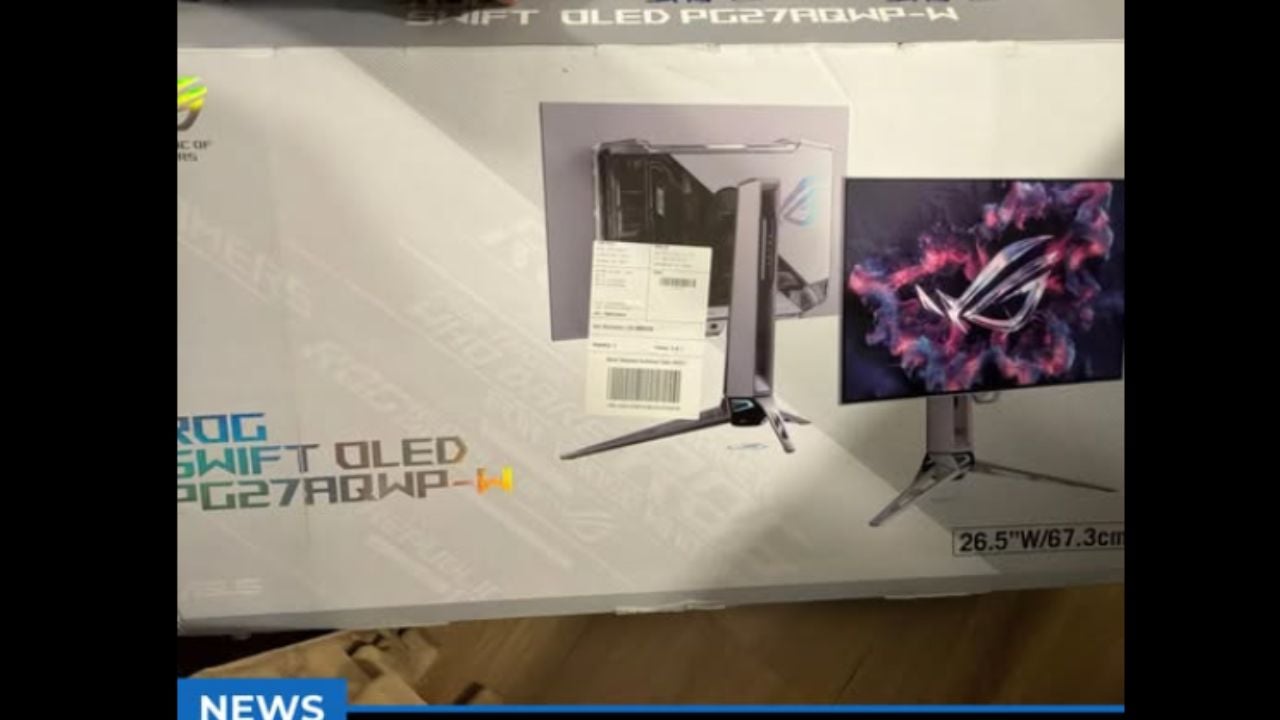
An Amazon customer says a $1,100 gaming monitor order turned into a return nightmare after the box arrived with the wrong OLED screen inside.
The buyer, posting on Reddit under the name ph9ntasy, said he ordered an ASUS ROG Swift OLED PG27AQWP-W, a high-end 26.5-inch OLED monitor advertised with a 540Hz refresh rate at 1440p.
Instead, he said he received a broken ASUS ROG Strix OLED XG27AQDMG, a different 240Hz OLED model, placed inside the correct product box.
The case was reported by TweakTown, which described it as another example of a high-value electronics order apparently affected by a swapped-return problem.
The Box Looked Right Until He Opened It
The buyer said the outer packaging matched the monitor he ordered, which made the problem harder to spot before opening the box.
The screen inside did not match the label. According to the Reddit post, it was a damaged lower-refresh-rate ASUS OLED display instead of the premium model he paid for.
That mismatch is a serious problem for expensive electronics because a box label, tracking record, or warehouse scan can make an order appear correct even when the product inside has been swapped.
The buyer said he had recently built a PC and ordered his peripherals, making the monitor the last major piece of the setup. Instead, he opened the package and found a broken display he says he never ordered.
The Return Cost Made The Refund Harder
The buyer said he paid $368 to ship the monitor to his country and waited 15 days for the package to arrive.
After contacting Amazon, he said he was told he could get a refund only if he returned the monitor to a U.S. location. He wrote that return shipping would cost about $600 and that Amazon would not reimburse that cost.
A U.S. buyer may still face a frustrating return, but an international buyer can end up stuck between the retailer’s return requirement and shipping costs that make the refund process painful.
The buyer also said the order was bought directly from Amazon, not a third-party reseller. TweakTown reported the same detail, noting that shoppers often assume direct Amazon fulfillment lowers the risk of swapped, used, or damaged items showing up in a new order.
The Likely Issue Is A Swapped Return
TweakTown pointed to a likely return-swap problem: someone buys an expensive item, returns the box with a cheaper or broken product inside, and that bad return later makes its way back into inventory.
That points to a weak spot in online retail returns, especially for expensive electronics where the packaging can look legitimate even when the product inside is wrong.
For buyers, the practical move is to document high-value deliveries immediately. Photograph the shipping label, the factory seals, the box, the serial numbers, and the first unboxing. If the item inside does not match the order, contact the retailer quickly and keep the evidence in one place.