
Parker James Wilde pitched a way to earn $7,200 or more in monthly Amazon profits from a store his company would manage. Utah later secured a nearly $8 million civil judgment over the business, and he now faces federal fraud charges.
Wilde, 29, of Draper, Utah, was charged with securities fraud, wire fraud and money laundering in an indictment unsealed Oct. 13, 2026. Federal prosecutors allege that multiple investment schemes caused millions of dollars in losses to approximately 200 victims.
The earlier Utah investigation documented at least 216 customer contracts and $9.2 million in payments for Amazon business opportunities. In a December 2025 court order, Wilde admitted making or allowing knowingly false consumer representations and failing to comply with required business-opportunity disclosures.
The federal case also concerns a cryptocurrency-related day-trading pitch. The civil judgment and criminal indictment are separate proceedings, and the new federal charges have not resulted in a conviction.
Amazon Sales Page Promised $7,200-Plus in Monthly Profits

A sales-page screenshot reproduced in Utah’s civil complaint advertised automated Amazon stores generating $2,500 to more than $7,200 in monthly passive profits in about 60 days. The same promotional material claimed Wilde had more than 100 active clients averaging $3,000 in monthly profit.
Through Private Label Accelerator, operated by PJW Profit Ventures LLC, and Passive Ecom Ventures LLC, Wilde sold customers the prospect of owning online stores without managing product listings, shipping and daily operations themselves. His businesses would select products, establish the stores and oversee sales, according to the state’s allegations.
Buyers faced consulting fees of $5,000 to $20,000 and another $7,000 to $10,000 in inventory costs for each product category. Marketing materials also promised customers a refund of their initial payments if the venture did not become profitable within a year. Utah investigators later challenged those earnings and refund representations.
State Complaint Identified 216 Contracts and $9.2 Million in Payments
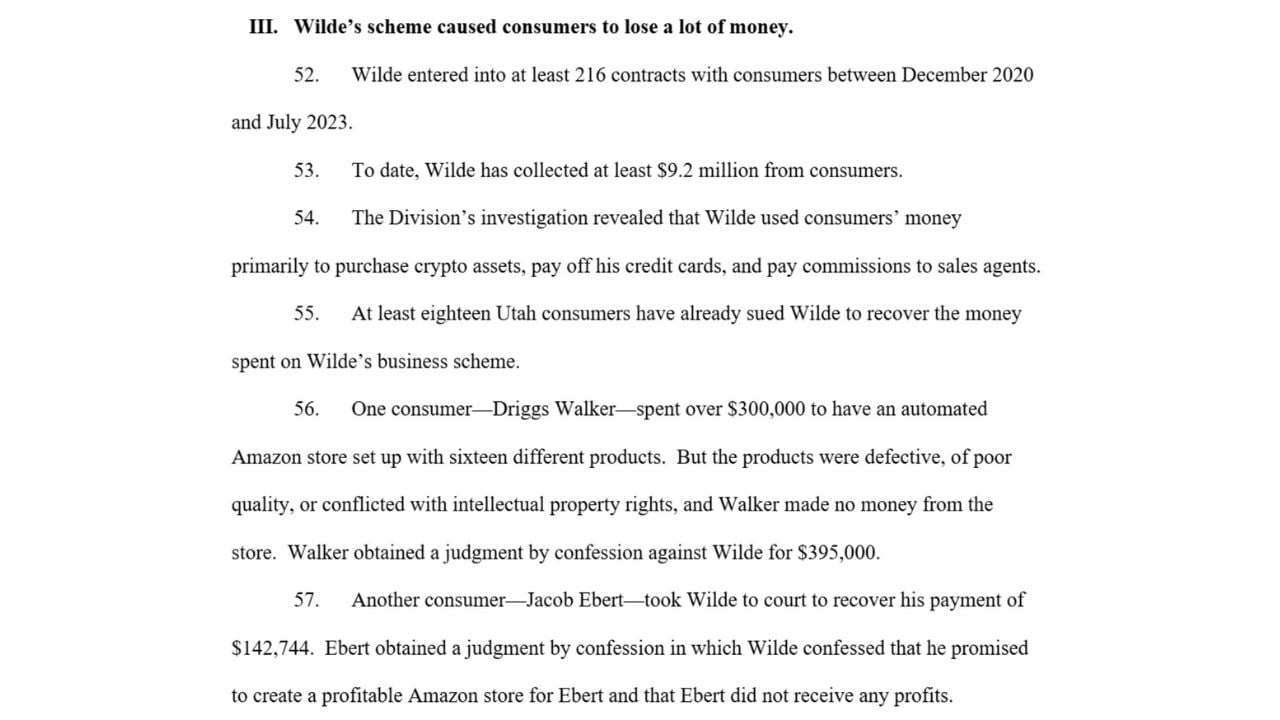
The original Utah complaint, dated Nov. 27, 2024, identified at least 216 contracts signed between December 2020 and July 2023 and at least $9.2 million received from consumers. Those were amounts customers paid Wilde’s businesses, not a separate court judgment or an amount to add to the later federal loss allegations.
Utah’s Division of Consumer Protection alleged that Wilde used consumer payments primarily to purchase cryptocurrency for himself, pay his credit card balances and compensate sales agents. The agency also documented complaints about stores that never went live, products that were not launched and unauthorized charges to customer payment cards.
By the time the civil complaint was prepared, the agency had received 28 consumer complaints, including 17 from Utah. State investigators said they could not identify a single customer for whom Wilde established a profitable Amazon store, and none of the complainants had received the full promised refund.
Customers Described Five- and Six-Figure Losses and Unfulfilled Promises
The Utah complaint identified a customer, Driggs Walker, who had spent more than $300,000 for an automated Amazon store involving 16 products. According to the filing, problems with the products prevented the venture from earning money, and Walker obtained a $395,000 judgment by confession against Wilde. Another customer, Jacob Ebert, obtained a separate confessed judgment after pursuing the $142,744 he had paid for an Amazon business that did not deliver profits, the state said.
In firsthand interviews with ABC4, Texas resident Brook Talbot described paying roughly $106,000 for consulting and inventory tied to three products. After a year, he said the promised store had not become operational. Dylan Cox of Vineyard, Utah, said he paid $2,000 for an online course and another $6,000 for store setup but did not receive the business he expected, according to ABC4’s reporting.
Another customer, Amber Edmondson, told the station that access to the company’s communications system disappeared and that an attempted $15,000 card charge was declined. A declined charge is not a completed $15,000 loss.
Wilde Admitted False Consumer Claims in the Utah Civil Proceeding
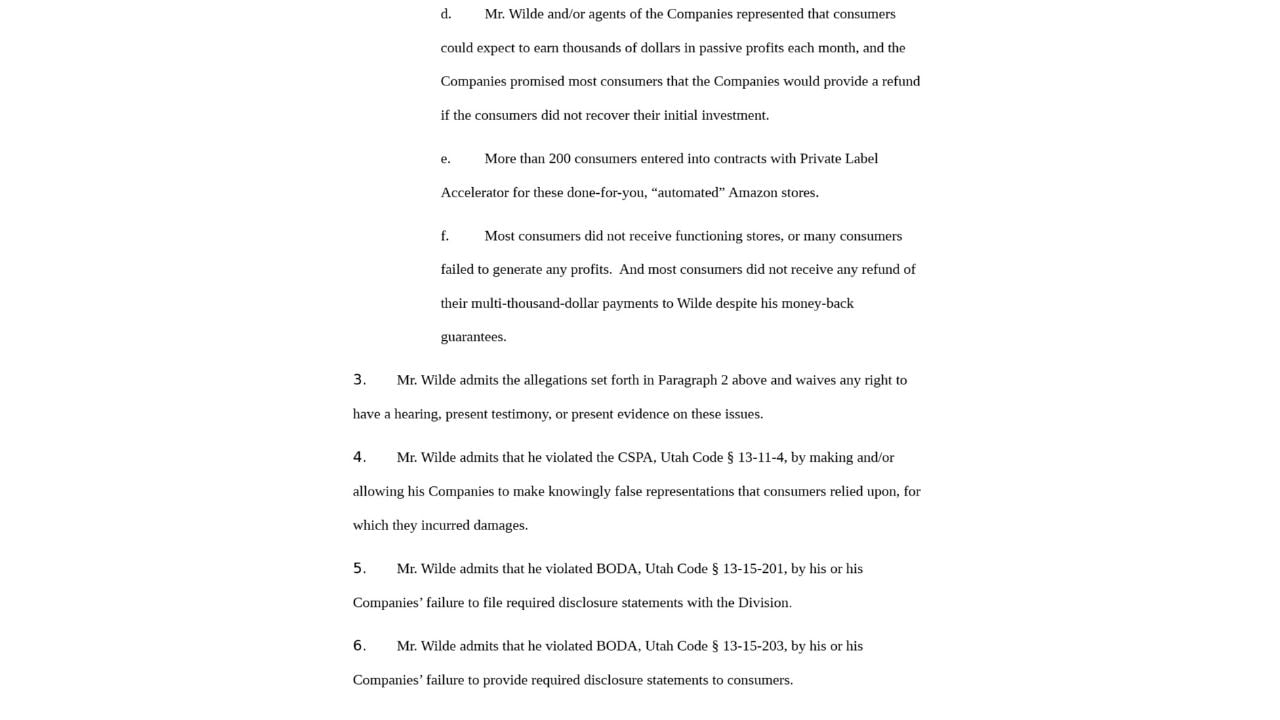
On Dec. 17, 2025, Utah’s Fourth District Court entered a stipulated order in case 240406248. Wilde admitted the order’s findings that more than 200 people contracted for automated Amazon stores and that most consumers did not receive functioning stores or refunds, while many failed to generate profits.
He also admitted violating Utah’s Consumer Sales Practices Act by making or permitting knowingly false representations on which customers relied and suffered losses. His admissions covered violations of the state’s Business Opportunity Disclosure Act for failing to file required statements with regulators and provide those disclosures to prospective buyers.
Those admissions resolved the state civil enforcement action. They were not a guilty plea to the securities, wire fraud or money laundering charges later filed in federal court.
Judge Entered a $7.93 Million Judgment, With Part Conditionally Suspended
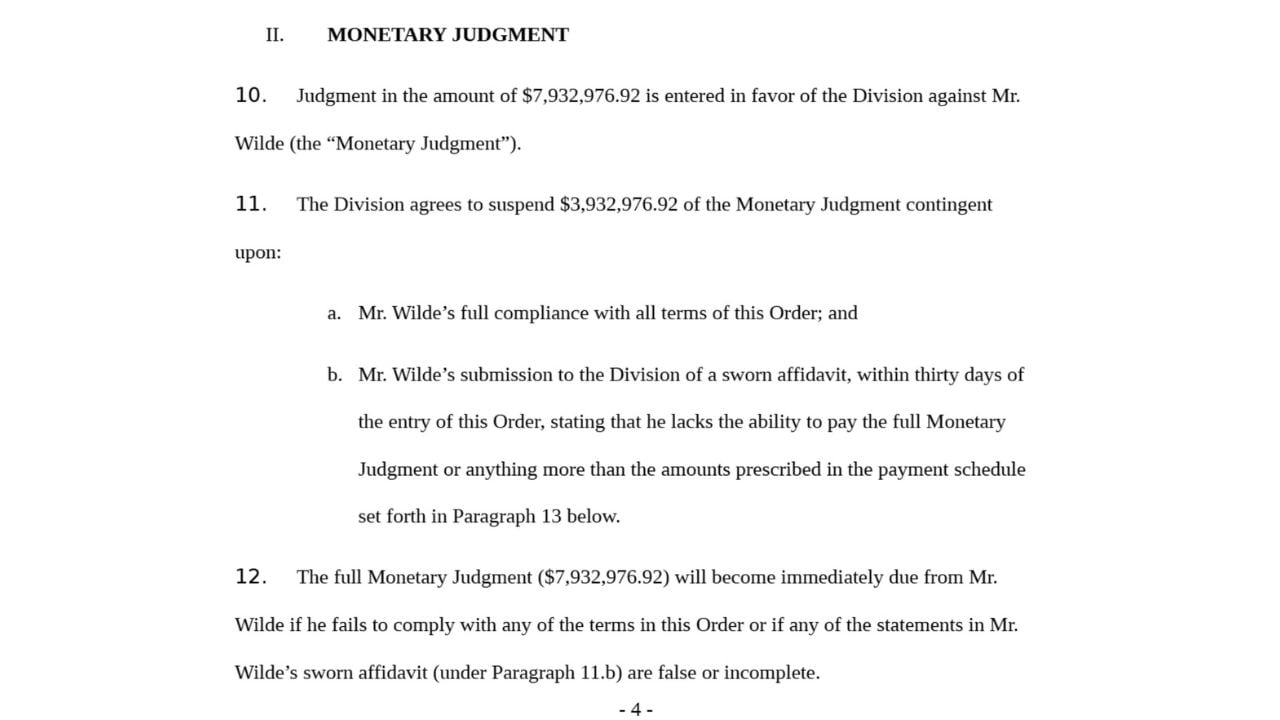
The court entered a monetary judgment of $7,932,976.92 in favor of the Utah Division of Consumer Protection. It conditionally suspended $3,932,976.92 of that amount, provided Wilde complied with the order and submitted a sworn account of his inability to pay the full judgment. A violation of those conditions could make the full amount due.
For the $4 million unsuspended portion, the order required three $50,000 payments during the first year, with deadlines at seven days, six months and 12 months after entry. It called for discussions within 18 months about repayment of the remaining $3.85 million and allowed the state to pursue collection after that period. The order establishes those obligations, not how much has been collected.
The judge also permanently barred Wilde from selling business opportunities, engaging in money-making opportunity schemes and conducting telemarketing as specified in the order, with three years of compliance reporting.
Federal Indictment Adds a Cryptocurrency Day-Trading Pitch
The U.S. Attorney’s Office says Wilde began soliciting investments in a done-for-you e-commerce scheme in August 2021, promoting it through carefully selected social media portrayals of wealth and investor success. Prosecutors allege he used investor money for personal spending and an extravagant lifestyle to reinforce that image.
Federal prosecutors also accuse Wilde of soliciting investors for a day-trading operation based on claimed expertise in cryptocurrency investments and promises of significant returns. The October announcement did not assign a distinct loss figure to that offering or establish how much overlap exists between the approximately 200 alleged federal victims and the consumers involved in Utah’s earlier action.
U.S. Attorney Melissa Holyoak announced the charges following an investigation involving the FBI’s Salt Lake City office and Utah consumer protection and securities regulators. A federal jury trial is scheduled for Dec. 18, 2026, in Salt Lake City. Wilde is presumed innocent of the federal charges unless proven guilty.
How to Check a Managed Amazon Store Offer Before Paying
The Federal Trade Commission advises prospective buyers of covered business opportunities to request the required disclosure document and an earnings claim statement when the seller makes income promises. Those records should identify the seller, relevant legal actions, refund terms, references and evidence backing any advertised earnings.
Before paying for an automated store, customers should verify that the proposed business and products can actually operate under the marketplace’s rules. Ask for a written accounting of consulting fees, inventory purchases, platform costs and the person authorized to use stored payment-card information. Check claims of success with customers reached independently, not only testimonials selected by the seller.
Consumers who discover unexplained card charges should contact their issuer promptly and preserve contracts, statements and communications. Suspected deceptive business opportunities can be reported through the FTC’s ReportFraud website or to their state consumer protection agency.