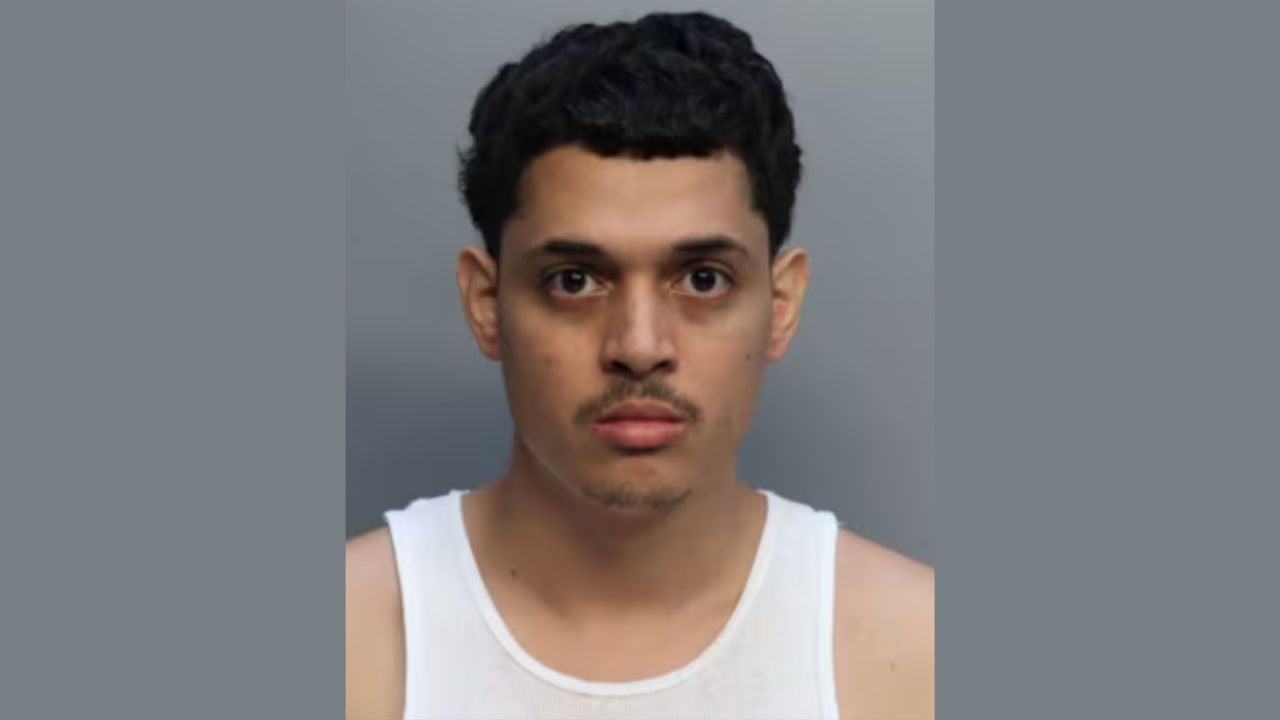
A Miami-Dade man who performed online as “Yunglazz Drakula” is accused of posting videos that described bank spoofing, account access, and identity theft while showing cash, cards, and personal information belonging to other people.
Lazaro Lesteiro-Diaz, 26, was arrested after a joint investigation involving Miami police, Miami-Dade deputies, and the FBI, according to Local 10 News.
Investigators said one video showed him beside a laptop, cash, and a call-center-style headset while rapping in Spanish about making a call appear to come from Bank of America and getting a customer’s verification code over the phone.
A search of his Westwood Lakes home later turned up cash, cards, a call-center headset, a gun, suspected drugs, and animal evidence that led to additional charges. The charges are accusations and have not been proven in court.
The Videos Became Part of the Fraud Case
Local 10 reported that Lesteiro-Diaz performs under names including “Yunglazz Drakula” and “Drakula.” An arrest report listed his occupation as “rap-fraudster” and described a June 17 video in which he was seen with a laptop, money, and a headset or microphone commonly used by fraudsters and scammers.
Police said the lyrics referred to calling from a Bank of America number. A Miami police detective interpreted the lyrics in the arrest report as describing a scam in which a caller gains access to a bank account by persuading the customer to provide a verification code over the phone.
Investigators said the online activity continued. In a July 6 livestream, police said Lesteiro-Diaz displayed a firearm, a large amount of cash, and a laptop before turning the camera toward personal information belonging to multiple victims while discussing organized fraud and spoofing methods.
Police Said the Posts Showed Cards, Cash and Victim Information
Another video posted shortly before the search allegedly showed multiple debit, credit, and gift cards, cash on a sink, and a suspected firearm with an extended magazine, according to Local 10.
The videos gave investigators more than a performance persona. Police described them as evidence connected to spoofing and account-takeover schemes, with the suspect allegedly showing the tools, proceeds, and personal data tied to fraud activity.
The Search Found Fraud Tools and Other Evidence
Authorities searched a home in the 11200 block of Southwest 43rd Lane in the unincorporated Westwood Lakes area on July 23, one day after a judge signed the warrant. Local 10 reported that police, deputies, and FBI agents took part in the raid.
Investigators said they found a gun, magazines, a “Drakula” diamond chain, a diamond watch, baby bottles with suspected promethazine-codeine syrup, cash, and a call-center headset. Police also reported finding two dead chickens with their heads cut off and a live baby goat inside a box near religious materials; a rescue organization took custody of the goat.
During an interview, police said Lesteiro-Diaz admitted the items were his and said he had bought the cough syrup to “cure his sickness.” Investigators said he also stated that he had previously attempted to commit fraud, then invoked his right to remain silent.
The Charges Include Organized Fraud and Identity Theft
Lesteiro-Diaz was arrested on charges of organized fraud, money laundering, identity theft, armed drug possession, and animal cruelty with intent to injure or kill.
Records cited by Local 10 showed he was being held at the Turner Guilford Knight Correctional Center on a $30,000 bond. Before posting bond, he would have to prove that any funds used came from a legitimate source.
Verification Codes Should Never Be Shared by Phone
The fraud allegation centers on a familiar account-takeover tactic: a caller pretends to be a bank, creates urgency, and asks the customer to read back a one-time verification code. That code is meant to protect the account, but it can also let the scammer finish a login, password reset, wallet enrollment, or transaction if the victim shares it.
The Federal Trade Commission warns consumers never to give verification codes to someone who calls, texts, or emails unexpectedly. A real bank or fraud department does not need a customer to read back a code that was sent to the customer’s phone or email.
If a caller claims to be from a bank, the safest move is to hang up and contact the bank through the number on the card, the official app, or the bank’s verified website. Customers should also treat unexpected verification codes, password-reset messages, new-device alerts, and wallet-enrollment notices as urgent signs that someone may be trying to access the account.
Anyone who shared a code should call the bank immediately, lock the account if possible, reset passwords from a clean device, remove unknown devices or wallet cards, and review recent transfers, card activity, Zelle payments, ATM withdrawals, and account changes. Victims should save call logs, texts, screenshots, verification-code messages, bank alerts, transaction records, phone numbers, account notices, and any names or titles used by the caller.
Bank impersonation and identity-theft reports can be filed with local police, the FTC at ReportFraud.ftc.gov, the FBI’s Internet Crime Complaint Center at IC3.gov, and IdentityTheft.gov.