Hugh Hefner’s private diary does not just detail his sexual exploits. His widow alleges it tracks women’s menstrual cycles. Now she says his foundation is digitizing thousands of intimate images that were never meant to be seen.
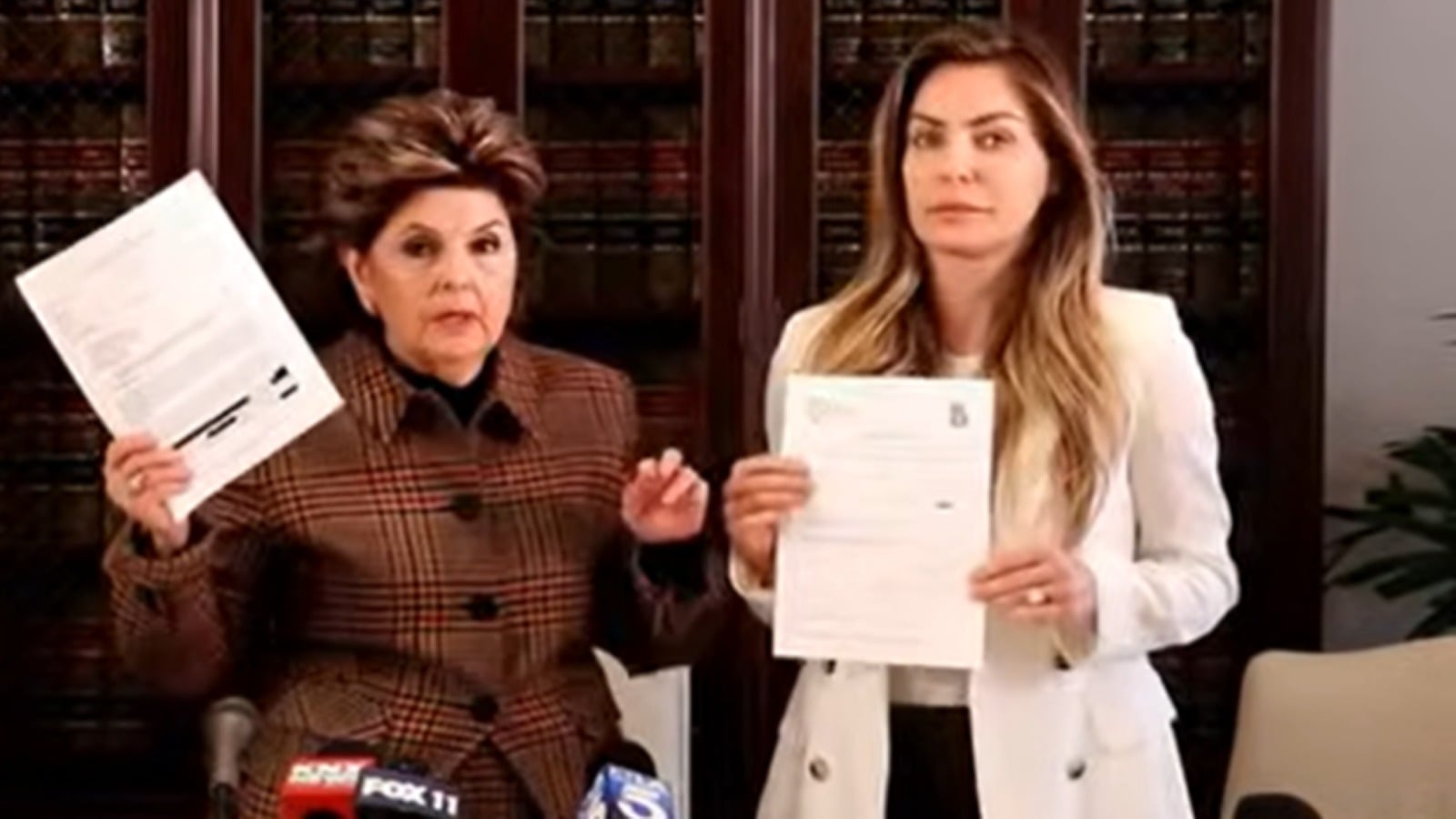
At a Los Angeles press conference on Tuesday at attorney Gloria Allred’s office, Crystal Hefner announced she filed regulatory complaints asking the attorneys general in California and Illinois to investigate what she claims is a trove controlled by the Hugh M. Hefner Foundation. Roughly 3,000 personal scrapbooks containing thousands of nude images, plus a diary with names of sexual partners, descriptions of sex acts, and menstrual cycle information, also stating that minors may be involved.
Speaking alongside Allred, Crystal stressed these are not Playboy magazine photos. Her complaint is about private images “never intended for publication in Playboy or in any other format.” Images, she says, were taken in personal contexts and later ended up under the foundation’s control.
The timing adds another layer. Crystal says she was removed as president of the foundation on Monday after raising concerns about the materials and refusing to resign.
Why Digitizing Changes Everything
Here’s the pressure point. Physical scrapbooks stored in lockers are one type of risk. Searchable digital files are another.
Crystal and Allred say they were told the materials are being digitized. Allred said she does not believe the images have been distributed yet, but warned that digitizing them raises privacy risks in the event of a cyberattack or leak.
“A single security failure could devastate thousands of lives,” Crystal warned. She emphasized modern threats like artificial intelligence, deepfakes, digital scanning, online marketplaces, and data breaches, and argued that once images leave secure custody, the harm is irreversible.
In other words, this is not about what happened in the 1960s. It is about what could happen tomorrow if those files fall into the wrong hands.

The Disturbing Allegations
Allred said the documentation includes names of women Hefner slept with, along with notes describing the sex acts they performed. She said the alleged diary dates back to the 1960s and spans decades.
The most serious claim. Crystal said the materials may include images of girls who were underage at the time. Allred also alleged some images may involve adult women who could not give informed consent, including situations where they were intoxicated.
Important context. Neither Crystal nor Allred provided evidence for the most serious allegations at the press conference, according to local reporting. What is publicly available right now is an allegation and a request for an investigation, not a finding.
“Women’s Bodies Are Not Property”
Crystal was direct about her position. She said the people who have custody of the scrapbooks are not the ones personally exposed, and that the risk falls on the women in the photos.
She believes the photos should be destroyed. Allred said getting assurances that the materials will not be distributed is the first objective.
“This is a civil rights issue,” Crystal said. “Women’s bodies are not property. Are not history.”
“These women do not know where their photos are, how they are being stored, or what will happen to them next,” she added.
From Playmate to Protector
The evolution is striking. Crystal, 39, entered the Playboy universe as its product, Playboy’s December 2009 Playmate of the Month, then became Hefner’s wife from 2012 until his death in 2017. In her 2024 memoir, Only Say Good Things: Surviving Playboy and Finding Myself, she recast that era as survival, not a fairy tale.
Now she is trying to pull the spotlight off the myth and onto the women behind it. Not the magazine. The private archive. The ones, she says, who may not even know their images are kept somewhere in storage, and could become infinitely more vulnerable once they are scanned, searchable, and portable.
It’s a role reversal. The former symbol is now demanding a chain of custody.

The Foundation’s Silence
The Hugh M. Hefner Foundation, a Santa Monica-based organization that publicly claims to advance civil rights and civil liberties, has not responded to requests for comment, according to multiple reports.
Crystal called out what she sees as hypocrisy, arguing that the materials are being kept under the guise of a charitable organization.
It is not clear how the foundation obtained the materials after Hefner’s death in 2017, and that uncertainty is one reason Crystal and Allred want state authorities involved.
What Happens Next
The regulatory complaints filed with the attorneys general in California and Illinois ask authorities to investigate how the materials are held, whether any laws were broken, and what safeguards may be appropriate.
When asked what the foundation intends to do with digitized images, Allred said: if they are digitizing them, what are they planning to do with them.
This is not yet a courtroom showdown over what is inside the scrapbooks. It is a bid to get government oversight on the chain of custody before digitization turns a private archive into a permanent, portable problem.
The question now. Will preserving Hugh Hefner’s “legacy” come at the cost of thousands of women’s privacy, or will state authorities step in before the files go digital?