The internet, in all its chaotic, pixelated glory, has never been a place for nuance. We’ve become accustomed to the frenetic exchange of memes, the digital equivalent of a playground shouting match where the repercussions are increasingly surreal.
But when the boundaries of global diplomacy begin to blur with the logic of a low-budget action movie, you know we have officially crossed the Rubicon into a strange new era of international brinkmanship.
This week, we found ourselves staring at a screen, blinking in disbelief, as an official diplomatic channel waded into the digital mud to throw a punch that felt less like a measured geopolitical maneuver and more like a scene from a fever dream.
When national interests are articulated through AI-generated slapstick, we aren’t just witnessing a breakdown in decorum; we are witnessing the complete transformation of the global stage into a theatre of the absurd, where the actors are no longer just people, but algorithms fed by the deepest anxieties and aggressions of their states.
The New Face of Diplomacy
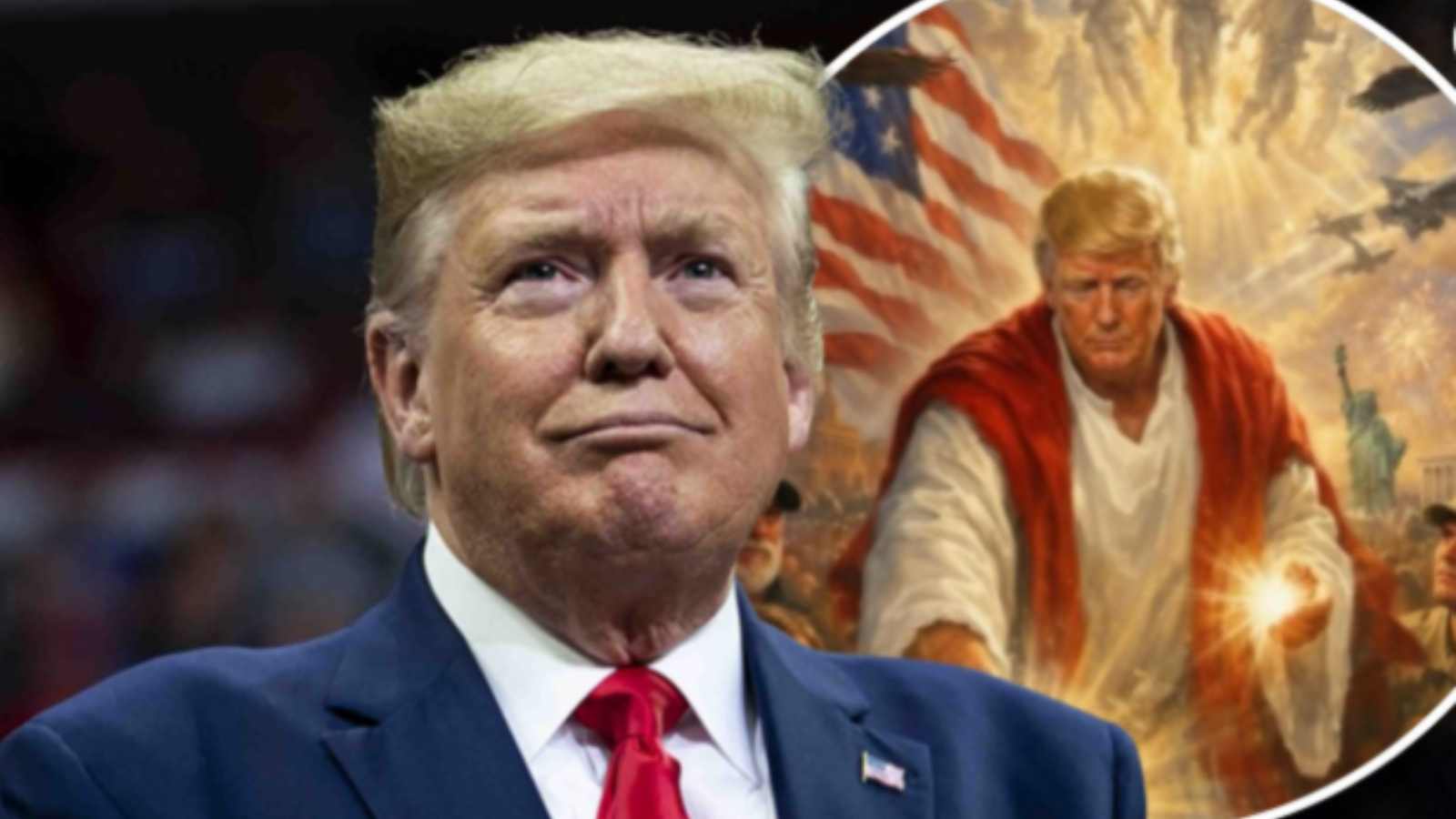
The spark for this latest episode of online theater was, perhaps predictably, a move by President Donald Trump, who shared, and subsequently deleted, an AI-generated image of himself as a messianic figure, laying a glowing hand on a sick man. In the blink of an eye, the digital discourse exploded.
But while many were debating the optics of such imagery, the Iranian Embassy in Tajikistan took a detour from traditional diplomatic responses. They didn’t issue a formal press release or a stiff-upper-lip condemnation.
Instead, they shared an AI-generated video showing Jesus Christ descending to deliver a literal blow to the face of the president, ending in a dramatic plunge into a pit of hellfire.
— Iran Embassy in Tajikistan (@IRANinTJ) April 14, 2026
It is a striking escalation. We have seen diplomatic spats play out on social media before, but the weaponization of artificial intelligence to create violent, personalized satires of foreign leaders marks a jagged shift in how countries “speak” to one another.
There is a deeply uncomfortable irony here: the very technology that holds the promise of immense creative potential is being repurposed as a tool for high-stakes trolling.
For those who follow international relations, this is a signal flare. It suggests that the barrier to entry for propaganda has been effectively erased. Anyone with a keyboard and a subscription to a generative AI model can now craft narratives… or, in this case, aggressive, violent animations that bypass the traditional diplomatic press office entirely.
The Limits of Digital Satire
But let’s look at this through a more critical lens. Is this actually an “outrage,” as the headlines scream, or are we simply witnessing the inevitable evolution of the political cartoon? For centuries, political leaders have been caricatured in ink and paint, often in humiliating or violent scenarios.
We have always used imagery to cut our leaders down like the sizebiting satire of 18th-century British prints and the editorial cartoons of the 20th century. Is an AI-generated video of a biblical figure punching a politician really so different in function from a satirical drawing of a king losing his crown?
Perhaps the real source of our collective “outrage” isn’t the content itself, but the speed and the uncanny, hyper-realistic nature of the medium. We are disturbed because the AI makes the impossible feel present. It isn’t a hand-drawn sketch; it is a slick, processed reality that feels dangerously close to the truth.
You have shown your true colours. Deranged, hatefull parasites.🤮🤮🤮🤮🤮🤮🤮🤮 pic.twitter.com/F6DosRpmQ7
— theo theo (@arcticsea14) April 15, 2026
This raises a host of questions that we are only beginning to grapple with. If diplomatic missions are now engaging in this kind of content creation, what does that mean for the sanctity of the digital space?
Are these embassies testing the limits of what platforms like X or Instagram will tolerate under the guise of free speech or political commentary? Furthermore, how does this affect the public’s ability to discern what is real and what is just another state-sponsored troll?
When the lines between a government-issued statement and a meme-warrior’s latest creation are dissolved, the average citizen is left adrift in a sea of visual noise, unsure of what deserves their attention and what is merely intended to distract them.
The incident also highlights the sheer volatility of the current U.S.-Iran relationship, which has been exacerbated by the ongoing conflict. When state-level propaganda leans into religious iconography, like the depiction of Jesus, it isn’t just a random creative choice.
It is a calculated play on the religious sentiments of the American public, specifically the religious conservatives who represent a core part of the former president’s base.
It is a cynical yet highly effective way to alienate a leader from his supporters by mocking his claim to righteousness. It is a digital information operation, designed to poke at the fault lines of American identity and belief.
As we look at the wreckage of this latest online scuffle, we are forced to ask: where does this end? As generative AI tools become more sophisticated, the “quality” of these political attacks will only improve.
We will see more fluid animations, more realistic sound design, and increasingly elaborate scenarios. The challenge for the platforms hosting these entities, and for the public consuming them, is to maintain a sense of proportion.
We are being trained to react with visceral intensity to every ping on our phones, to every shocking video that trends on our feeds. But perhaps the most radical act of resistance in this new era of digital warfare is not to get outraged, but to recognize these images for what they are: ephemeral, synthetic noise designed to provoke a reaction.
Ultimately, the image of a biblical figure punching a former U.S. president is just that… an image. It carries no weight of authority, no policy implication, and no truth. It is a digital shadow.
The real question is not whether the Iranian Embassy should be posting such things, but whether we, as an audience, are going to keep letting these manufactured provocations dictate the tenor of our global conversation. We are the ones who decide if the punch lands or if it just hits empty air.