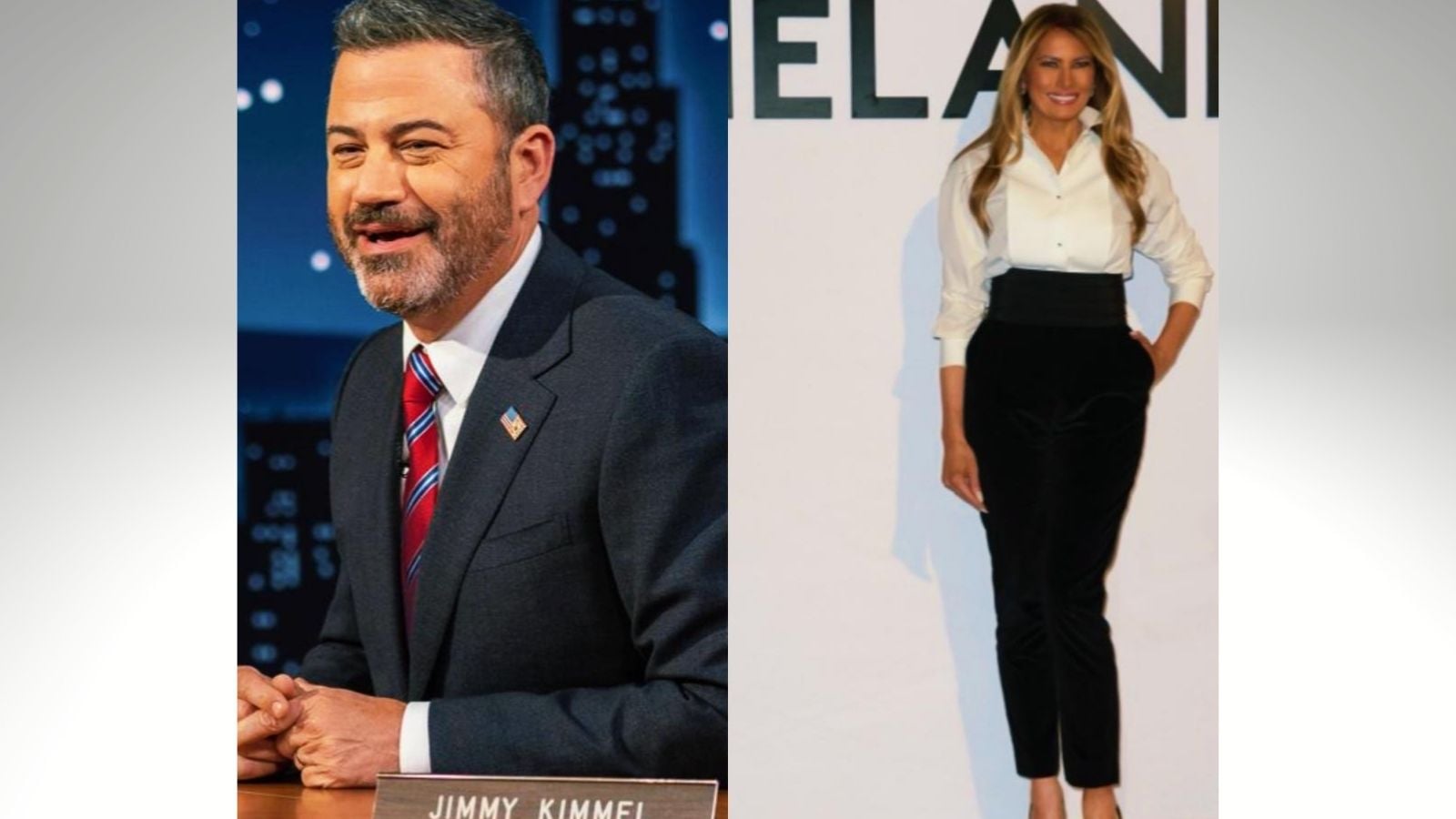
What happens when a late-night joke minds its business for a few days and then suddenly becomes the most controversial line on the internet? Ask Jimmy Kimmel, because that is exactly the situation he has walked into this week.
Kimmel told a joke about Melania Trump on his ABC show, and a few days later, a gunman opened fire at the White House Correspondents’ Dinner. Now the punchline is back in everyone’s feed, and the late-night host is catching heat for it line by line.
The line, “Mrs. Trump, you have a glow like an expectant widow,” landed during a Correspondents’ Dinner roast bit Kimmel staged on his own show. It aired before any shots were fired, but Trump supporters and right-wing commentators are now calling for apologies or action against ABC, the network behind his show.
That is the part that’s getting attention. A joke that was supposed to live and die in one episode is suddenly front and center in a much louder conversation about political comedy, timing, and what counts as a punchline when the real world shifts overnight.
So… About that Joke Everyone Suddenly Remembers
The line is short, sharp, and very much in the tradition of late-night taking swings at political marriages. “Mrs. Trump, you have a glow like an expectant widow,” Kimmel said, delivering it as if he were actually hosting the Correspondents’ Dinner.
The segment itself was packaged as a parody of the dinner. It played like a piece of theatrical satire, which is pretty standard for Kimmel, who roasts the President on a near-nightly basis. But the wording here had a bit more bite than usual.
That extra edge is exactly why people cannot stop replaying it now. Once a completely different story took over the news cycle, the joke stopped feeling like just another late-night jab and started reading like something heavier. Same words, totally different vibe.
Then The Real World Stepped in And Changed Everything
A gunman targeted members of the Trump administration at the actual Correspondents’ Dinner on Saturday, 25th April. That detail is what flipped this from a typical entertainment moment into something far more serious, almost instantly.
To be clear, Kimmel’s segment aired before the incident, and the timing is the only link between them. His show aired earlier in the week. The shooting happened days later. But once the news broke, the internet did what it always does. It started connecting dots, even the ones that do not actually connect.
Within hours, that clip was everywhere again. Social media users began circulating it with reactions that framed it as if it were tied to the shooting. Critics labeled it a “disgusting joke,” despite the fact that it existed before the incident ever happened.
But that timing issue is really the backbone of the backlash. It asks people to judge a joke written in one context against an event that no one could have predicted. That is a complicated ask, and it is landing harder than anyone at ABC probably expected.
The Backlash is Loud and Very Specific
This is not just casual online outrage that fades after a few hours. Trump supporters have directly criticized Kimmel, while right-wing commentators are calling for formal consequences. The focus is not just on the comedian. It has expanded to the network itself. ABC is being pulled into the conversation, with calls for apologies, statements, or some kind of accountability.
For critics, the argument is simple. If the joke aired on the network, then the network shares responsibility. And people are not just venting for the sake of it. They want something concrete. A retraction. A statement. Any sign that the backlash has been acknowledged.
So far, that response has not come. Neither Kimmel nor ABC has issued a public comment, according to available reporting, and that silence is now part of the story too. Every hour without a response keeps the conversation going.
The Part That Makes This Especially Messy
Here is where things get complicated in a way that goes beyond the usual late-night controversy. The joke did not change. The clip did not change. What changed was everything around it. It aired in one news cycle and got judged in another.
And in that gap, the meaning shifted in real time. On the day it aired, it was just another satirical jab in a long line of political jokes. Days later, it became something people were dissecting with a level of seriousness entirely different from the one it had started with.
That gap is the thing. It’s what every comedian has nightmares about. It is also what every comedian quietly worries about. Not necessarily the joke itself, but what happens to it once it leaves the room it was written for. In this case, many of the loudest critics were not even reacting to the original broadcast. They were reacting to a clip that resurfaced under entirely new circumstances.
What This Moment Says About Political Comedy Right Now
Late night has always thrived on pushing buttons. Presidents, first ladies, public figures, nobody is really off limits. That has been part of the format for decades.
But the intensity of the reaction to this one line, especially when placed next to a real-world security incident, suggests something is shifting. The audience is watching more closely. The margin for how jokes are received feels tighter. Entertainment and real news keep blurring into each other, and audiences are feeling it.
When politics and actual danger share the same headlines, even unrelated jokes can start to feel different in hindsight. This is not just about Kimmel. It is part of a broader recalibration happening across comedy. And right now, that is the part comedy writers will not stop thinking about.