Saturday night at the Washington Hilton was supposed to be one of Washington’s most polished nights with suits and press passes, and everyone pretending to like each other for one evening.
Instead, a gunman identified as Cole Tomas Allen, a 31-year-old teacher from Torrance, California, forced his way through a security checkpoint armed with multiple weapons and opened fire in the Washington Hilton, the hotel where the White House Correspondents’ Dinner took place.
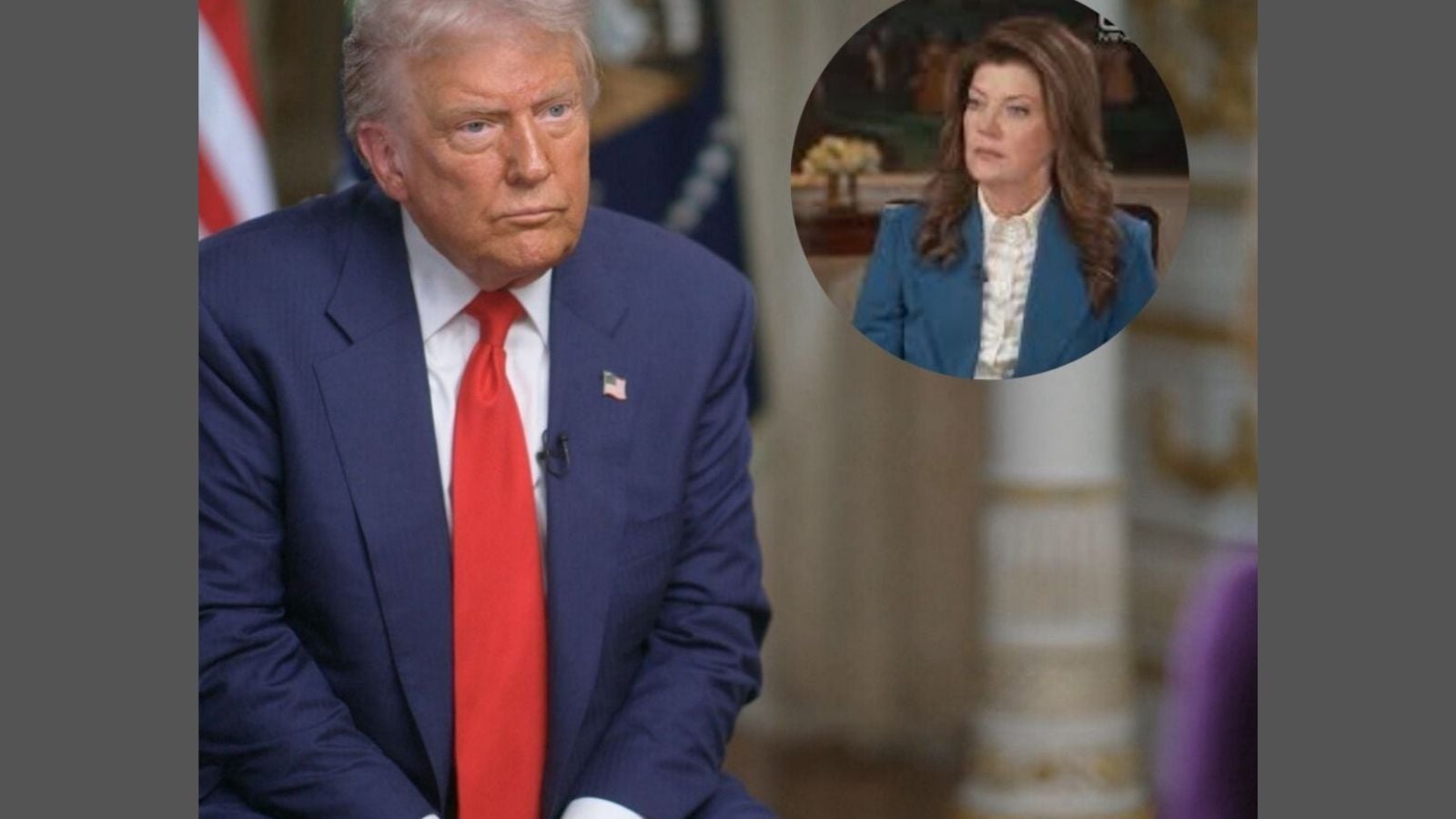
Nobody died, no civilians were hurt, and the only person who took a bullet was a Secret Service agent whose vest absorbed the shot. He is, according to President Trump, “a hundred percent” okay. By Sunday night, Trump was on 60 Minutes with CBS anchor Norah O’Donnell, and somehow the shooting became the second most dramatic thing that happened that weekend.
The Night Cole Tomas Allen Decided to Blow Up Washington’s Fanciest Party
Here is what we know about Allen. Moments before charging into that ballroom, he emailed what federal authorities described as a manifesto to his own family members, essentially narrating his intentions before carrying them out.
Trump, who said he personally read the document, told O’Donnell that Allen had gone through a significant personal transformation before the attack, moving away from his Christian faith and becoming, in Trump’s words, “anti-Christian” pretty “sick” and “radicalized.”
Trump also revealed that Allen’s own brother and sister had reportedly contacted police about his behavior before any of this happened. His family had seen something coming and said something. What action, if any, was taken before Saturday night remains unclear.
U.S. Attorney Jeanine Pirro confirmed Allen would be charged with using a firearm and assaulting a federal officer with a dangerous weapon, and made clear those were just the opening acts, with significantly more charges expected to follow.
The Part Where the President of the United States Refused to Leave
When shots rang out inside that ballroom, Secret Service agents rushed to evacuate both Trump and Vice President J.D. Vance. Vance was moved. Trump was a whole different situation, and he admitted it freely on camera without anyone having to drag it out of him.
Trump told O’Donnell that he wanted to see what was happening, that he slowed his security detail, and that agents had to repeatedly ask him to move before he finally complied. He described himself “walking out pretty tall” while agents wanted him lower and faster, telling them “Wait a minute” more than once so he could assess things himself. The man was in the middle of an active shooting situation and was essentially asking for a moment to observe.
He and Melania eventually got down when agents instructed them to. Trump described Melania as strong, smart, composed, and immediately aware of what was unfolding, which honestly tracks, because if your husband is pausing an evacuation to rubberneck during a shooting, composure stops being a personality trait and starts being a coping mechanism.
Sir, Did You Just Compliment the Alleged Shooter’s Speed?
Watch as officer in bottom left draws gun, points at assassin, does he shoot, but look at three officers at top, one in middle drops like he took cross fire to the vest? He falls and stumbles. Cross Fire Dangerous. #Trump #shooting #WHCD more on my YouTube channel link in X Bio pic.twitter.com/K6tvQDWspf
— Ross McLean (@McLeanChronicle) April 26, 2026
After watching the security footage, Trump had thoughts. Not about the investigation, not about policy, but about how fast Allen was moving when he charged through that checkpoint. Trump told O’Donnell it looked “like a blur” on tape, and then, with the energy of someone watching combine drills, suggested the NFL should consider signing him.
Read that again. The president of the United States, talking about a man who allegedly targeted his administration with multiple weapons, took a detour into athletic recruitment territory.
He did eventually pivot to praising the Secret Service agents who drew their weapons and took Allen down, calling them sharp and professional, which was a genuinely deserved compliment. But the NFL comment had already left the building, and it is not coming back.
The Words That Turned a News Interview into a Screaming Match
This is where the interview went from tense to unforgettable. O’Donnell read aloud a line from Allen’s alleged manifesto, in which Allen had written that he was no longer willing to permit what he described as “a pedophile, a rapist, and a traitor to coat his hands with crimes”, a language widely understood as being directed at Trump. She read it plainly, on camera, to his face.
Trump did not let her finish. He told her he had been waiting for that moment, called CBS “horrible people” twice with full commitment, and launched into a defense of his character against accusations written by a man, who according to Trump is a “sick person” who got caught pretty easily because of well, his “incompetence.”
O’Donnell asked calmly whether Trump even believed the line was referring to him. Trump bypassed the question entirely, claimed full exoneration, referenced Jeffrey Epstein and unnamed opponents without elaborating, and told O’Donnell she should be “ashamed” of herself for reading it on national television.
When she clarified that she was simply reporting what the shooter had written, Trump called her a “disgrace” and told her to finish the interview. She did, without blinking. The whole exchange lasted only a few minutes but produced the kind of television that gets clipped, screenshotted, and debated for weeks because O’Donnell never raised her voice once, while Trump never stopped raising his.
So, Where Does Washington Go from Here
Trump closed the interview with a directive: reschedule the dinner within 30 days, add more security, and make it bigger. He framed it as a matter of principle, not personal interest, saying he is too busy to attend but that letting one unstable person cancel a Washington tradition would set a terrible precedent.
Allen remains in custody, and the injured agent has recovered well. The immediate crisis has passed, but the impact of the night continues to ripple.
What remains is the realization that the line between governance and spectacle is no longer blurred; it is practically nonexistent. A formal dinner turned into a breaking news event, followed by an interview that felt like live theater.
And perhaps the most striking part is not how unusual it all was, but how quickly it started to feel familiar.