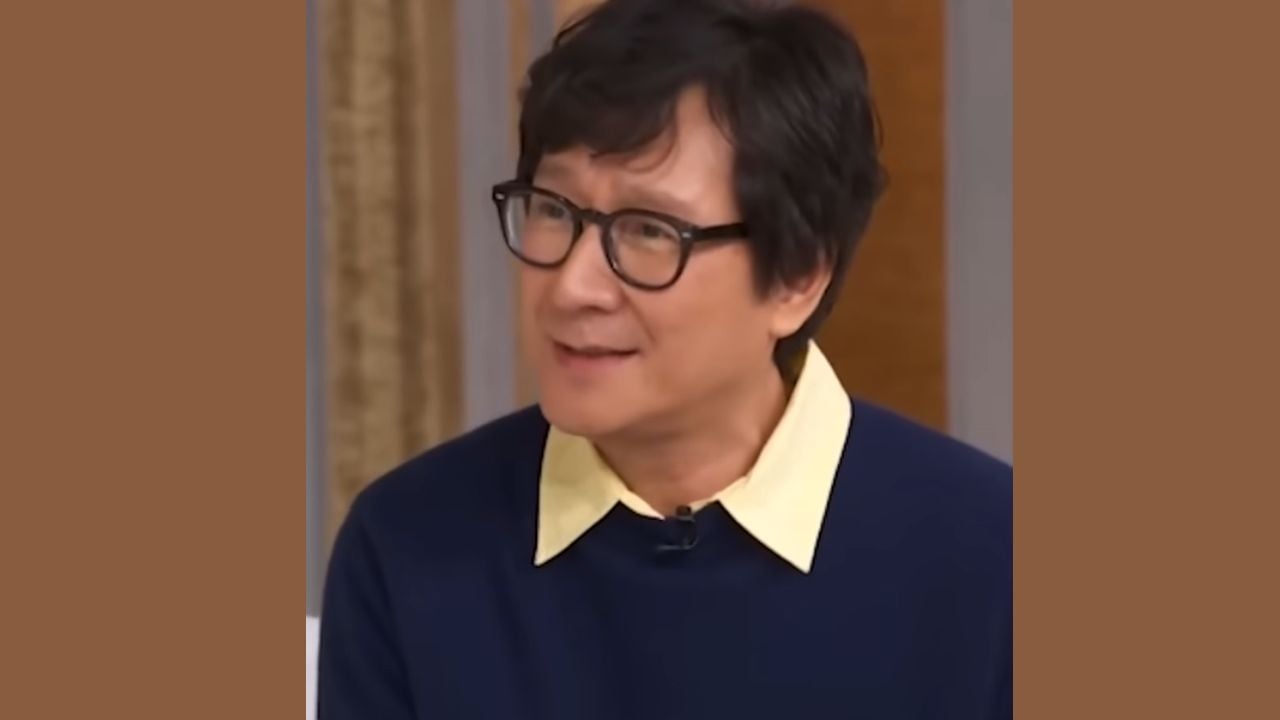
Ke Huy Quan knew he would get paid for playing Short Round in Indiana Jones and the Temple of Doom. What he did not expect was another enormous check arriving long after the work was finished.
In his new memoir Never Say Die, Quan recalls coming home roughly two years after first signing onto the movie and finding his parents standing at the kitchen table with an envelope bearing his name. Inside was his first residuals check from Lucasfilm, worth “almost $100,000,” according to Entertainment Weekly.
The amount initially made little sense to him. Quan had already been paid for making the movie and did not understand why more money had suddenly arrived, while his parents were smiling with what he remembered as a mixture of surprise and disbelief.
For a 12-year-old making his first film, the arrangement was especially unusual. Quan credits Steven Spielberg and George Lucas with making sure his deal included participation that continued paying after production, a decision he says ultimately changed his family’s circumstances.
The Check Arrived Two Years After Quan Thought He Had Been Paid
Quan remembers walking into the kitchen and finding both of his parents waiting beside the envelope. His mother held the envelope with his name printed on it, while his father had the paperwork that had been inside. When they handed the check to him, Quan struggled to understand the number in front of him. “It was for almost $100,000,” he writes in Never Say Die.
Quan understood that actors were paid to make movies, and that had already happened. He did not yet understand residuals or why the success of Temple of Doom could continue generating money for him after filming ended.
The 1984 movie was Quan’s first major screen role. He landed the part after accompanying his younger brother to an open casting call in Los Angeles and unexpectedly being asked to audition himself.
He Credits Spielberg and Lucas With a Deal That Changed His Family’s Life
Quan says the contract provision was highly unusual for someone in his position. “Back then, almost no actors got a piece of a movie’s profits,” he writes, adding that those arrangements were generally associated with major stars.
That made his own participation especially striking. Temple of Doom was following the enormous success of Raiders of the Lost Ark, meaning everyone involved knew it was not being made as a small or obscure project. Quan describes the clause as “a quiet gesture” from Spielberg and Lucas and says the resulting share was “life-changing for my family.”
Quan’s family had fled Vietnam as refugees before eventually reuniting and settling in Los Angeles, where he was still adjusting to a new country and language when the Indiana Jones opportunity arrived.
Grand Central Publishing’s Never Say Die description traces that path from his refugee childhood through sudden fame in the 1980s, the disappearance of acting opportunities and the comeback that eventually returned him to Hollywood.
The Money Is Only One of His ‘Temple of Doom’ Memories
Quan’s memories of Temple of Doom extend far beyond the residuals check. He writes extensively about Harrison Ford, whom he came to view almost like an older brother during the physically demanding production. Quan was too young and new to Hollywood to appreciate how exhausting the work could be for Ford, who seemed “unshakable” to him at the time.
Years later, Quan learned that Spielberg had occasionally used his presence to improve Ford’s mood. Whenever Ford was having a difficult day, Quan says Spielberg would tell someone to send the young actor over.
Quan had no idea that was happening. He simply noticed that Ford would soften when he arrived and enjoyed being around the older actor, describing their dynamic as similar to “tagging along with an older brother,” according to People.
Ford also taught Quan to swim after learning that the child actor was frightened of the water. Quan recalls Ford patiently talking him through the process in a hotel pool until he managed to move forward on his own.
Acting opportunities eventually dried up, Quan spent years working behind the camera and later returned to acting under his original name. Never Say Die, published by Grand Central Publishing on Sept. 15, follows that journey through the comeback that culminated in Quan winning the Academy Award for Everything Everywhere All at Once.