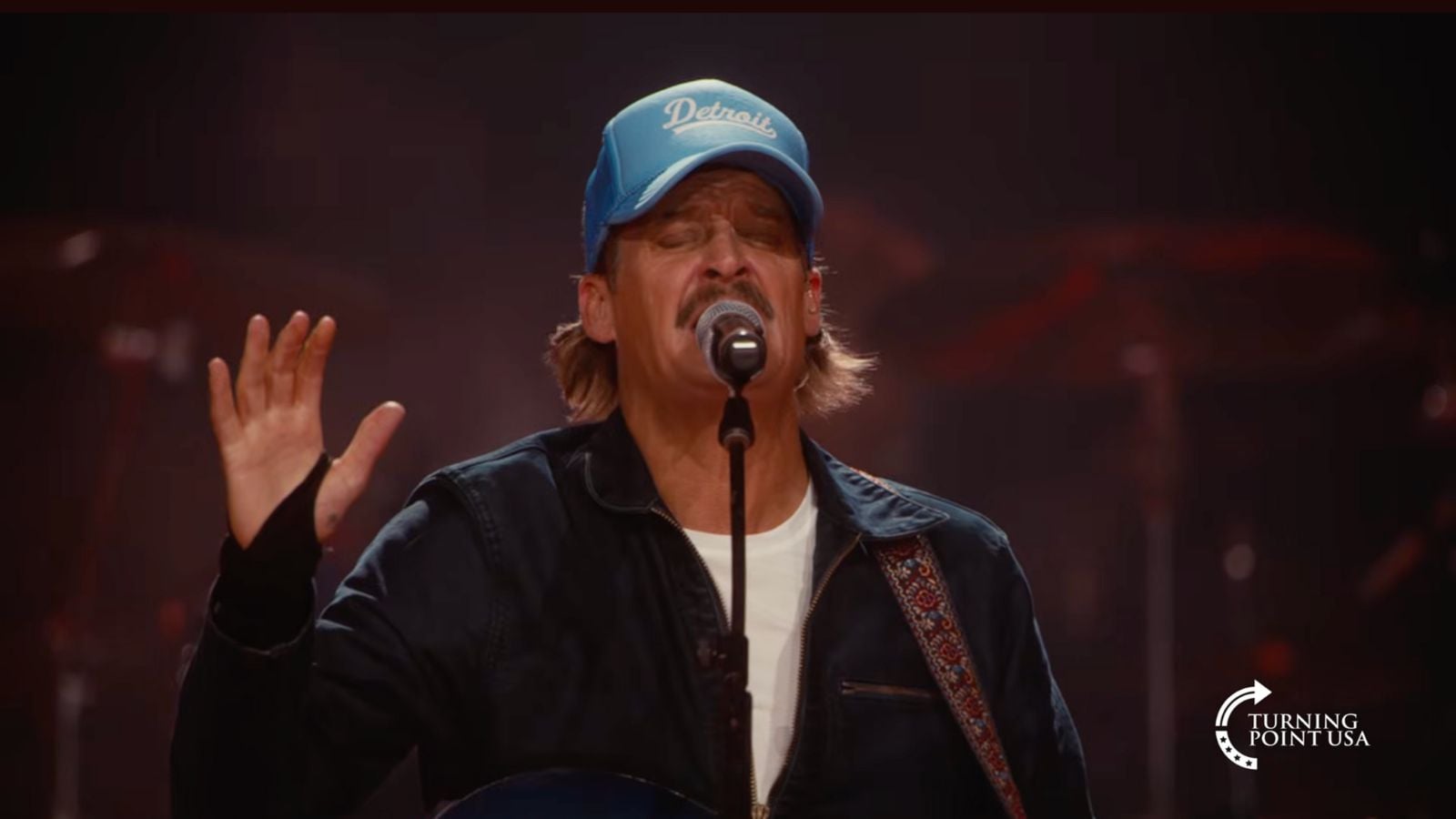
Kid Rock stepped into the spotlight during Super Bowl Sunday, but not in the way he probably hoped. He headlined Turning Point USA’s “All-American Halftime Show,” a conservative-leaning event meant to rival the official halftime performance by Bad Bunny. What started as a bold statement quickly turned into a viral mess when viewers spotted issues with Kid Rock’s set.
Clips spread fast online, showing his mouth movements out of sync with the audio during his hit song “Bawitdaba.” Accusations of lip-syncing flew, and the performance became the punchline of the night.
The event drew millions of eyes, peaking at around 5 million concurrent viewers on YouTube after a last-minute switch from X due to licensing problems. Total views hit about 16 million, a solid number for an alternative broadcast but far short of the official Super Bowl halftime’s record 133.5 million from the previous year. Still, the show made waves for its political edge and the unexpected drama on stage.
Details of Kid Rock’s Performance
Kid Rock took the stage in a black t-shirt and shorts, bursting out with his signature yell: “My name is KIDDDDD ROCKKKKKK.” He performed just two songs to wrap up the set. First came his 1999 rap-rock anthem “Bawitdaba,” a track known for its rowdy vibe and crowd-pleasing hooks. He bounced around the stage, which was modestly sized compared to the Super Bowl’s massive setup, engaging with fans on both sides.
During “Bawitdaba,” several moments stood out. Viewers noticed times when the vocals blared through the speakers while Kid Rock’s microphone was lowered away from his mouth. His lips appeared to stop moving entirely as the rap verses and chorus continued without pause.
The mismatch was clear in clips shared widely on platforms like X, Instagram, TikTok, and Reddit. Some parts showed his mouth forming words that didn’t align with the audio at all.
Kid Rock’s lip syncing is even more egregious than Ashlee Simpson and Millie Vanilli pic.twitter.com/Yiz3RrxQ1j
— Geoff Coffelt (@Skate_a_book) February 9, 2026
He followed with an acoustic cover of Cody Johnson’s “Til You Can’t,” performing under his real name, Robert Ritchie. This slower, more stripped-down number contrasted the high-octane opener and seemed to go off without the same issues.
At 53 years old, Kid Rock brought his usual flair, but the energy couldn’t overshadow the problems in the first song. The performance aimed to rally the audience with familiar hits, yet it ended up highlighting production flaws that dominated discussions.
Social Media Reactions
Clips of the “Bawitdaba” performance exploded online, racking up views and comments. People compared it to infamous lip-sync fails, like Ashlee Simpson’s 2004 “Saturday Night Live” mishap or Milli Vanilli’s scandal in the 1990s. The consensus among critics was that the lip-syncing looked sloppy and obvious, with the audio continuing seamlessly while Kid Rock’s actions didn’t match.

Not everyone piled on. Some fans defended him, suggesting it was an audio-video sync problem in the broadcast rather than intentional miming. They pointed out that backing tracks are common in live shows, especially high-energy ones where artists move a lot. Others argued that at his age and with the physical demands of the performance, some support from pre-recorded elements made sense.
The backlash extended beyond the lip-sync issue. A resurfaced 2021 Kid Rock song drew fresh criticism for its lyrics about underage girls, adding fuel to the fire just days before the show. While not directly tied to the performance, it amplified negative attention on the artist and the event.
Supporters countered by focusing on the show’s intent to provide an alternative for those unhappy with the main halftime choice.

Why This Matters in the Bigger Picture
The “All-American Halftime Show” wasn’t just about music; it reflected deeper cultural divides. Turning Point USA, led by Charlie Kirk, marketed it as a stand against what they saw as the NFL’s drift from “American” values.
Bad Bunny’s performance, full of Latin flair and hits like “Tití Me Preguntó,” celebrated diversity but irked some who preferred English-language acts. Comments from figures like former President Trump on Truth Social echoed this sentiment, criticizing the official show.
In the end, Kid Rock’s set became the event’s most memorable part for the wrong reasons. It sparked memes, reaction videos, and debates that kept the conversation going days later. The alternative show achieved visibility but at the cost of ridicule.
For Kid Rock, a veteran performer with a history of controversial moments, this added another chapter to his public persona. Whether seen as a flop or a bold try, it highlighted how live events can go viral in unexpected ways.
What do you think?