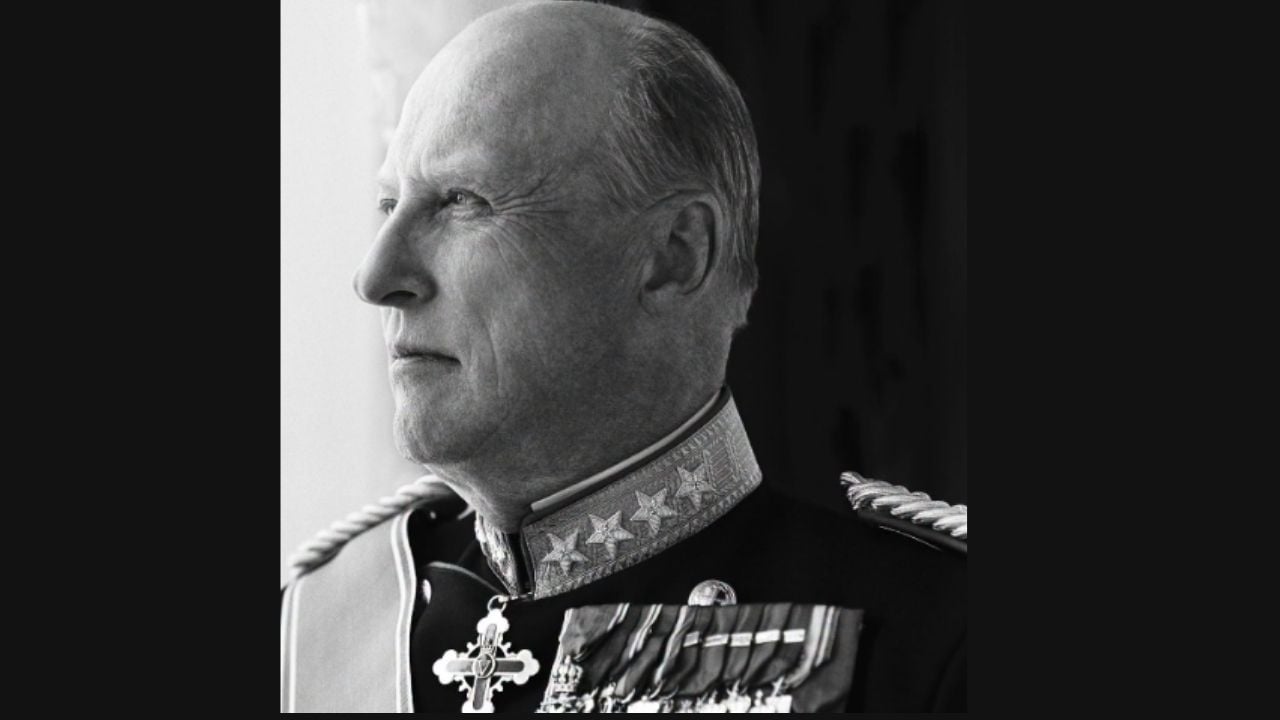
King Harald V of Norway has died at 89, ending a reign of more than 35 years and immediately passing the throne to his son, Haakon.
The Norwegian Royal Court announced that Harald died peacefully at Oslo University Hospital Rikshospitalet at 6:35 a.m. local time on Friday, Aug. 28. The monarch had been hospitalized since Aug. 17, and his condition deteriorated after he developed a bacterial infection in his bloodstream, according to Reuters.
Harald had been Norway’s king since Jan. 17, 1991, when he succeeded his father, King Olav V. He became known for a relatively informal style of monarchy, a public emphasis on tolerance and national unity and his determination to remain king for life even as recurring health problems forced him to reduce his schedule.
Norway was not left without a monarch after his death. Haakon, 53, succeeded automatically and became King Haakon VIII, while his daughter, Crown Princess Ingrid Alexandra, 22, became heir apparent.
Harald Died After 11 Days in the Hospital
Harald was admitted to Rikshospitalet on Aug. 17 after complications from treatment for hemolytic anemia caused fluid to accumulate in his body. During the following weekend, the Royal Court said his condition had worsened and that doctors were treating him with antibiotics for a bacterial infection in his bloodstream.
The palace initially said Harald had responded to the antibiotic treatment and was stable. On Aug. 27, however, it announced that his condition had become “very serious.” Queen Sonja, Haakon and other members of the royal family gathered at the hospital as concern about the king’s health intensified. The Royal Court’s announcement the following morning said Harald had died peacefully at 6:35 a.m.
Haakon Became King the Moment His Father Died
Norway’s constitutional system makes royal succession immediate. The government explains that when a monarch dies, the next person in the line of succession automatically becomes king or queen, meaning Haakon did not have to wait for a coronation, parliamentary vote or proclamation to inherit the throne.
Current Associated Press reporting identifies the new monarch as King Haakon VIII. His wife, Mette-Marit, becomes queen, while their eldest child is now Crown Princess Ingrid Alexandra and the first person in line to succeed her father.
The transition also brings an unusual constitutional first in modern Norwegian history. Because Ingrid Alexandra is already an adult, the government says she must submit a written oath before the Storting as the second person in the line of succession.
An extraordinary Council of State was convened at the Royal Palace on Aug. 28 as part of the formal transition. Norway does not stage a coronation in which the monarch is crowned, Haakon must instead swear an oath before the Storting promising to govern in accordance with the Constitution and laws.
Harald Refused to Abdicate Despite Years of Health Problems
Harald’s health increasingly affected his public schedule during the final years of his reign. He underwent treatment for bladder cancer in 2003 and experienced repeated hospitalizations and infections later in life.
One of the most serious episodes came in 2024, when Harald became ill with an infection during a private trip to Malaysia. Doctors implanted a temporary pacemaker before he was medically evacuated to Norway, where he subsequently received a permanent device.
After returning to his duties that year, the palace announced that Harald would permanently reduce the number and scope of his official engagements. He nevertheless rejected suggestions that he might follow other aging European monarchs into retirement, maintaining that the oath he had taken as king was for life.
Haakon regularly served as regent during his father’s illnesses and periods of medical leave. Those temporary assignments gave him years of experience carrying out the monarch’s constitutional responsibilities before the succession became permanent.
His Reign Helped Modernize Norway’s Monarchy
Harald was born Feb. 21, 1937, at Skaugum in Asker and became the first Norwegian prince born in the country in 567 years. After Nazi Germany invaded Norway in 1940, his mother, Crown Princess Märtha, took Harald and his sisters first to Sweden and then to the United States, where they spent much of World War II.
He later studied at Oxford and became an accomplished sailor, representing Norway at three Olympic Games. His relationship with Sonja Haraldsen also challenged the royal conventions of the era. After years of waiting for permission to marry the commoner he loved, the couple wed in 1968 and later had two children, Märtha Louise and Haakon.
Harald became particularly associated with national unity during moments of crisis. After the July 22, 2011 terrorist attacks killed 77 people, he joined a grieving country in mourning. In a widely remembered 2016 speech, he described a Norway encompassing different religions, family structures, backgrounds and sexual orientations before declaring, “Norway is you. Norway is us.”
Prime Minister Jonas Gahr Støre said after Harald’s death that “a whole nation is in mourning,” remembering a king who “found the words to bind us together when we needed them the most.” The Norwegian government has declared a period of national mourning lasting from Aug. 28 until after Harald’s funeral, with flags at state institutions lowered to half-staff.