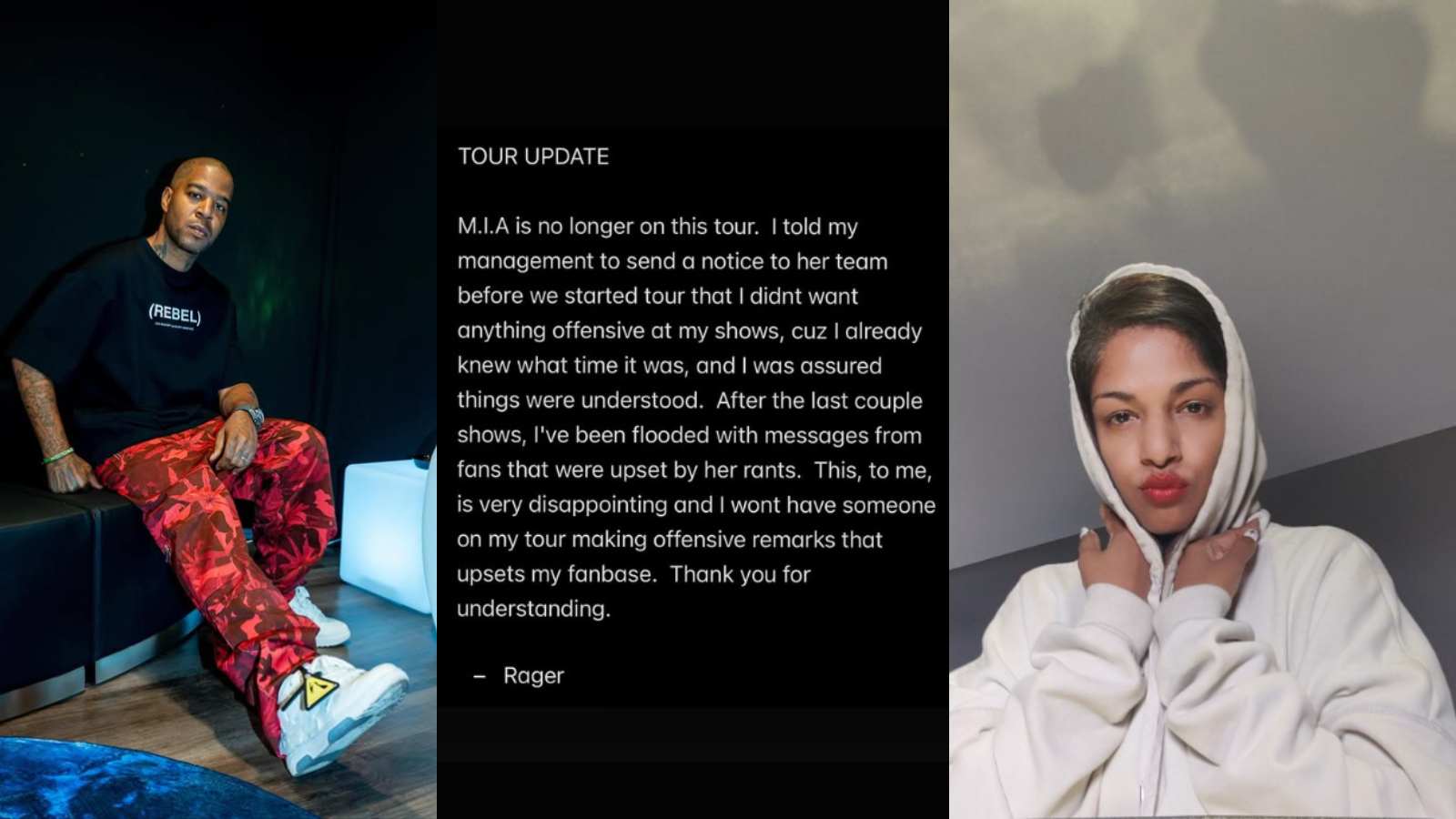
Kid Cudi fired M.I.A. from his Rebel Ragers tour, and honestly, once you hear the full story, you’ll understand exactly why it went left the way it did. By May 4, the moment had taken over online, clips flying around, people quoting her, boos cutting through the noise, Cudi’s Instagram Stories lighting up. The whole thing unraveled faster than most celebrity drama does these days, and it started at a single show in Dallas.
The Rebel Ragers tour is a big deal, covering more than 30 cities across North America, and it had only just kicked off in Phoenix on April 28. M.I.A. was booked as an opening act, and by all accounts, it should have been a straightforward arrangement. But when she hit the Dallas stage on May 2, she took the crowd somewhere nobody was expecting to go.
She told the audience she had been canceled for many reasons, but never imagined she would be canceled for being a brown Republican voter. Then she went to introduce her 2010 track, often referred to as Illegal, and said, “I can’t do ‘Illegal,’ cause some of you could be in the audience,” basically implying that some of the people who paid for tickets might be undocumented.
The crowd started booing. She also expressed support for Donald Trump during the set. By the time the clips hit social media, the reaction was not pretty.
@trippinsippuhh everyone booing M.I.A after she went on her political rant #mia #kidcudi #politics #smh ♬ original sound – trippinsippuh
Kid Cudi responded on May 4, posting on Instagram Stories that M.I.A. was officially off the tour. He said he had been flooded with messages from fans who felt disturbed and upset by what she said on that stage, and he was not going to let that continue.
Pre-Tour Communications and the Limits of the Stage
What makes this even messier is that Cudi had already tried to prevent this exact scenario. His management allegedly sent a notice to M.I.A.’s team before the tour even started, clearly stating that he did not want any offensive material during his shows. He said he had to do that because he already knew what time it was with her, given her history of making inflammatory public statements.
M.I.A.’s team reportedly confirmed they understood the terms. So when she went ahead and said what she said in Dallas, Cudi did not see it as just a political disagreement. He saw it as a direct violation of an agreement made before the first show ever took place.
This is actually where you see how headliners operate when it comes to supporting acts. Opening slots are not just filler. They are part of the headliner’s brand for that night, and Cudi clearly treats them that way. When M.I.A. stepped outside the lines he had drawn, professionally and logistically, the exit became unavoidable.
A Legacy of Provocation Meets a Sanctuary Space
The thing about these two artists, though, is that they are coming from completely different creative universes, and that collision was always going to be interesting. M.I.A. has built her entire career on provocation. Her music, her politics, her public persona, all of it leans into disruption, and her history of controversial comments, including past statements about vaccines and 5G, means she is no stranger to backlash.
Kid Cudi, on the other hand, has spent years building something that feels almost therapeutic for his fans. His concerts are known for being emotionally safe spaces, places where people who grew up with his music go to feel understood. The Rebel Ragers tour is literally a celebration of that connection, spanning his entire career.
When M.I.A. told the Dallas crowd that half her team did not make it because of visa issues, and followed it up by telling people not to listen to what she called bots on the internet, the energy in that room clashed hard with what Cudi’s audience came for. Even within a tour literally named after rebellion, there are clearly limits to what kind of provocation people will accept, especially when it feels directed at them personally.
The Financial and Professional Cost of a Political Pivot
The timing could not have been worse for the production. Dallas was one of the first major stops on the tour, and instead of building momentum, the story became entirely about M.I.A.’s declarations on that stage. By calling herself a brown Republican voter and delivering that Illegal line, she placed herself at the center of a political controversy when the tour had barely found its footing.
The original Rebel Ragers lineup featured guests including Big Boi, A-Trak, and Dot Da Genius, who rotated across dates. There is now a vacancy, and as of the current reporting, no confirmed replacement has been announced. Nobody has publicly disclosed whether M.I.A. will receive any compensation for the dates she will no longer perform, nor have the financial terms of the cancellation been shared.
The higher cost is narrative. This tour was supposed to focus on Cudi’s music catalog and legacy. Instead, that story has been buried in a debate about political speech in a commercial arena.
@shalsea_mac @KidCudi you were awesome but THIS?? #fyp #kidcudi #fy #TheRebelRagersTour #MIA ♬ original sound – The Famous Grave Co.
Unanswered Questions and the Online Defense
M.I.A. has posted limited responses on social media, defending her comments and pointing to her history of immigrant rights activism, but she has not given a full interview or issued a detailed statement directly addressing the firing. So we are working with one side of the story: Cudi’s Instagram account. The exact wording of the pre-tour notice from his management has not been made public.
Cudi mentioned being flooded with fan messages, but there are no published numbers around ticket refunds or any measurable data on how the incident has affected the tour financially. What we have is the visible, audible fallout from that Dallas crowd and the social media aftermath.
What this whole situation makes clear is that a concert stage is not a free-for-all, no matter who you are or how long your career has been. The headliner controls the environment, and the moment a supporting act becomes a source of significant audience distress, the math becomes very simple, very quickly.
M.I.A. is an artist whose whole identity is built on pushing limits, but this time she pushed them inside someone else’s house. The result was a swift professional exit, and the Rebel Ragers tour rolls on without her.