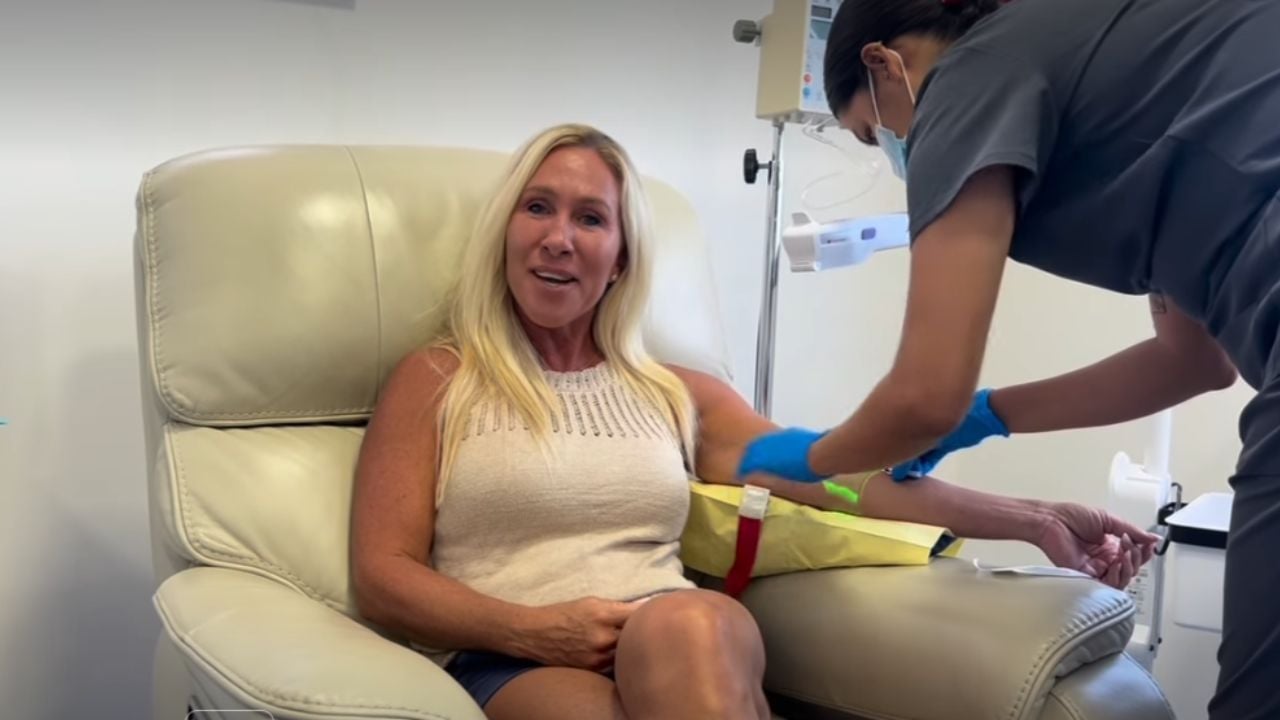
Marjorie Taylor Greene is turning her latest health choice into a public statement about preventive care, medical freedom, and treatments she believes should be easier to access in the United States.
The former U.S. representative told TMZ that she and her fiancé, Brian Glenn, traveled to Puerto Vallarta, Mexico, for stem cell IV treatments aimed at anti-aging and long-term wellness. TMZ reported that the couple underwent the treatments Saturday at Dream Body Clinic.
Greene Framed the Trip as Preventive Health
View this post on Instagram
Greene told TMZ she has always been proactive about health, pointing back to her time owning a CrossFit gym. She described stem cell therapy as another wellness tool and said she believes it can help with anti-aging and overall health.
She also said she does not carry health insurance, choosing instead to spend that money on preventive treatments and health-related therapies she personally trusts.
That detail makes the Mexico trip more than a celebrity-style wellness appointment. It fits Greene’s public message about distrust of mainstream systems, personal choice, and willingness to seek options outside the usual U.S. medical path.
The Procedure Is Not FDA-Approved for Anti-Aging
The most important caveat is medical, not political. TMZ noted that the stem cell procedure Greene received is not approved by the U.S. Food and Drug Administration, which is why she and Glenn traveled to Mexico.
The FDA says regenerative medicine products, including stem cell products and exosome products, are regulated by the agency. The FDA also warns that there is misleading information online about what these products can treat.
The agency says the only FDA-approved stem cell products in the United States consist of blood-forming stem cells derived from umbilical cord blood, and those products are approved for certain disorders affecting blood production, not for anti-aging or general wellness.
Greene Wants Wider Access in the U.S.
Greene told TMZ she strongly recommends stem cells and believes the therapy should be federally legalized in the United States. Her argument places the treatment inside a broader political conversation about medical freedom, regulation, and access to experimental or alternative therapies.
That framing will likely draw two different reactions. Supporters may see the trip as consistent with Greene’s anti-establishment approach to health care. Critics may focus on the FDA’s warnings about unapproved regenerative medicine products and the risks of treating wellness claims as proven medicine.