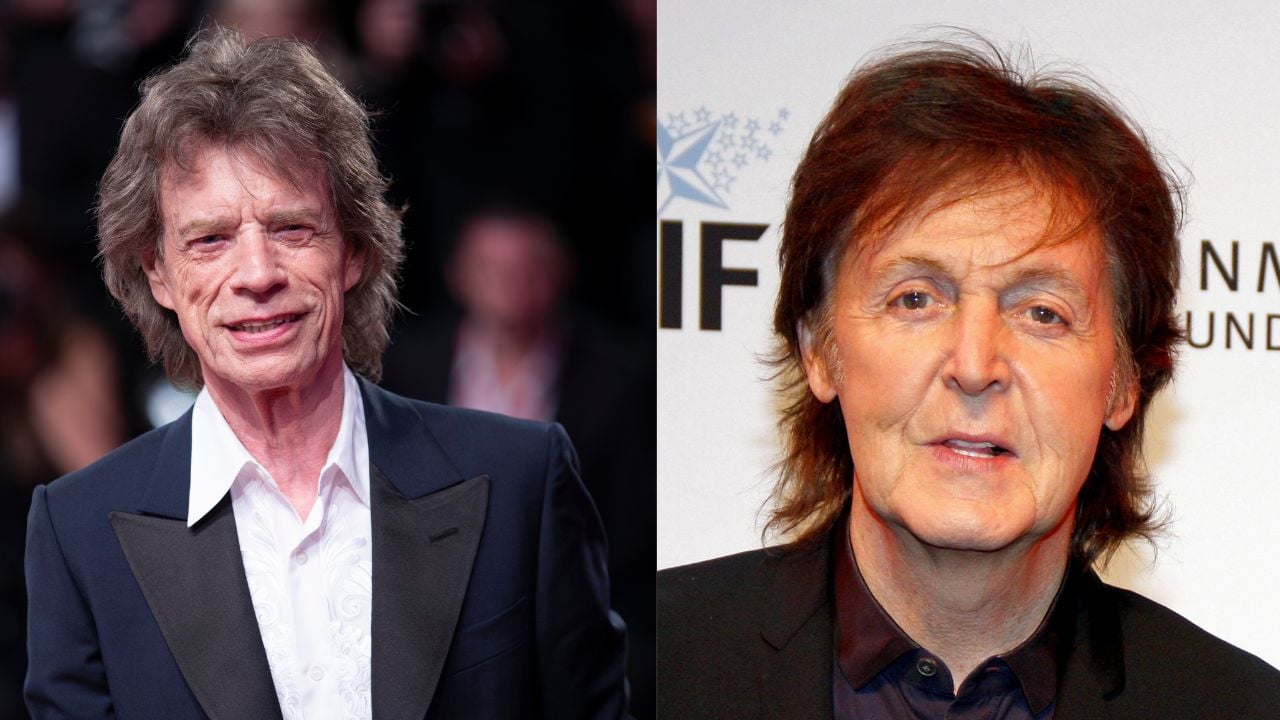
Mick Jagger had one practical question before Paul McCartney joined the Rolling Stones in the studio: could a Beatle give the band the raw, fast bass part the song needed?
McCartney plays bass on “Covered In You,” a track from the Rolling Stones’ upcoming album Foreign Tongues. The collaboration came after McCartney had already recorded bass for “Bite My Head Off,” the punk-edged song from the band’s 2023 album Hackney Diamonds.
Jagger told NME that working with McCartney was “very easy,” but he admitted he checked with producer Andrew Watt before the session because the part needed a specific kind of attack.
“He’s not a stranger, but he’s never played bass with us before,” Jagger said, according to Entertainment Weekly. “It’s a different thing, you know?”
Jagger Wanted a Fast, Overdriven Bass Line
Before McCartney recorded the part, Jagger said he asked Watt whether the former Beatle would be into the track’s rougher feel.
“I said to Andy, ‘Is he gonna be into this? Because it’s a punk tune and it’s going to go really fast and I want overdriven bass,’” Jagger recalled. “‘It’s gonna be simple, no mucking about.’”
Watt told him McCartney could handle it. Jagger said the answer came quickly once McCartney started playing.
“He did it,” Jagger said. “He did exactly what was needed in like 10 minutes.”
McCartney Said Playing With the Stones Was ‘Really Exciting’
McCartney had his own version of the session when he spoke with NME in May. PEOPLE reported that he described the experience as a rare chance to show up with his bass and let another band lead the room.
“It was really nice to just show up at a studio with your bass and just say, ‘Right, where do you want me?’” McCartney said. “You start playing, and they show you the song, and I start thinking, ‘I’m playing with the Stones!’”
McCartney said he was “well chuffed” by the moment and did not treat it casually. He also described hearing the Stones build the track in real time, with Keith Richards working out his lick, Ronnie Wood shaping his solo and Jagger finding the vocal.
“A great thing is all I had to do was play bass and not make mistakes, so it was good,” McCartney said.
The Session Carried Over From Hackney Diamonds
Jagger said “Covered In You” was recorded during the same session as “Bite My Head Off,” McCartney’s bass feature on Hackney Diamonds. That earlier track marked one of the rare modern studio crossovers between McCartney and the Stones.
The Beatles and the Rolling Stones have been connected for decades beyond the old rivalry narrative. John Lennon and McCartney wrote the Stones’ 1963 single “I Wanna Be Your Man,” while Jagger contributed backing vocals to the Beatles’ 1967 track “Baby, You’re a Rich Man,” according to PEOPLE.
Entertainment Weekly also noted that Jagger and McCartney had previously sung together on the Stones’ 1967 song “We Love You,” which also featured Lennon. Jagger told NME that “Covered In You” was different because McCartney had never played bass with the band before.
Foreign Tongues Brings More Guest Players Into the Stones’ Orbit
Foreign Tongues is the Rolling Stones’ 25th album and is set for release Friday, July 10. Entertainment Weekly reported that the album includes guest contributions from Robert Smith of the Cure, Red Hot Chili Peppers drummer Chad Smith, Steve Winwood and Bruno Mars, who appears on cowbell.
The new album follows Hackney Diamonds, the Stones’ first album of original material in nearly two decades. Andrew Watt returned as producer after working with the band on that record.
Jagger also addressed the long-running Beatles-versus-Stones rivalry in a recent Sunday Sitdown interview with Willie Geist. “I think there was an element of truth in it,” he said, according to Entertainment Weekly. “But I think there was an element of PR in it, too.”
“It was also London [versus] Liverpool, so it’s a bit like L.A. [and] New York,” Jagger added. “Obviously, that was a good talking point for press to get on.”