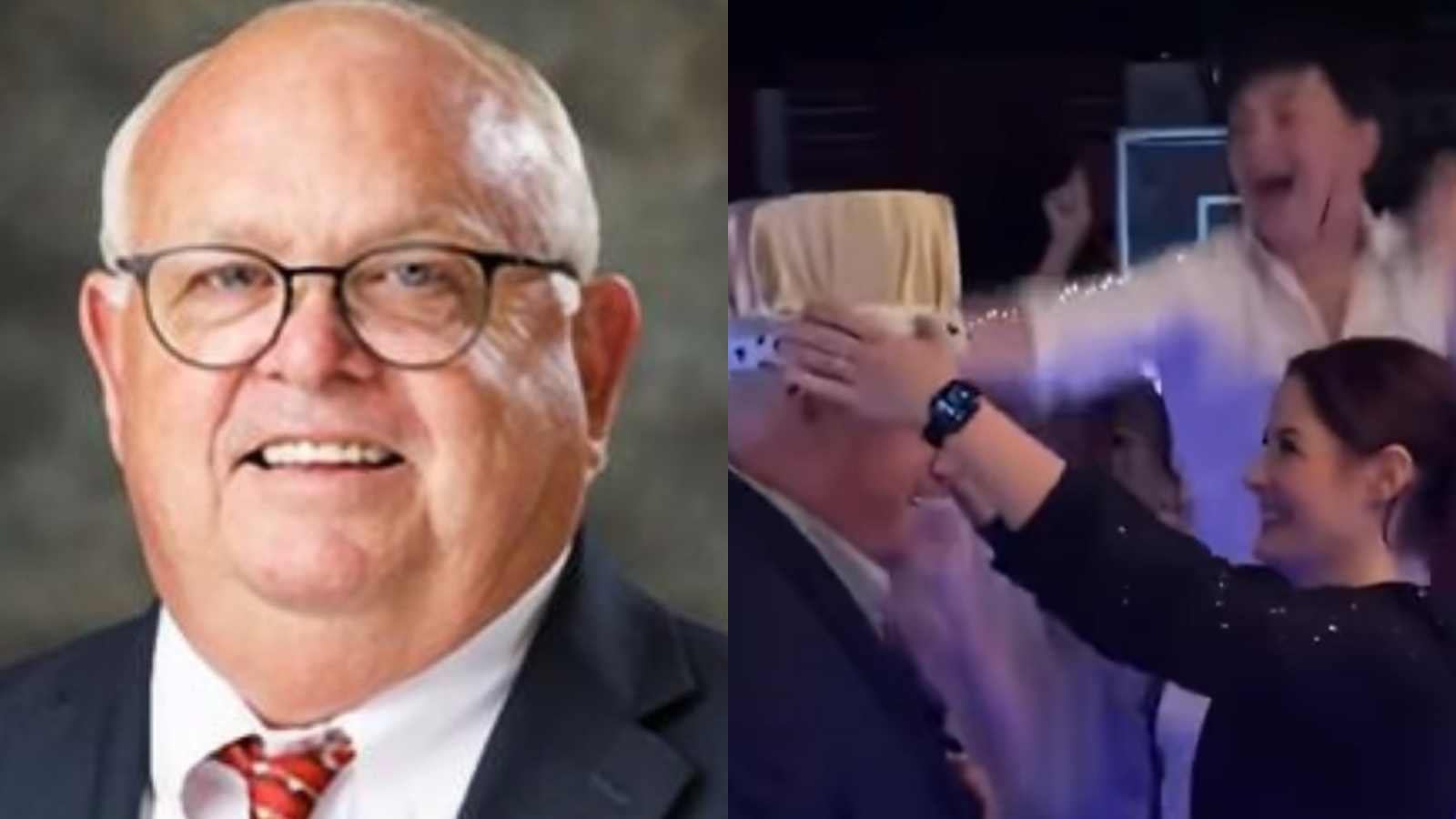
The atmosphere inside the Pauls Valley High School gymnasium was thick with an emotion that transcended the typical teenage exuberance of a Friday night prom.
It was a cocktail of relief, profound gratitude, and an undeniable undercurrent of shared trauma that had been processed in real-time by a community still grappling with the events of just ten days prior.
When the DJ announced the winner of the prom king crown, the roar that erupted from the student body wasn’t just the standard cheering of peers; it was a guttural, unified release of tension that had been held since April 7.
Principal Kirk Moore, the man who had physically wrestled an armed former student to the ground and taken a bullet in the leg to ensure his students could eventually make it to this very dance, walked forward to accept the honor.
As Nickelback’s “Hero” blared through the sound system, the lyrics, about not standing by and waiting for a savior, became more than just an early 2000s hit; they were the anthem of a school that had looked into the abyss and, thanks to one man’s immediate, adrenaline-pumped reaction, walked away from it.
This wasn’t just a coronation; it was a communal reclamation of safety, a way for students to process the unimaginable through the lens of a classic, triumphant narrative.
View this post on Instagram
The contrast of formal wear against the memory of tactical maneuvers and gunfire was stark, serving as a jarring reminder of the bizarre, modern reality that high school administrators are now forced to navigate as part of their job descriptions.
The Morning That Changed Everything
The narrative that led to this unexpected crowning began on the afternoon of April 7, when the familiar safety of the school lobby was shattered by a former student, Victor Lee Hawkins. According to the official police documentation from the Oklahoma State Bureau of Investigation, the gravity of the situation was absolute.
Hawkins, described in records as having a disturbing fascination with the 1999 Columbine tragedy, entered the facility armed with two semi-automatic handguns. The surveillance footage, which has since been shared and analyzed by news outlets across the globe, captured the exact moment the peace of the school day evaporated.
Moore, who was working in his office, didn’t hesitate. When the intruder began his assault, pointing a weapon at a student and firing, only for it to malfunction, Moore emerged from his office.
The footage showed him charging the gunman, tackling him onto a bench, and enduring a gunshot wound to the leg while continuing the struggle until another staff member intervened to disarm the attacker.
View this post on Instagram
For many in the community, this wasn’t a choice; it was a testament to the specific character of the man they had known for years as an educator and mentor. The fact that the students chose to honor him this way at prom speaks volumes about the bond between the administration and the student body in Pauls Valley.
They weren’t just honoring a “hero” in the abstract; they were honoring the man who stood between them and a potential tragedy, the man who made it possible for them to even have a prom in the first place.
This act of naming him king serves as their way of reclaiming ownership of the narrative, moving the story from one of terror and victimization to one of resilience and communal protection.
The Uncomfortable Reality of Hero Worship
While the visual of a principal being crowned prom king is undeniably cinematic and heartwarming, it invites a deeper, perhaps more uncomfortable conversation about the current landscape of education in the United States.
We have become incredibly adept at constructing “hero” narratives around school shootings, often focusing on the individual bravery of staff members who are forced to become combatants to survive their workdays.
When we celebrate these instances of “heroism,” are we inadvertently shifting the burden of school safety entirely onto the shoulders of educators? There is a subtle, pervasive danger in elevating these events to legendary status, as it risks normalizing the expectation that a principal’s job description should include physical intervention against armed intruders.
By framing this as a triumphant story of a principal saving the day, we risk sanitizing the reality of the situation: that a school environment became a theater of war, and that a man had to suffer a bullet wound to prevent a massacre.
The celebratory tone at the prom, while completely understandable given the proximity of the trauma, obscures a larger, systemic failure. We are effectively applauding the “fireman” while ignoring the fact that the school was burning in the first place.
View this post on Instagram
Is it possible that by focusing so intently on the bravery of the individual, we are distracting ourselves from the uncomfortable questions about why an armed former student was able to access the lobby in the first place?
It is a complex dichotomy to navigate; we want to celebrate the man who kept these children alive, but we must also be careful that such celebrations don’t become a distraction from the broader, more urgent need for structural, non-combatant safety solutions in our educational institutions.
Finding Balance in the Aftermath
Ultimately, the crowning of Principal Kirk Moore is a snapshot of a community attempting to heal in the only way they know how: by leaning into the positive.
For the students of Pauls Valley, this wasn’t an academic debate about school safety policy; it was a personal acknowledgment of a man they trust and care for, a man who, quite literally, took a hit for them.
View this post on Instagram
The emotional processing of a school shooting is not linear, and for teenagers, it often manifests in big, symbolic gestures. Creating a “prom king” moment is a way to freeze time, to acknowledge the horror of what happened while asserting that life must go on, and that the school belongs to them and their teachers, not the attacker.
As the community moves forward, the challenge will be holding onto that spirit of resilience without letting the “hero” narrative completely overshadow the need for rigorous, ongoing discussions about security measures.
It is entirely possible to applaud Moore’s courage and, simultaneously, recognize that the environment which required that courage is fundamentally broken.
The students of Pauls Valley High School have made their choice… they have chosen to center their narrative on the person who protected their future, rather than the person who tried to end it.
That is a profound act of collective agency. As the music fades and the prom decor is packed away, the real work begins, the work of processing, of healing, and of ensuring that no other principal or student ever has to rely on such heroism again.
For now, let us leave the crown where it rests: on the head of a man who proved, in the most visceral way imaginable, exactly what he was willing to sacrifice for the students he serves every single day.