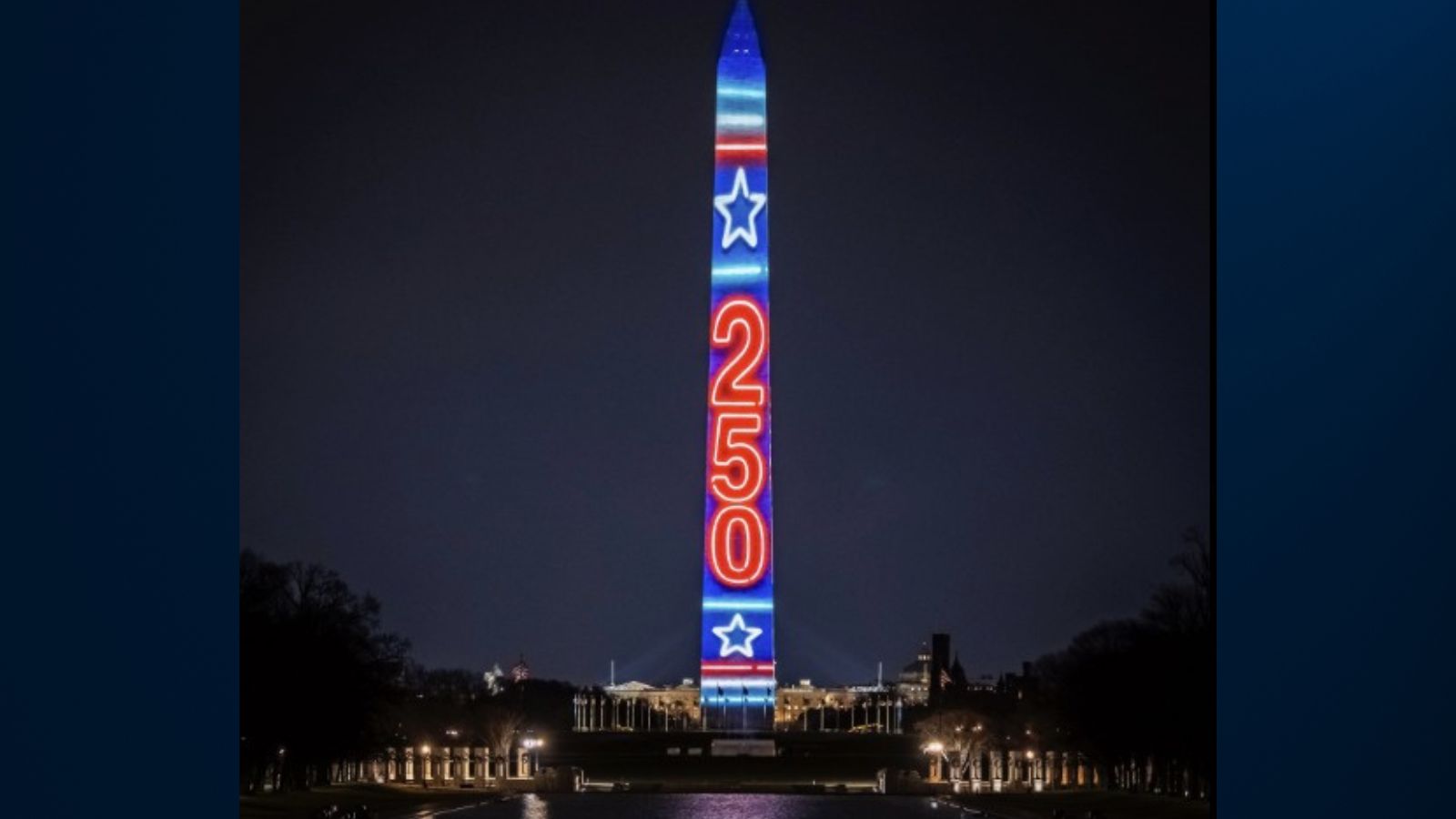
The Washington Monument has always been the quiet constant of the National Mall. It shows up in the background of history books, protests, celebrations, and tourist photos without ever changing.
That is why the internet collectively stopped scrolling when images surfaced showing the monument covered in massive projected visuals tied to America’s upcoming 250th anniversary.
For a country that rarely touches its most sacred landmarks, this felt big. And for a culture that reacts instantly online, it felt impossible to ignore.
A Familiar Landmark Suddenly Feels Unfamiliar
The projection turned the towering white obelisk into something completely different. Instead of stone and stillness, it became light, movement, and message.
The visuals were bold and unmistakably modern, signaling that the semiquincentennial celebrations are not planning to play it safe.
That shift alone was enough to spark intense reactions. Many people praised the display for making history feel alive and relevant. Others were visibly uncomfortable seeing such a revered structure altered, even temporarily.
What made the reaction stronger was its unexpectedness. The Washington Monument is not usually a place for experimentation. It represents permanence. Seeing it transformed challenged the assumption that national symbols must always look the same to be respected.
Online comments reflected that emotional whiplash. Some called it inspiring and powerful. Others said it crossed a line. Many people admitted they did not know how to feel, which only fueled further discussion.
Why the 250th Anniversary Hits Different
America’s 250th birthday is not arriving in a calm cultural moment. The country is still wrestling with how it talks about its past, who gets included in its story, and what patriotism looks like now. That context matters when you project anything onto a monument built to honor the nation’s first president.
This is not just an anniversary. It is a checkpoint. A chance to look backward and forward at the same time. The projection feels like an early signal that the celebration will try to balance tradition with reinvention.
Supporters see that as necessary. They argue that younger generations connect more with visuals, storytelling, and shared digital moments than with static ceremonies. In that sense, lighting up the monument is less about spectacle and more about meeting people where they are.
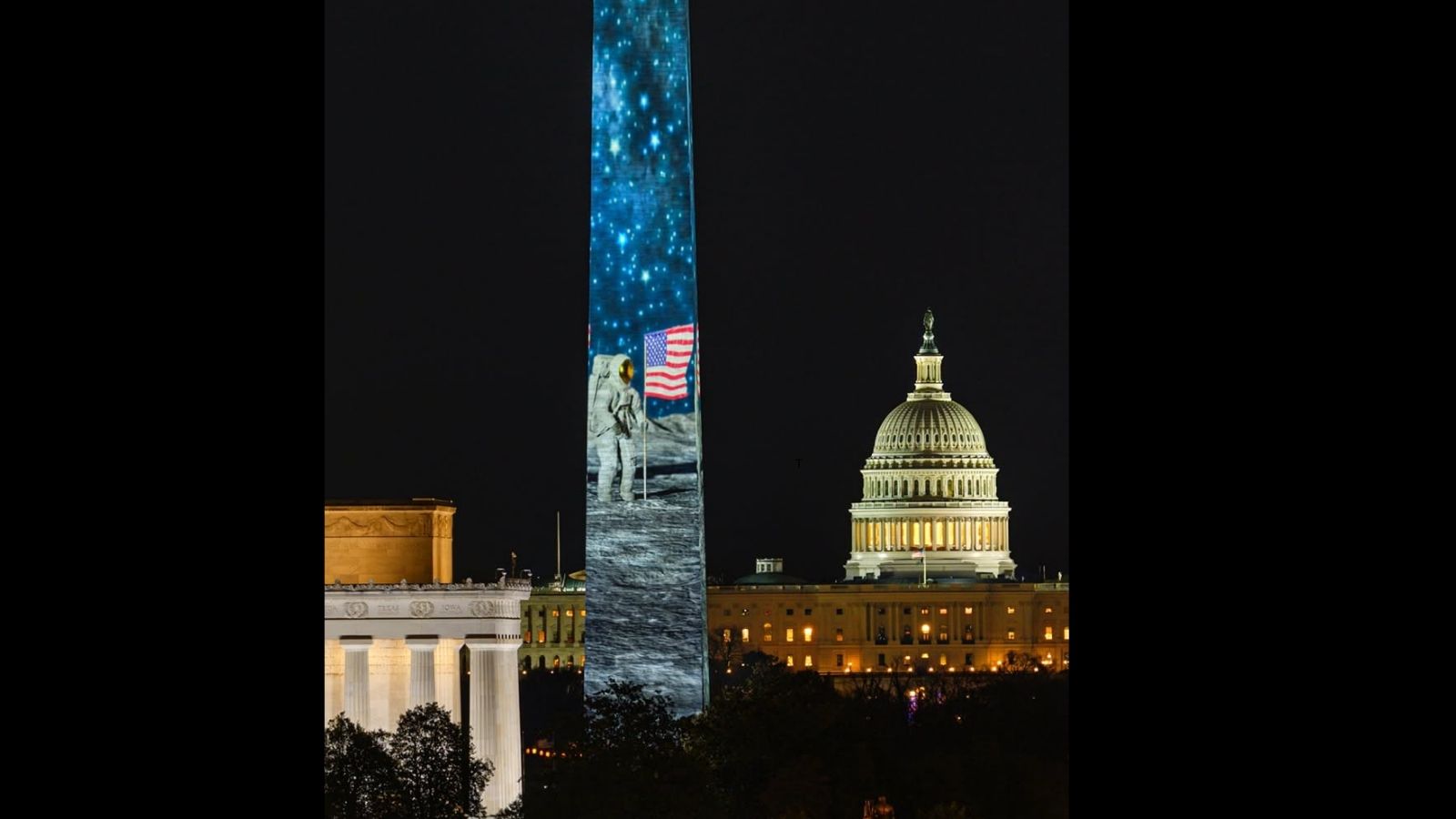
Critics see something else. To them, the monument should remain untouched, a neutral presence that does not bend to trends or technology. They worry that using it as a canvas risks turning history into content.
That divide is exactly why this moment matters. It shows how even the most established symbols are now part of larger cultural debates.
The Internet Does What It Always Does
As soon as photos and videos spread, reactions multiplied across platforms. TikTok users analyzed the symbolism and speculated about what future projections might look like.
Twitter threads argued about whether the display was respectful or reckless. Instagram comment sections turned into philosophical debates about national identity.
Some reactions were emotional. People talked about feeling proud, hopeful, or unexpectedly moved. Others expressed discomfort, saying the monument no longer felt like the steady presence they grew up with.
There was also humor, because there always is. Jokes comparing the monument to a sci-fi prop or a giant screensaver spread quickly, helping the moment go viral online.
What stood out most was how invested people became. This was not a passive scroll moment. It invited opinions. It demanded reactions. And it pulled a historical structure into the fast-moving world of digital culture without asking permission.
What This Moment Really Reveals
The uproar over the Washington Monument’s new look says less about the projection itself and more about how Americans relate to their history right now. There is a growing expectation that the past should speak to the present, not just sit quietly behind velvet ropes.
As the 250th anniversary approaches, this will not be the last bold choice. There will likely be more reinterpretations, more debates, and more moments that challenge how tradition and modern expression coexist.
In that sense, the projection already succeeded. It made people stop, look, and argue. It reminded the public that history is not just something to remember. It is something we actively shape through the choices we make today.
For a monument that has stood largely unchanged for nearly two centuries, provoking this much conversation in one night is remarkable. Love it or hate it, the Washington Monument just proved it can still surprise the nation. And that might be exactly the point.
What do you think about the monument’s new design?