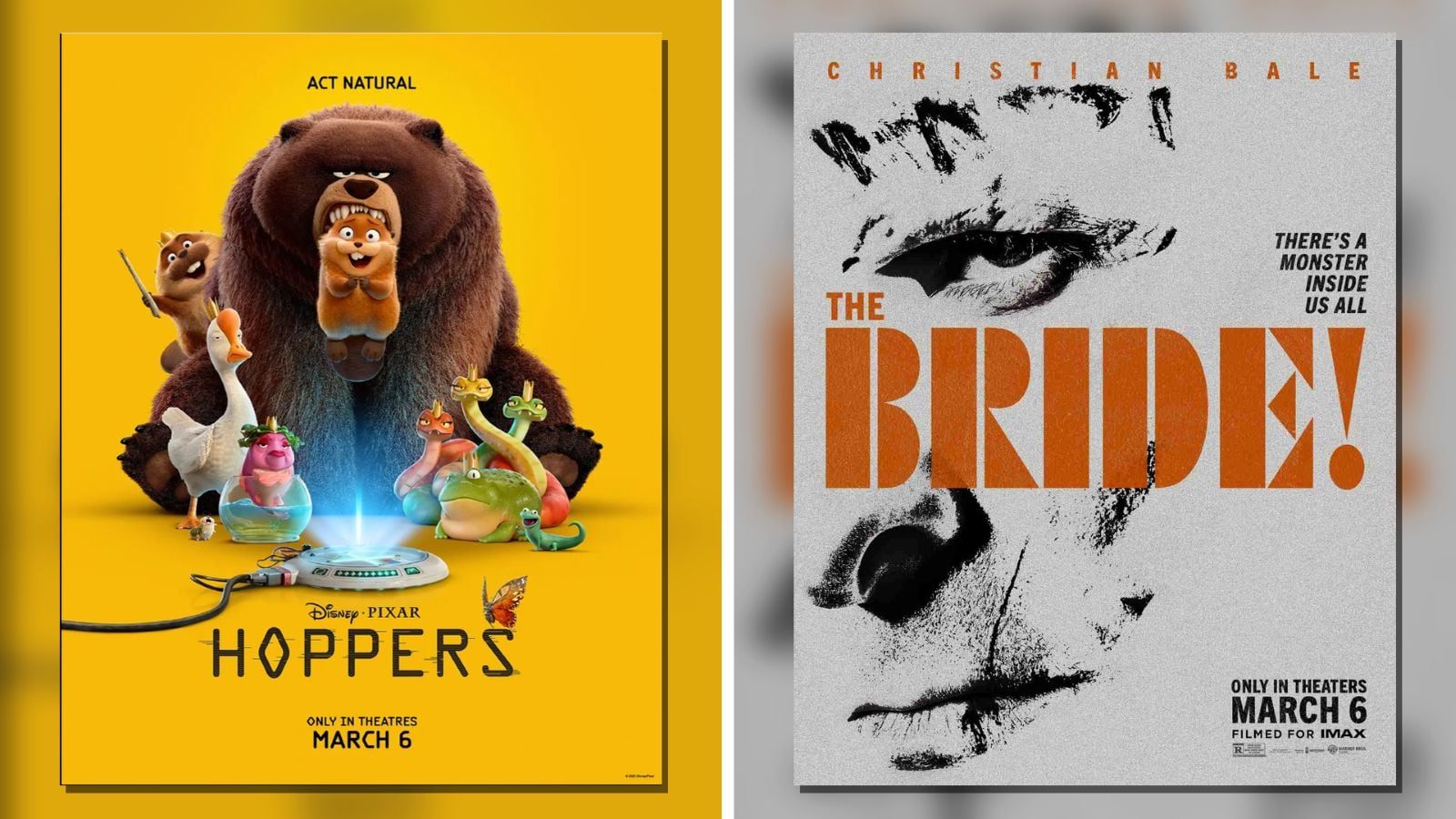
Pixar just pulled off the thing Hollywood keeps insisting is dead. An original movie that opens like a franchise. In the same weekend, Warner Bros. tried to revive a prestige monster and watched it open like a warning label.
Disney and Pixar’s Hoppers debuted at No. 1 with an estimated $46 million domestically and $42 million overseas for an $88 million global start, the biggest launch for an original animated film since Coco in 2017. The film follows a 19-year-old environmentalist whose consciousness transfers into a robotic beaver, and it arrived with every crowd-pleasing signal intact: an A CinemaScore, 94 percent on Rotten Tomatoes, and spring break not yet started.
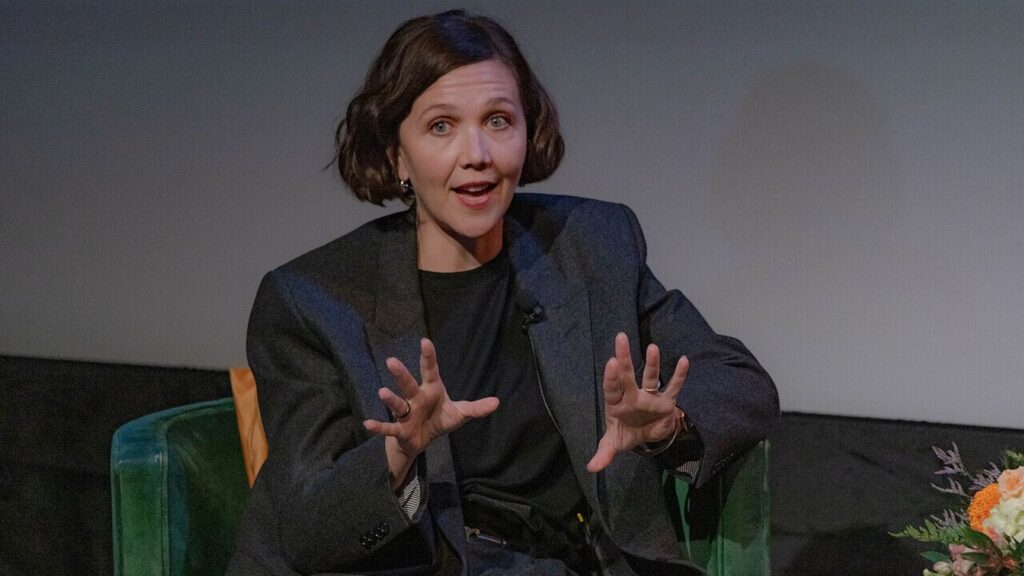
Meanwhile, The Bride! barely got off the slab. Maggie Gyllenhaal’s R-rated reimagining of the Bride of Frankenstein opened to an estimated $7.3 million from 3,304 domestic theaters and $6.3 million internationally for a $13.6 million global debut. Against its reported roughly $80 million production budget, before marketing, audiences handed it a C+ CinemaScore, and only 43 percent said they would definitely recommend it. Warner Bros. had projected $16 million to $18 million domestically. They missed by more than half.
This is not a simple “good movie beats bad movie” weekend. The two films are barely competing for the same audience. What makes the contrast so loud is the message it sends to every executive currently arguing in a boardroom about what people will actually leave the house for.
What Hoppers Did Right
Hoppers is the kind of original that does not ask viewers to prove anything. The premise fits in one sentence. The marketing works in one image. It is also arriving after a rough run for Pixar originals: last year’s Elio was the studio’s worst opening ever, according to the Associated Press, and Elemental only found its audience later.
Hoppers opening with real momentum is Pixar’s reminder that “original” is not the problem. Confusing is.
What The Bride! Got Wrong
The Bride! is the opposite lesson, at least on paper. Famous myth. Prestige talent. The kind of bold swing studios love to publicly praise while privately fearing. But it came to theaters with baggage. The Associated Press reported a bumpy road to release, including edits after reportedly poor test screenings and a shift from its original September date, before a mixed-to-negative response at wide release.
“An art house dare in multiplex clothing” is how one framework puts it. If you cannot explain what The Bride! is in five seconds, you do not have a mass market movie. You have a niche movie with a wide release budget.
The Complication Nobody Is Mentioning
Before anyone declares this a referendum on female directors or prestige ambition, consider what else is in this weekend’s top five.
Warner Bros.’ own Wuthering Heights, Emerald Fennell’s R-rated, female-directed literary adaptation starring Margot Robbie and Jacob Elordi, has crossed $213 million globally in four weekends against an $80 million budget. It is a certified hit. It is also exactly the kind of film that the “audiences are fleeing prestige” narrative would predict should fail.
This is not “Warner is doomed.” It is “Warner just found the line where ambition stops translating into tickets.” The difference between Wuthering Heights and The Bride! is not the gender of their directors or the seriousness of their material. It may simply be that one of them connected and the other didn’t.
The Two Arguments This Weekend Generates
Now watch the comment section split.
Camp One will say this is a referendum on tone. People want entertainment that feels like a clear night out. Hoppers is a communal, feel-good family trip. The Bride! is a dare. The $46 million versus $7.3 million gap becomes a morality play about joy winning.
Camp Two will say it is less about joy and more about clarity. Genre-bending is catnip to filmmakers and a question mark to casual buyers. In that reading, the flop is not an indictment of risk. It is an indictment of pretending a niche swing can be sold like a four-quadrant event.
Both camps are partly right. Neither is the whole story.
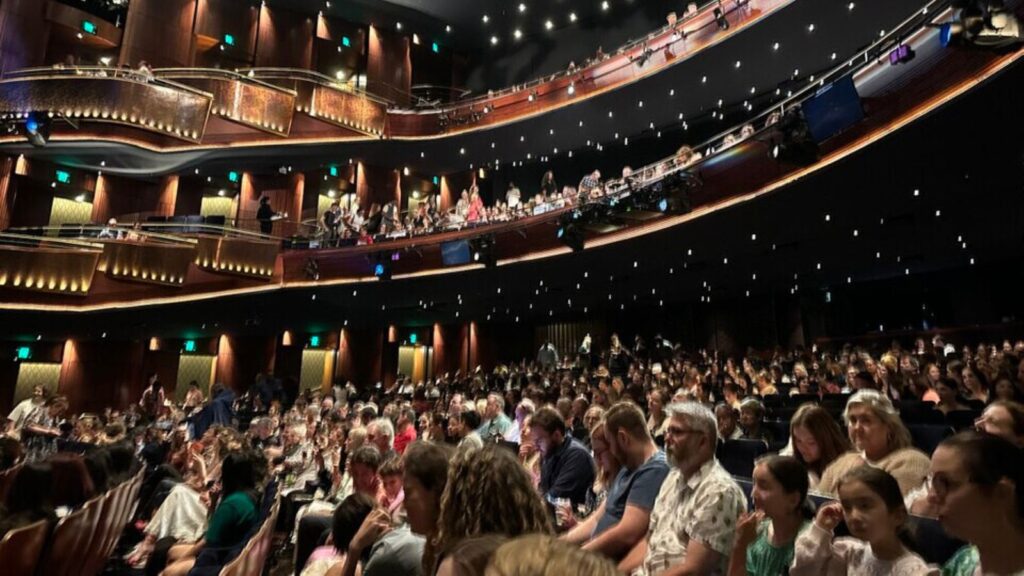
What the weekend actually shows is simpler and harder to spin: people did go to the movies this weekend. They just overwhelmingly chose the film with the clearer pitch, stronger exit scores, and broader lane. Most of them spent that money on a robotic beaver.
If you were running a studio today, this weekend is a trap. You can look at Hoppers and greenlight ten expensive originals with muddy pitches. Or you can look at The Bride! and decide risk is poison, then keep feeding audiences sequels until they stop believing theaters are for anything but brands.
Neither lesson is the right one. But Hollywood will pick one of them anyway.
More Hoppers, or fewer Brides, and does it matter which one they choose?