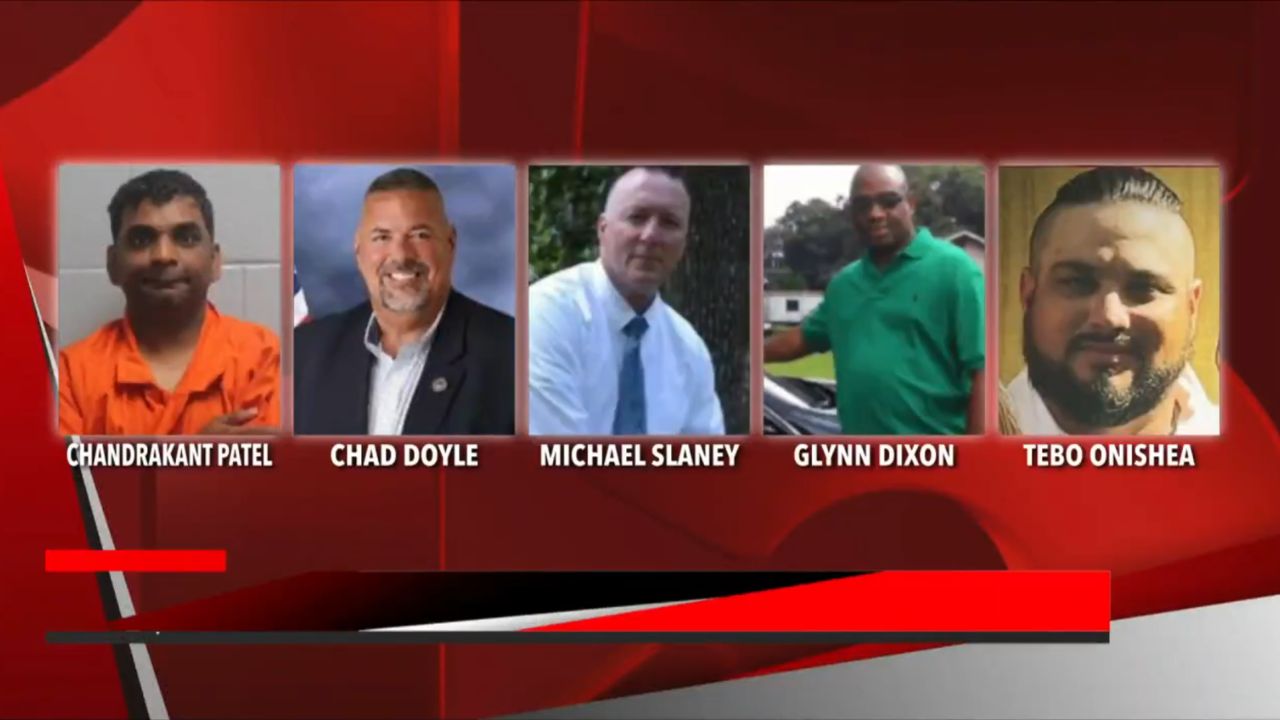
A former Louisiana police chief has become the last of five defendants to plead guilty in a decade-long immigration fraud scheme built around fake violent-crime reports.
Police1, republishing reporting from The Advocate, reported that former Forest Hill Police Chief Glynn Dixon pleaded guilty Tuesday in federal court. The U.S. Attorney’s Office for the Western District of Louisiana said Dixon’s plea followed guilty pleas from his four co-conspirators in recent weeks.
The defendants were identified by DOJ as Dixon, 62, of Forest Hill; Chandrakant Patel, 40, of Oakdale; Chad Doyle, 55, of Oakdale; Michael Slaney, 64, of Oakdale; and Tebo Onishea, 38, of Glenmora.
At the time of the offenses, DOJ said Doyle was Oakdale chief of police, Slaney was Oakdale marshal for Ward 5, Dixon was Forest Hill chief of police, and Onishea was Glenmora chief of police. Patel was a business owner.
Prosecutors Say Fake Armed-Robbery Reports Were Used For U-Visa Applications
According to DOJ, the scheme involved U nonimmigrant status, commonly called a U visa. Congress created the program to protect certain victims of qualifying crimes who help law enforcement investigate or prosecute criminal activity.
Prosecutors said the defendants fabricated police reports that falsely documented armed robberies that never happened. Those fictitious reports were then provided to noncitizens who used them to support fraudulent U-visa applications.
The scheme ran from December 2015 through July 2025, according to court documents cited by DOJ. The false reports were created in several central Louisiana parishes and listed people as victims of purported armed robberies.
USCIS says U nonimmigrant status is set aside for victims of certain crimes who suffered mental or physical abuse and are helpful to law enforcement or government officials in investigating or prosecuting criminal activity.
Businessman Paid Law Enforcement Officials For Reports, DOJ Says
DOJ said foreign nationals pursuing U visas paid Patel thousands of dollars to be named as “victims” in the fabricated incidents.
Patel then secured false police reports by coordinating with Doyle, Slaney, Dixon, and Onishea, each of whom used a law-enforcement position to certify fraudulent reports, according to prosecutors.
Police1 reported that Dixon admitted in court filings to generating at least 69 doctored reports for Patel between August 2023 and July 2025.
Police1 also reported that immigrants paid Patel $20,000 to obtain a police report and that Patel paid the lawmen about $5,000 for each bogus report they generated.
DOJ Says Falsified Documents Were Sent Through The Mail
The false paperwork allegedly did not stop with local police reports. DOJ said the defendants submitted falsified documents through the U.S. Postal Service and other carriers, which produced additional mail fraud charges.
The original federal indictment, announced in July 2025, charged Patel, Doyle, Slaney, Dixon, and Onishea with conspiracy and fraud offenses tied to the U-visa paperwork. It also included money-laundering charges and forfeiture allegations involving bank accounts, real property, and vehicles.
In the June 30 update, DOJ said Dixon, Doyle, Onishea, and Slaney each face up to five years in prison. Patel faces up to 20 years in federal prison.
Police1 reported that Patel admitted in his plea agreement to using proceeds from the scheme to buy gold bars, a Swiss Ingot watch, rings, several central Louisiana properties, and other items.
Immigration Officials Saw A Pattern
Police1 reported that agents became suspicious after U.S. Citizenship and Immigration Services flagged a large increase in U-visa applications supported by police reports from a sparsely populated rural area.
On paper, the false reports made it appear that there had been a wave of violent crime across a usually quiet part of central Louisiana. Prosecutors said the armed robberies never happened.
KALB previously reported that about 300 direct petitioners received U visas as part of the scheme and that applications for more than 650 U visas were filed, citing Special Agent Austin Witmer with Homeland Security Investigations.
The case was investigated by Homeland Security Investigations, the FBI, IRS Criminal Investigation, and USCIS Fraud Detection and National Security Division, according to DOJ.
Fraudulent U-Visa Schemes Can Hurt Real Crime Victims
The U-visa program is meant for victims of qualifying crimes who assist law enforcement. USCIS says an applicant must show that they were the victim of qualifying criminal activity, suffered substantial physical or mental abuse, have information about the crime, and were helpful, are helpful, or are likely to be helpful to law enforcement.
Fake reports can damage trust in a program built for people who actually suffered abuse, violence, trafficking, extortion, or other qualifying crimes. Real victims may face more scrutiny when agencies and investigators are forced to sort legitimate reports from fabricated paperwork.
A real immigration case should not require paying a business owner, police officer, marshal, or fixer for a fake report. Anyone told to buy a police report, invent a robbery, or sign paperwork describing a crime that did not happen should stop before submitting anything to USCIS.
People seeking immigration help should use a licensed attorney, an accredited representative, or official USCIS resources. Anyone who believes they were pressured into paying for fake law-enforcement paperwork should preserve receipts, messages, names, phone numbers, copies of forms, and police-report documents, then speak with a qualified immigration attorney before contacting federal or local investigators.