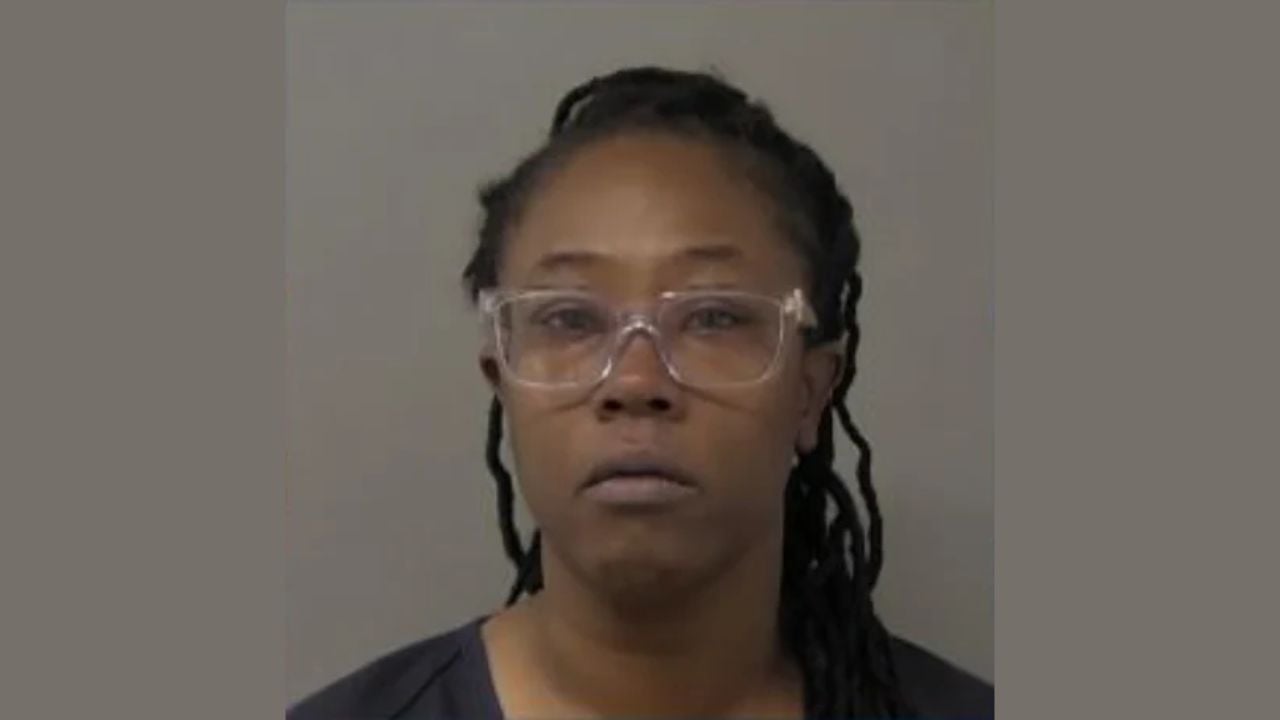
An Illinois woman has been arrested after police investigated the movement of $40,000 from a North Carolina resident’s bank account. Investigators say the money went into an account belonging to her before being converted into cashier’s checks.
Adriana Meshell Wallace, 37, of Decatur, Illinois, faces one felony count of attempted obtaining property by false pretenses. Sandhills Sentinel reported the case November 13, citing the Pinehurst Police Department.
Authorities located and arrested Wallace in Decatur before extraditing her to North Carolina. The county’s official booking record lists her admission to the Moore County Detention Facility on November 7, 2026.
Warrant Alleges a Transfer Without the Account Holders’ Consent
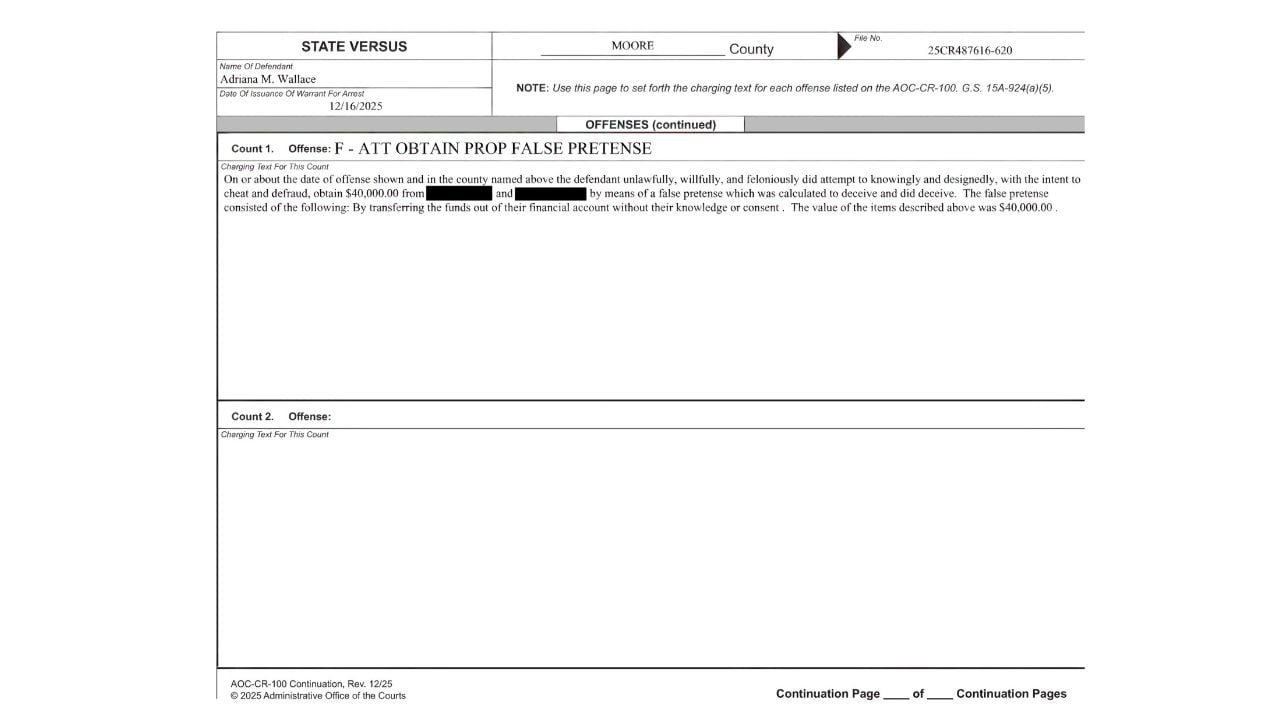
A two-page excerpt of the arrest warrant accuses Wallace of attempting to obtain $40,000 by transferring funds out of the account holders’ financial account without their knowledge or consent. The warrant lists May 28, 2025, as the alleged offense date and was issued December 16 that year.
Court Records Identify Appointed Counsel and November 25 Appearance
The complete three-page Moore District Court case summary lists one felony charge in case 25CR487616-620. It records a November 9 first appearance and a $5,500 secured bond set November 7.
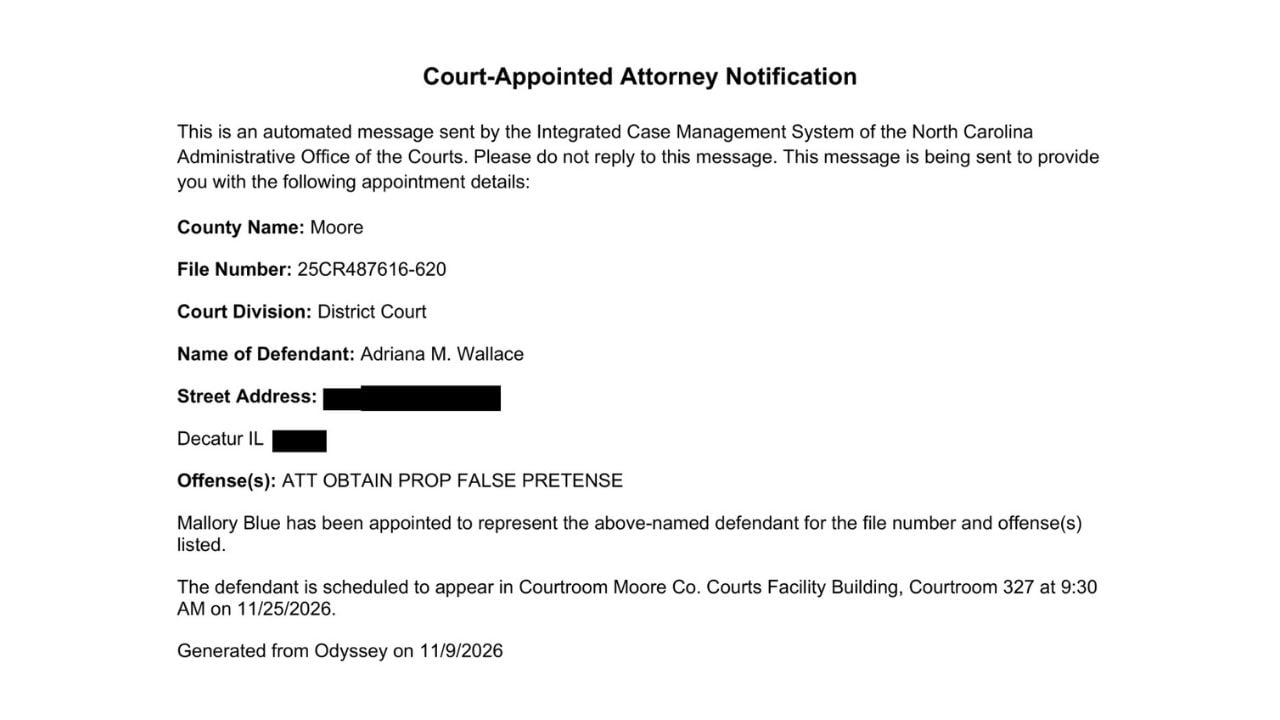
A one-page court-appointed attorney notice, generated November 9, identifies Mallory Blue as Wallace’s lawyer. It schedules her November 25 appearance for 9:30 a.m. in Courtroom 327 of the Moore County Courts Facility Building. Wallace is presumed innocent unless proven guilty.
Report Unauthorized Transfers and Preserve the Transaction Records
The Consumer Financial Protection Bureau advises contacting your bank or credit union immediately about transactions you did not authorize. Identify the date and amount of each disputed transfer, request an investigation and preserve statements, transaction confirmations and communications with the institution.
For unauthorized electronic transfers covered by federal error-resolution rules, banks generally have ten business days to investigate initially. Follow up in writing if the bank requests it, and keep a copy; failing to provide requested written confirmation can affect temporary-credit protections. If the bank rejects the dispute, request the information it used to reach its decision.