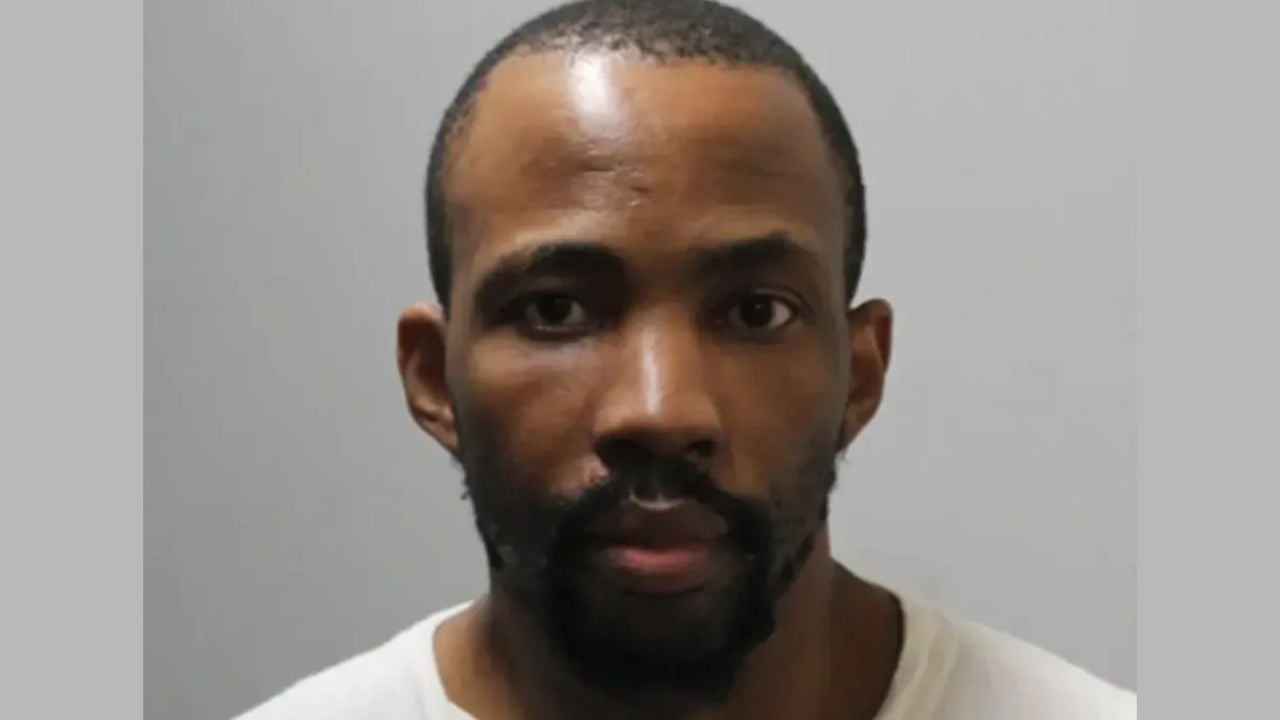
A Connecticut man wired $125,748 for supposed stock investments, then was told he would have to pay more money to withdraw his funds. The demand included a 10% commission and a separate 10% tax, according to an arrest warrant described in CT Insider’s November 13 report.
The Ledyard resident, now 70, refused to send additional money. He later recovered $70,000 after police contacted one of the businesses that received his transfers, leaving $55,748 unrecovered.
Ikeoluwa Famubode, 40, of Pikesville, Maryland, was charged November 5, 2026, with first-degree larceny and two counts of second-degree larceny. He had been taken into custody in Maryland and extradited to Connecticut, according to Ledyard police’s announcement reported November 10.
The investigation followed money sent to two Maryland businesses with different lines of work. Police linked Famubode to Zanzibay LLC, a wholesale consumer goods company listed as the recipient of the unrecovered funds.
Withdrawal Request Brought a $200,000 Condition
The resident met someone using the name “Manny Backus” on Discord in 2024. The contact promised to make him money through stock investments and directed him to send funds to designated bank accounts, according to the warrant reporting.
After making transfers in May and June, the man asked in July to withdraw some of his money. He was told he could not take it back until the investment account reached $200,000.
When he demanded his money back, the contact instructed him to wire the commission and tax to a Baltimore bank first. The man declined and reported the situation to police.
One Business Returned $70,000 After Police Contacted It
Detectives traced $55,748 in May and June transfers to Zanzibay’s bank account. Maryland business records identified Famubode as the company’s resident agent, according to the warrant account.
A further $70,000 went to Ozz Guys LLC later in June. Police described that company as a uniform sales and cleaning business and questioned one of its principals about the payment.
The representative returned the $70,000, denied wrongdoing and said he did not know how the money had entered the company’s account. Police then tried repeatedly to contact Famubode about the remaining $55,748 but could not reach him.
Court Lists Three Felonies and a November 23 Arraignment
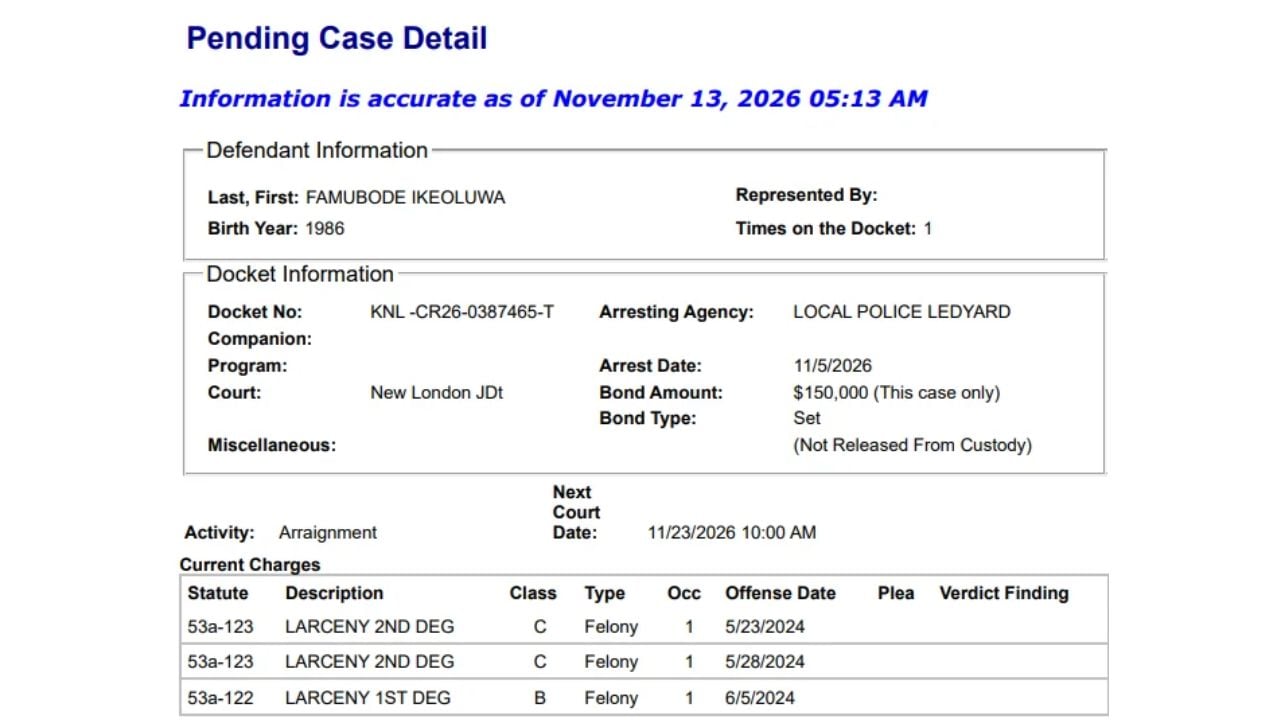
Ledyard police began investigating August 3, 2024. Officers in Pikesville tried unsuccessfully to locate Famubode at his listed address in 2025, according to the warrant reporting.
The one-page Connecticut court summary for case KNL-CR26-0387465-T lists two second-degree larceny counts with alleged offense dates of May 23 and May 28, 2024. The first-degree larceny count carries a June 5, 2024 offense date; all three are listed as felonies.
The record, accurate as of November 13, lists Famubode as not released from custody, with bond set at $150,000. It schedules an arraignment for November 23 at 10 a.m. in New London Superior Court. He is presumed innocent unless proven guilty.
Do Not Pay Extra Fees to Release Supposed Investment Funds
The SEC’s advance-fee fraud guidance warns that scammers may demand taxes, commissions or other payments when someone tries to withdraw an investment. Sending more money to release the funds can compound the loss. Stop sending payments if an online investment contact introduces such demands.
If you have already transferred money, the Federal Trade Commission advises contacting your bank immediately and asking whether the payment can be reversed. Preserve wire receipts, receiving-account details, usernames and messages, including any withdrawal demands, and report suspected online investment fraud to local police and the FBI’s Internet Crime Complaint Center.