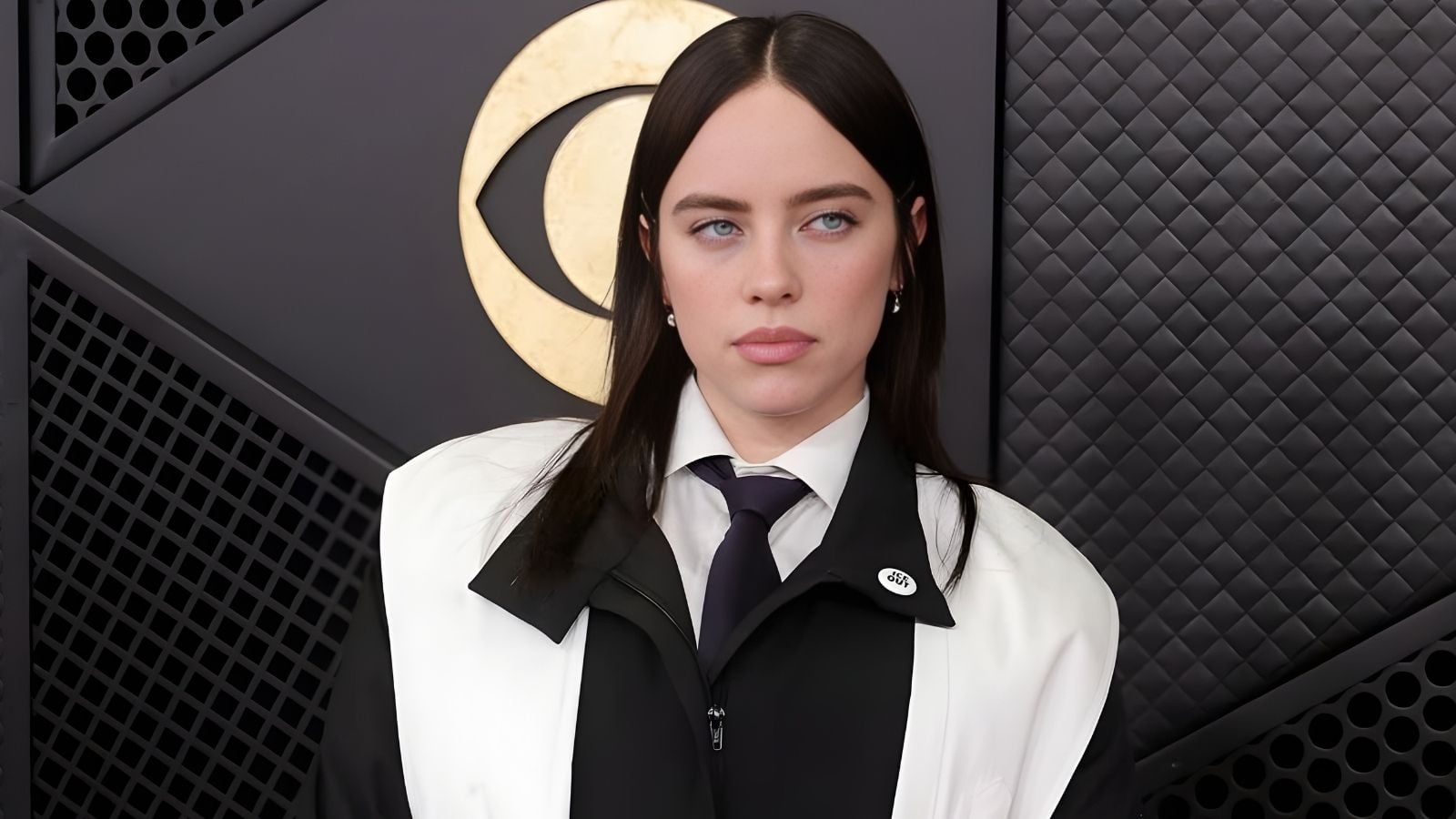
Billie Eilish is no stranger to controversy, but this time the conversation has taken a sharp turn from music charts to property lines. A viral post circulating on X has reignited debate around the singer’s recent political comments, accusing her of hypocrisy after a reporter claimed to visit her Los Angeles home while calling out its location on what he described as “stolen land.”
The post, which quickly gained traction, shows the GB News reporter Ben Leo standing outside a gated property and referencing Eilish’s past remarks about land, colonization, and immigration.
His message was blunt. “I thought Billie didn’t believe in borders… but according to the driveway, Billie DOES believe in borders!” followed by “Let us in, Billie!” as he gestured toward the gates and entryway outside her home. Within hours, the clip spread across social media, pulling Eilish into another culture war moment that blends celebrity, politics, and internet outrage.
The Comment That Sparked It All

The controversy traces back to remarks Eilish made during the recent Grammy Awards ceremony. Wearing a pin that said “ICE OUT,” Eilish urged people to speak out against immigration enforcement and declared that “no one is illegal on stolen land.” The statement reflects a viewpoint shared by many activists who argue that modern nations like the United States were built through the displacement of Indigenous peoples.
Supporters praised Eilish for using her platform to speak up. Critics, however, zeroed in on what they saw as a contradiction. The reporter behind the viral post decided to put that contradiction front and center. In his message, he pointed out that Eilish owns property in California, a state whose land history includes colonization and forced displacement of Native tribes.
🚨 LMFAO 😂 A reporter just rolled up to Billie Eilish’s LA mansion, the one SHE says is built on “stolen land” and it’s pure gold!
Massive gates, security cameras, tall fences, thick hedges, all keeping people OUT.
Reporter: “I thought Billie didn’t believe in borders… but… pic.twitter.com/nRxTwXkfUa
— Gunther Eagleman™ (@GuntherEagleman) February 4, 2026
His implication was clear. If Eilish truly believes that living on “stolen land” is morally wrong, then she should apply that belief to herself, not just to government policies or historical discussions. The tone of the post was confrontational and sarcastic, framing Eilish’s activism as performative rather than principled.
Social Media Turns It Into a Culture Clash
Online reactions quickly split into familiar camps. One side cheered the reporter on, calling the post a “gotcha” moment that exposed what they see as celebrity hypocrisy. Many argued that wealthy stars often promote radical-sounding ideas without being willing to make personal sacrifices.
Some users went further, suggesting that if Eilish truly stood by her words, she should give up her home or donate her property to Indigenous groups. Others mocked the idea that anyone living in the U.S. could meaningfully avoid occupying land with a complicated history.

On the other side, fans and supporters pushed back hard. They argued that Eilish’s original comments were about immigration policy and historical acknowledgment, not a literal demand for every person to abandon their home. To them, the reporter’s post deliberately twisted a broader moral argument into an unrealistic personal purity test.

As the debate grew, the focus shifted away from what Eilish actually said and toward what people wanted her words to mean. The result was less about policy and more about whether public figures are allowed to express values without being held to impossible standards.
The Bigger Conversation
The clash over Eilish’s Grammy speech and her home isn’t just about one moment or one celebrity. It reflects a larger cultural moment where the public expects consistency and authenticity from public figures.
Audiences today often scrutinize every statement and action for alignment. What once might have been a short‑lived online discussion has spiraled into a debate involving history, politics, land rights, celebrity responsibility, and online discourse. For critics, pointing out contradictions feels like accountability. For supporters, it feels like bad-faith nitpicking. The truth usually sits somewhere in between.
Whether you see it as a teachable moment about history and privilege or a misunderstanding blown out of proportion, it’s a moment that won’t be forgotten quickly. Billie Eilish’s “stolen land” controversy shows that how we say something can matter just as much as what we say, especially when the spotlight is on you.
What do you think?