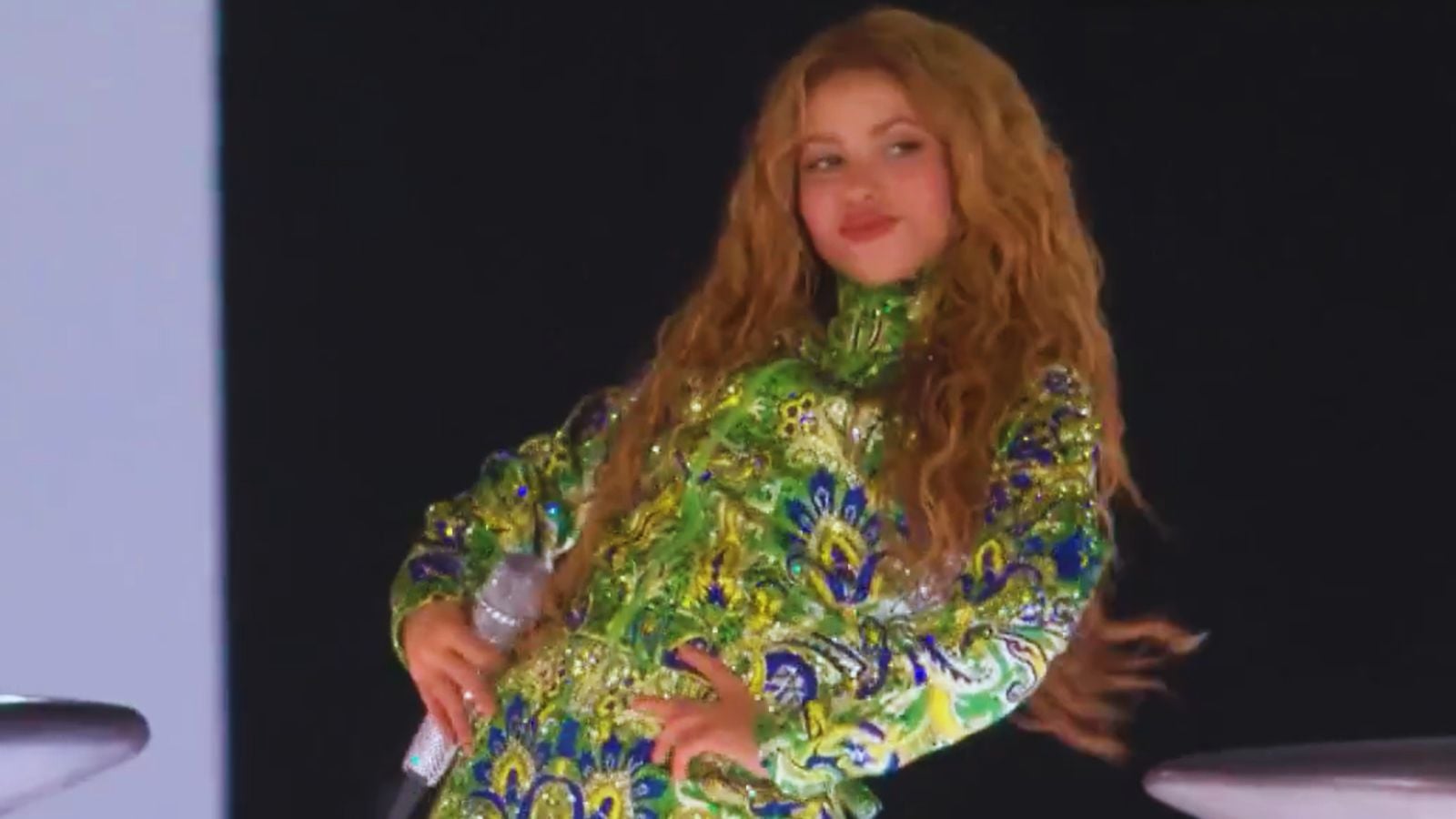
Two million people did not show up on Copacabana Beach just to hear “Hips Don’t Lie.”
They showed up for the whole argument.
Shakira’s free Rio de Janeiro concert put her on one of pop music’s loudest stages — the same shoreline recently used to turn Madonna and Lady Gaga into citywide events. Rio officials estimated the crowd at roughly 2 million people. The city-backed Todo Mundo no Rio concert is also expected to inject about 800 million reais, roughly $161 million, into the local economy.
Copacabana has become a civic event with choreography, and this one hits harder because Shakira’s career has never been a clean pop coronation. It has been sold in pieces: the teenage failure, the Latin crossover gamble, the breakup album, the tax headlines, the woman who had to keep proving that global did not mean temporary.
Copacabana made all of that look small.
Stop Calling This a Comeback
Comebacks are for artists who disappeared from the public imagination. Shakira never really did. She just kept getting reintroduced through someone else’s frame.
In the 1990s, that frame was failure. Her first two albums, Magia and Peligro, did not make her a commercial force. The cleaner pop-history version skips that awkward chapter and starts with Pies Descalzos. But the early stumble matters. Before she became shorthand for hips, hooks, and World Cup-sized choruses, Shakira was a teenage artist whose first attempts did not land. Two million people on a beach is an answer to an industry that once had no obvious place for her.

She Was Never Just a Crossover Act
For years, Shakira has been discussed with a qualifier attached. Latin superstar. Colombian singer. Crossover act. Bilingual hitmaker. The labels follow her everywhere.
None of those labels is false. They are just too small for what happened in Rio.
A crossover artist is someone trying to enter the larger room. Shakira filled the beach outside it.
That contradiction lies at the heart of every Madonna-and-Gaga comparison. They are treated as obvious residents of the global pop canon. Shakira gets discussed as slightly adjacent to it — as if her dominance needs an asterisk because it moves through Spanish, English, Arabic-inflected dance, rock, reggaeton, and football stadiums simultaneously.
Copacabana rejected that asterisk. The crowd behaved as if a long-awaited institution had returned, rather than as if an international curiosity had arrived.

The Breakup Became a Pop Machine
After her split from Gerard Piqué, Shakira’s public life became tabloid fodder. Betrayal. Relocation. Diss tracks. Motherhood. A full-scale reinvention. She could have disappeared inside the gossip loop of her own story. Instead, she turned the material into an era.
That is why “Las Mujeres Ya No Lloran” works as more than just an album title or branding. It is a thesis: pain does not have to remain private to be dignified, and survival does not have to whisper.
Shakira has said that not having a husband left her feeling able to work, write songs, and make music again. Whether fans read that as liberation, shade, or both, Rio gave the line a physical form. Two million bodies answering back is not a viral lyric. It is something harder to manufacture and harder to dismiss.

The Spectacle Wasn’t Clean
A fair version of this story does not get to be spotless.
AP reported that a 28-year-old worker died during stage setup before the concert, with authorities investigating possible workplace-safety violations. He was there building the stage that produced the spectacle. His death belongs in the story before the crowd numbers do.
There was also the legal chapter. Shakira settled a Spanish tax case in 2023 — a settlement that came as the case moved toward trial rather than after a verdict. A separate 2018 tax investigation was later dismissed by a Spanish court. Reuters reported the court found no evidence she deliberately omitted information. For years, though, the headlines ran alongside the music, complicating the narrative of triumphant reinvention that her team preferred.
The Rio moment does not erase those complications. It exists alongside them.
HERE SHE IS, SHAKIRA AT COPACABANA 🇧🇷 pic.twitter.com/51vKMGsHWp
— 2000s (@PopCulture2000s) May 3, 2026
Two Million People Settled the Argument
For decades, Shakira’s story has been told primarily through what she had to overcome. Early failure. Language barriers. Industry categorization. Romantic collapse. Legal scrutiny. The exhausting habit of being labeled a comeback every time she reminded everyone she never left.
Rio made a simpler argument.
Two million people are not subtle and do not need a qualifier, an asterisk, or a crossover caveat. It is the kind of crowd that ends certain conversations by making them irrelevant.
Shakira did not just join Madonna and Lady Gaga on Copacabana Beach. She walked into a comparison that pop culture should probably have been making seriously for a long time.