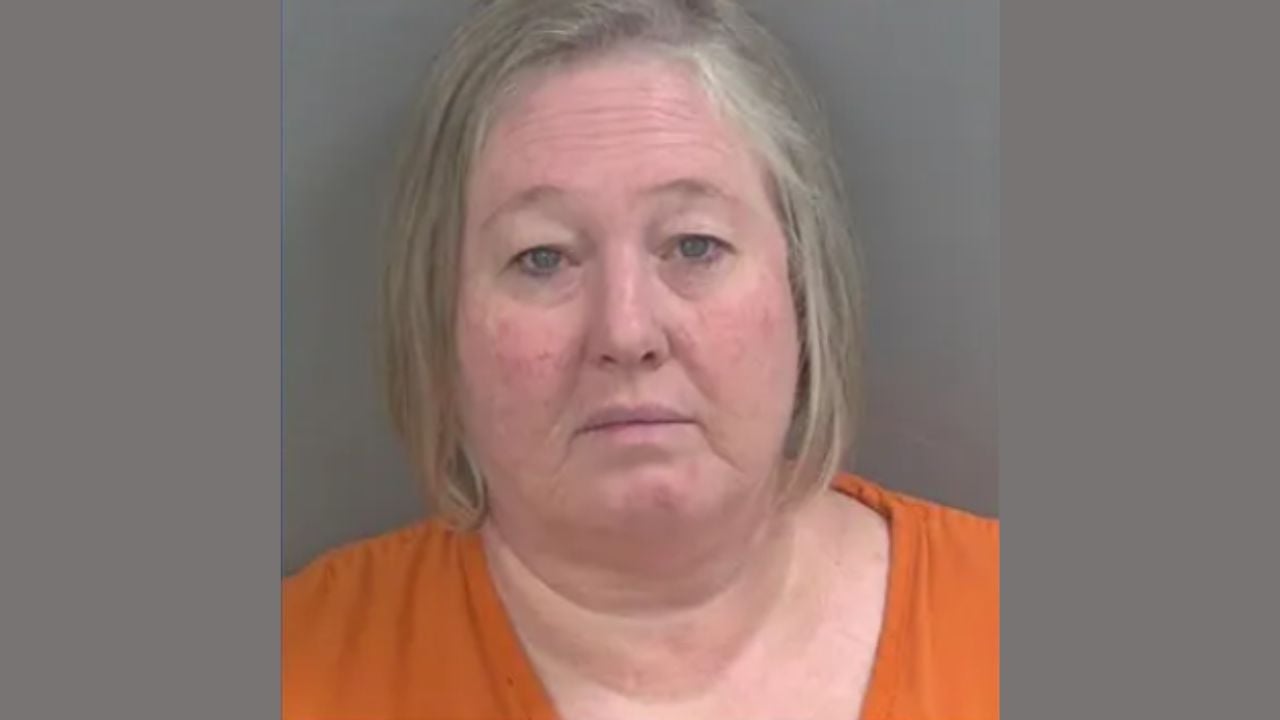
A Florida woman is accused of convincing hundreds of people that she was battling cancer, collecting more than $40,000 from people who wanted to help her and then using the money to pay personal debts.
Maribeth Ellen Jones, 51, of Bonita Springs, worked as an activities director in a Naples community when investigators say she told residents between 2022 and 2024 that she had cancer and was undergoing treatment.
Authorities say the deception went beyond asking for donations. Jones allegedly acted as though her health was deteriorating and even had community members cut her hair under the premise that she was preparing for chemotherapy.
According to FOX 13 News, the Collier County Sheriff’s Office ultimately identified 238 residents who investigators say were defrauded of more than $40,000.
Residents Raised Money Because They Believed She Had Cancer
People in the community created a GoFundMe fundraiser for Jones that was connected to her personal bank account. Investigators say residents also gave her money directly through cash and personal checks. The investigation also uncovered two earlier GoFundMe campaigns in which Jones had been a beneficiary and had similarly claimed to have cancer.
The Collier County Sheriff’s Office said Jones went to considerable lengths to make the alleged illness appear genuine, including pretending her condition was worsening and allowing community members to cut her hair as though chemotherapy were imminent.
Sheriff Kevin Rambosk said the case was particularly troubling because it allegedly exploited people who believed they were helping someone facing a life-threatening illness. He also warned that fraudulent appeals can damage public trust in legitimate fundraisers for people who genuinely need assistance.
GoFundMe Says More Than $41,000 Was Refunded
GoFundMe told FOX 13 that fundraisers organized for Jones were removed from its platform and that her account was banned from future fundraising. The company said more than $41,000 was returned to donors through its GoFundMe Giving Guarantee.
Investigators described more than $40,000 as having been obtained from 238 residents, while GoFundMe’s figure reflects money the platform says it refunded through fundraisers associated with Jones.
The sheriff’s investigation also involved allegations that some residents gave Jones cash and personal checks outside GoFundMe. Public reporting does not establish whether every person who gave money outside the platform has been reimbursed.
She Faces a Second-Degree Felony
After detectives obtained an arrest warrant, Jones turned herself in at the Naples Jail Center. She was arrested August 5 and charged with grand theft involving between $20,000 and $100,000, a second-degree felony.
The criminal case remains pending. Jones has been charged but not convicted, and the allegations against her remain to be resolved in court. The investigation was also reported as ongoing.
Verify Personal Fundraisers Before Sending Money
A compelling story, photographs and support from other donors do not by themselves prove that a personal crowdfunding appeal is legitimate. The Federal Trade Commission recommends researching the person behind a crowdfunding campaign and understanding exactly who will receive the money before contributing. When possible, donors should verify significant claims through people or information independent of the fundraiser itself rather than relying only on what appears on the campaign page.
For a medical fundraiser, donors can look for consistent updates, a clearly identified organizer and evidence that people who genuinely know the beneficiary are involved. Pressure to donate immediately, vague explanations about how money will be used or a story that cannot be independently confirmed are reasons to slow down before paying.
Anyone who suspects a crowdfunding campaign is fraudulent should preserve the fundraiser page, receipts, messages and payment records and report the campaign to the platform. The FTC also advises reporting suspected crowdfunding fraud through ReportFraud.ftc.gov and, where appropriate, to state or local law enforcement.