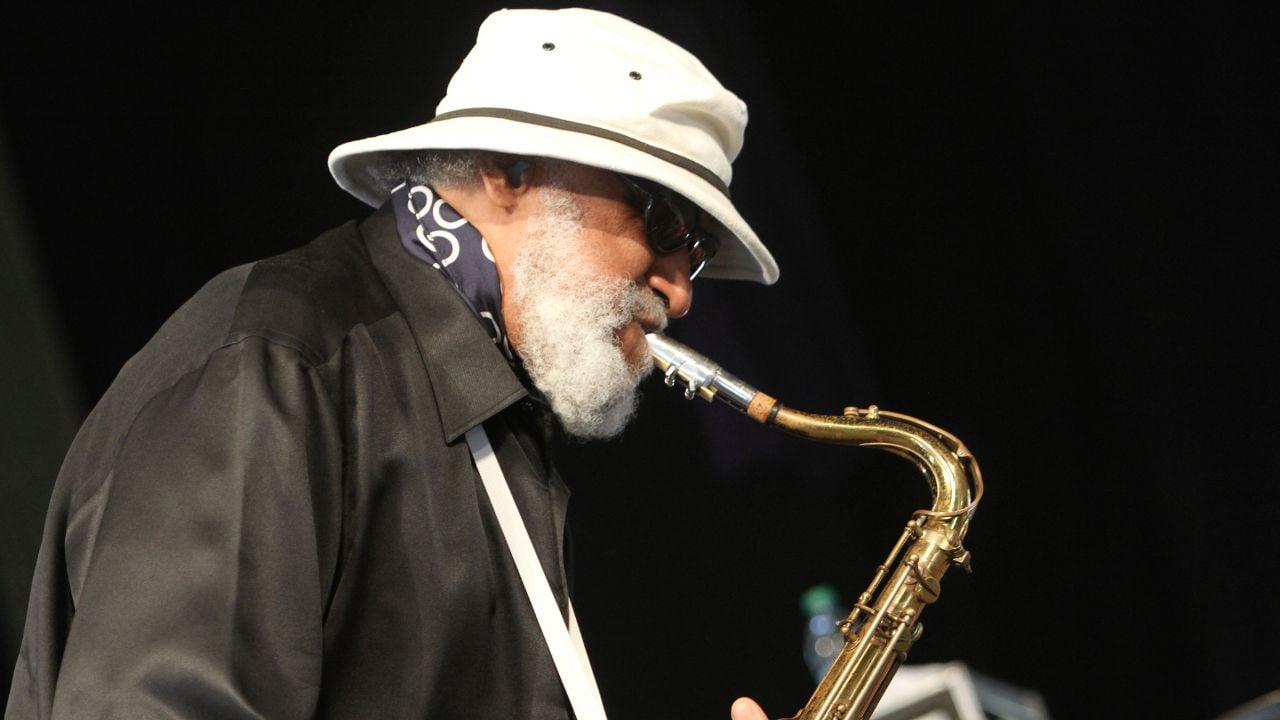
Sonny Rollins, the tenor saxophonist whose huge tone, restless improvisations, and refusal to coast made him one of jazz’s defining figures, has died. He was 95.
Rollins died Monday afternoon at his home in Woodstock, New York, according to The Associated Press. His spokesperson, Terri Hinte, confirmed the death and did not give a specific cause. AP reported that Rollins had been largely housebound in recent years because of physical problems.
The news was also announced on Rollins’ official website, which remembered him by the title that followed him for nearly 70 years: the “Saxophone Colossus.” It began as the name of his landmark 1956 album, then became shorthand for a musician whose playing could sound muscular, comic, lyrical, and unpredictable inside the same solo.
Rollins Grew Up Near the Center of Modern Jazz
Born Walter Theodore Rollins in New York City on Sept. 7, 1930, Rollins grew up in Harlem’s Sugar Hill neighborhood, close to musicians who were helping shape bebop and hard bop. NPR reported that his neighbors included future jazz players such as Jackie McLean, Art Taylor, and Kenny Drew.
Rollins studied piano first, then moved to saxophone as a child. By his teens, he was already playing in New York and absorbing the language of musicians who were changing jazz after World War II.
His rise came quickly. AP reported that Rollins was recording by the late 1940s and soon worked with Thelonious Monk, Bud Powell, and Miles Davis. Those early associations placed him near the center of postwar jazz, but Rollins’ own sound soon became impossible to mistake.
Saxophone Colossus Turned a Nickname Into a Legacy
Rollins recorded Saxophone Colossus in 1956, and the album became one of the essential hard bop records of the decade. Its best-known track, “St. Thomas,” carried Caribbean rhythm into a modern jazz setting, drawing from family memory while still sounding completely like Rollins.
The Guardian noted that Rollins released more than 60 albums across his career and worked with many of the central figures of 20th-century jazz, including Davis, Monk, and John Coltrane.
His major recordings from the 1950s also included Way Out West, A Night at the Village Vanguard, and Freedom Suite. Those albums showed how comfortable Rollins was with risk: open trio settings, long improvisations, unexpected song choices, and a saxophone sound that could carry the center of the music without needing much decoration around it.
His Williamsburg Bridge Break Became Jazz History
At the height of his fame, Rollins stepped away from public performance. Instead of chasing the next booking or studio date, he practiced for long hours on the Williamsburg Bridge in New York, using the open space above the East River as a private rehearsal room.
The break became one of the most famous stories in jazz because it ran against the usual logic of success. Rollins was already celebrated, but he believed his playing still needed more work.
That period led to The Bridge, his 1962 return album. NPR described the comeback as a major cultural moment, and AP reported that Rollins later said he was proud he had been able to look beyond popularity and follow what his inner self told him to do.
Rollins Reached Far Beyond Jazz Clubs
Rollins never stayed inside one narrow version of jazz. He played calypso, hard bop, freer improvisation, ballads, funk, and film music, changing shape without losing the force of his tenor sound.
He composed and performed music for the 1966 Michael Caine film Alfie. Rock listeners also heard him on the Rolling Stones’ 1981 album Tattoo You, where he played saxophone on tracks including “Waiting on a Friend.”
NPR reported that Rollins was not a purist and enjoyed moving between calypsos, extended solos, and popular material. His sound remained instantly recognizable even when the setting changed.
Honors Followed, but Rollins Kept Returning to the Work
Rollins received some of the country’s highest arts honors, including a Kennedy Center Honor and the National Medal of Arts. NPR also identified him as a National Endowment for the Arts Jazz Master.
AP reported that Rollins won a Grammy Award for best jazz instrumental album for This Is What I Do and later won best jazz instrumental solo for “Why Was I Born?” from Without a Song: The 9/11 Concert.
That live album came from a Boston concert performed days after the Sept. 11 attacks. Rollins had been forced to evacuate his apartment near ground zero, but went ahead with the performance at the urging of his wife and manager, Lucille Rollins.
He Stopped Performing, but His Influence Kept Moving
Rollins continued performing into his 80s, but pulmonary fibrosis eventually ended his playing career. AP reported that he gave his last concert in 2012 and stopped playing altogether in 2014.
Even after retirement, Rollins remained a subject of study and argument among musicians. His solos were transcribed, his recordings were revisited, and his bridge sabbatical became a lesson in how seriously he treated improvement even after fame had already arrived.
His survivors include his nephew, Clifton Anderson, and nieces Vallyn Anderson and Gabrielle DeGroat, according to AP.
Rollins’ death leaves jazz without one of its last direct links to the bebop generation. His recordings remain the clearest record of what made him different: a tenor saxophone voice that could push, tease, sing, search, and turn a familiar song into something newly alive.