
The 31st Annual Critics Choice Awards officially kicked off the 2026 awards season with a night that balanced prestige film making with the kind of unhinged, viral energy only Chelsea Handler can deliver.
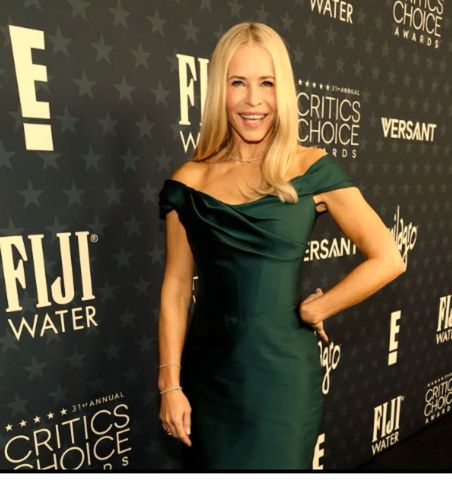
Hollywood descended upon the Barker Hangar in Santa Monica on Sunday, January 4, for an evening that saw Paul Thomas Anderson’s One Battle After Another cement its status as the Oscar front runner. While the film took home the night’s biggest honors, including Best Picture and Best Director, it was a series of bizarre “only in 2026” moments that had social media in a total frenzy.
It was a massive night for Paul Thomas Anderson. His sprawling epic One Battle After Another didn’t just win Best Picture; it dominated the craft categories, proving that the Critics Choice Association (CCA) is fully on board the PTA train this year. Anderson also walked away with Best Director and Best Adapted Screenplay, effectively making him the man to beat as we head toward the Academy Awards.
Timothée Chalamet continued his scorched-earth victory tour, picking up Best Actor for his transformative performance as a ping-pong prodigy in Marty Supreme. Chalamet, who has been relatively low-key this season, used his speech to deliver a rare and sweet shout-out to his partner, Kylie Jenner, who was seen cheering from the audience.
On the actress side, Jessie Buckley pulled off a major win for Hamnet, edging out heavyweights like Emma Stone and Renate Reinsve. Buckley’s win is being hailed by pundits as the “turning point” of the season, suggesting the Best Actress race is much tighter than previously thought.
Leave it to Chelsea Handler to keep things from getting too self-serious. Returning to host for her fourth consecutive year, Handler’s opening monologue was a tightrope walk between a moving tribute to the late Rob Reiner and a series of savage roasts.
The “Awkward Moment of the Night” award, however, goes to the Ping-Pong Paddle Incident. In a nod to Chalamet’s Marty Supreme, Handler announced that a lucky attendee had a ping-pong paddle hidden under their seat, which granted them “one free spank” of Chalamet at the afterparty. The camera panned to legendary actress Kathy Bates, who found the paddle, licked it for the camera, and then immediately looked horrified by her own choice.
“That is so gross,” Bates was seen mouthing as the room erupted in laughter. It was the kind of chaotic live-TV moment that makes the Critics Choice Awards a fan favorite.
In terms of pure “Worst” (or perhaps “Best” depending on your level of irony), Hacks stars Megan Stalter and Paul W. Downs arrived on the red carpet dressed in 1:1 replicas of the outfits Timothée Chalamet and Kylie Jenner wore to the Marty Supreme premiere last month.
Downs rocked a blazing orange leather suit, while Stalter mimicked Jenner’s signature poses. “We’ve been shooting season five of Hacks so we haven’t had a lot of time to shop,” Downs joked to reporters. “We just borrowed from friends.”
In the television categories, Netflix’s Adolescence was the evening’s big winner, sweeping almost every category it was nominated in. The most emotional moment of the night came when Owen Cooper took home Best Supporting Actor in a Limited Series. At just 16 years old, Cooper is now officially the youngest person ever to win a Critics Choice Award.
His performance as Jamie Miller has already earned him an Emmy, and this win confirms his status as one of Hollywood’s most formidable young talents.
Why the 2026 Critics Choice Awards Mattered?
The 31st Annual Critics Choice Awards wasn’t just another stop on the long, champagne-soaked road to the Oscars; it was a definitive cultural reset. After years of award shows struggling to find their footing in a post-streaming, post-pandemic landscape, Sunday night at the Barker Hangar felt like Hollywood finally regained its swagger, even if that swagger occasionally tripped over a ping-pong paddle.
The energy was electric, but the underlying narrative was clear: industry transition. This year’s ceremony proved that the “Old Guard” and the “New Wave” aren’t just co-existing; they are fighting for the very soul of the box office.
Let’s talk about the elephant in the room: One Battle After Another. Paul Thomas Anderson has always been the “critic’s darling,” the filmmaker’s filmmaker who often walks away with universal praise but empty hands. Not this year. By sweeping Best Picture, Best Director, and Best Adapted Screenplay, Anderson has officially moved from the “prestige niche” into the “dominant force.”
What’s fascinating here isn’t just the win, but the way the CCA chose to reward it. This is a film that balances a raucous, political thriller energy with the meticulous technical craft PTA is known for. It’s a “big” movie in every sense of the word. In an era where we worry about the death of the mid-budget adult drama, One Battle After Another is the industry’s counter-argument. It’s a statement that says: “We can still make epics that aren’t about superheroes.”
Then there’s Timothée Chalamet. Watching him accept Best Actor for Marty Supreme, you couldn’t help but feel you were watching a once-in-a-generation talent officially enter his “prime” era. His performance as Marty Reisman is a masterclass in physical acting, he didn’t just play a ping-pong player; he became an athlete.
But beyond the craft, Chalamet’s win is a win for star power. His acknowledgment of Kylie Jenner wasn’t just a sweet “couple moment”; it was a savvy piece of brand management. In 2026, being a great actor isn’t enough; you have to be a phenomenon. Chalamet is the rare bird who can lead a Josh Safdie indie to global hit status while maintaining the kind of tabloid gravity that keeps the lights on at E! News. He is the bridge between the old Hollywood glamour and the new digital era.
We have to address the “Paddle Lick.” On paper, Chelsea Handler’s ping-pong bit was a standard awards show gag. But Kathy Bates (a living legend with an Oscar, two Emmys, and zero patience for nonsense) turning that moment into a viral “gross-out” clip is exactly why we still watch these shows live.
It was a moment of pure, unscripted humanity. In a world of perfectly curated Instagram feeds and PR-managed acceptance speeches, seeing Kathy Bates mouth “that’s so gross” to a global audience is a reminder that these people are, at the end of the day, just as weird and reactive as we are. It was the most “Oops” moment of the night, but also the most authentic.
The television side of the night told a different story. While Netflix’s Adolescence swept the Limited Series categories, the wins for The Pitt and The Studio showed a shift back toward character-driven episodic storytelling.
Owen Cooper’s record-breaking win for Adolescence is perhaps the most significant takeaway for the future of the industry. At 16, he is out-acting veterans twice his age. His win signals a shift in what critics are looking for: raw, unfiltered vulnerability over polished artifice. His performance as Jamie Miller didn’t just move people; it changed the conversation around how we depict youth in crisis on screen.
Many will call the Megan Stalter and Paul W. Downs “cosplay” the “worst” red carpet moment, but it was probabaly the highlight. In an industry that often takes itself far too seriously, seeing the stars of Hacks poke fun at the very “it-couple” sitting ten feet away from them was refreshing. It was a meta-commentary on the awards season itself—a reminder that this is all, essentially, a very expensive high school prom.
What Happens Next?
As we look toward the Golden Globes and the Oscars, the Critics Choice Awards have drawn a line in the sand.
- Paul Thomas Anderson is the king.
- Timothée Chalamet is the heir apparent.
- Adolescence is the gold standard for television.
The race is no longer wide open; it has a shape, a rhythm, and a very clear set of frontrunners. But if Sunday night taught us anything, it’s that in Hollywood, the moment you think you know what’s coming next is exactly when someone hands you a ping-pong paddle.