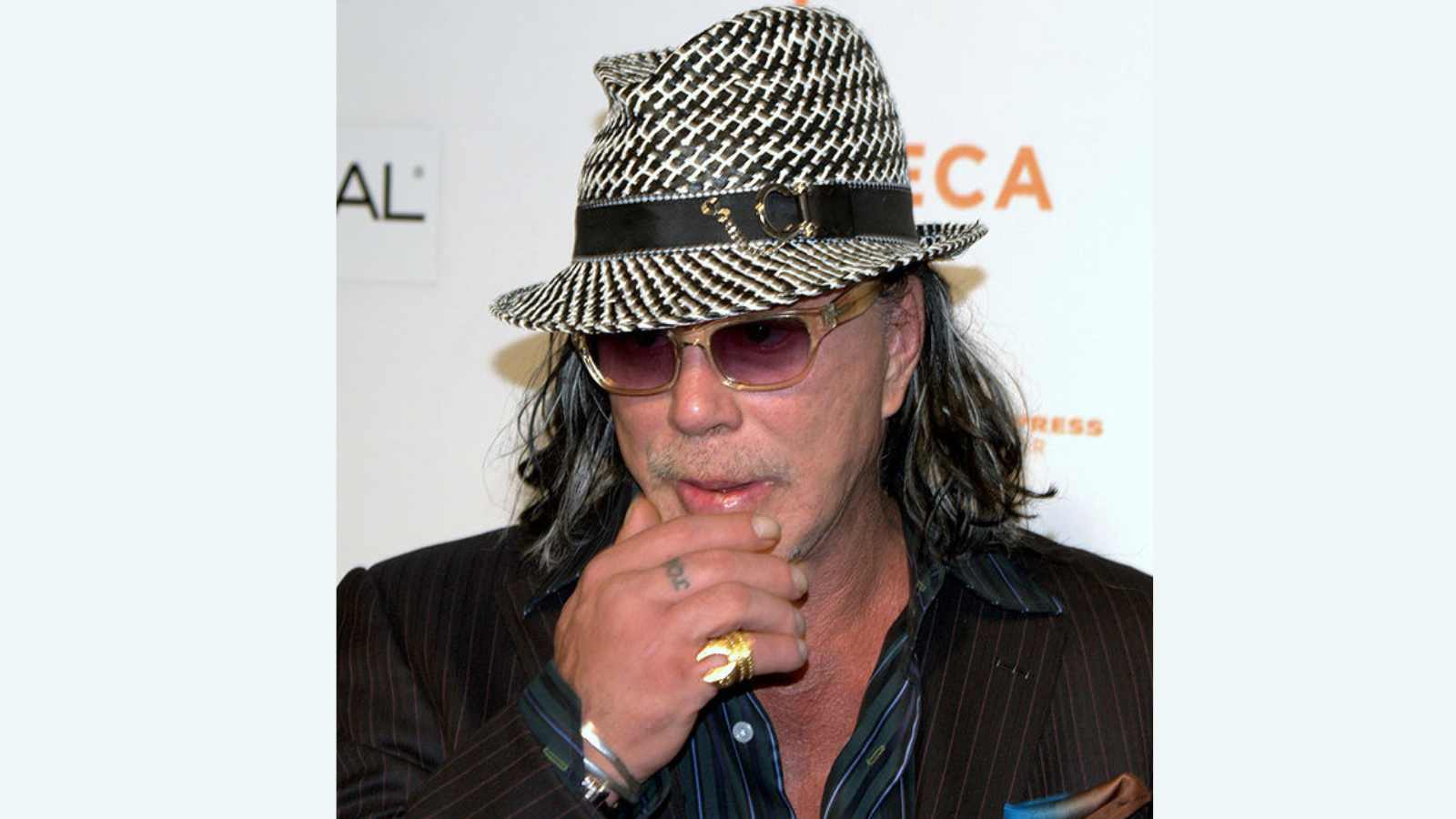
When a GoFundMe appeared in Mickey Rourke’s name in early January, launched by a member of his management team to raise $100,000 and cover the $59,100 in back rent alleged in an eviction complaint, the campaign did not announce itself quietly.
“Mickey Rourke is an icon, but his trajectory, as painful as it is, is also a deeply human one,” the campaign description said. “Fame does not protect against hardship, and talent does not guarantee stability. What remains is a person who deserves dignity, housing, and the chance to regain his footing.” Around 2,700 donors read that and gave anyway. Within about two days, the campaign had raised more than $100,000.
Then the 73-year-old Oscar nominee went on Instagram and rejected it with language that made headlines for a week.
Mickey Rourke denies setting up GoFundMe to pay $60k overdue rent.
“If I Needed Money, I Wouldn’t Ask for No F***ing Charity. I’d rather stick a gun up my ass and pull the trigger.”
The actor, who is facing eviction for owing $60k rent, denies having involvement in the fund. pic.twitter.com/BmUiF5Fuhz
— Oli London (@OliLondonTV) January 6, 2026
“If I needed money, I wouldn’t ask for no f—ing charity,” he said in the video. “I’d rather stick a gun up my ass and pull the trigger.”
He called it humiliating. He told donors to get their money back. He said he would never ask strangers or fans for a nickel. He said he had too much pride.
The rent claim at the center of the case was $59,100. The fundraiser had already raised more than enough to cover it.
What the Court Said in March
On March 9, 2026, a Los Angeles County Superior Court judgment was entered in favor of Rourke’s landlord, Eric T. Goldie. The order granted the landlord possession of the Drexel Avenue property, canceled the rental agreement, and forfeited the lease, ending Rourke’s legal right to occupy the home. It was entered by default, which indicates he did not respond to the complaint or appear to defend himself within the required time. The judgment was for possession only, not money damages. The complaint’s $59,100 rent claim, therefore, was not what the court resolved on March 9.
He did not contest the case in time. That is the part that matters here.

The Problem With the Clean Narrative
Before this turns into a simple morality play about pride and consequences, one complication matters: Rourke said the house had serious habitability problems, and his manager backed that up.
According to Rourke’s own Instagram video and later reporting on comments from manager Kimberly Hines, the Drexel Avenue property had severe water damage, black mold, rodents, rotten flooring, and plumbing problems. Hines also told The Hollywood Reporter she had arranged alternative housing in Koreatown because of the property’s condition.
There is also a complication in Rourke’s version of events. While he said publicly that he did not know who started the GoFundMe, Hines said she and her assistant ran the idea past Rourke’s own assistant and that everyone agreed it would be helpful. That contradiction was reported in January and never really got resolved in public.
Whatever remedies may have existed over the condition of the property were not litigated here. Rourke did not preserve them in this eviction case. He refused the money, did not answer the complaint in time, and defaulted.
The house may well have been unlivable. He still lost the lease by default.

The $550-a-Night Detail
The hotel Rourke moved into, a West Hollywood property where Page Six reported rooms start at about $550 a night, is not the detail of a man with nothing. It is the detail of a man navigating a specific and familiar kind of Hollywood distress. Enough resources, backing, or momentum to maintain appearances. Not enough stability to keep the rent dispute from swallowing the address.
That is a particular kind of Hollywood story. The career peak remains The Wrestler in 2008, the Oscar nomination that followed, and the version of Mickey Rourke Hollywood liked talking about more than consistently hiring. Now he is 73, in a hotel, while his manager is still telling Entertainment Weekly that “2026 will be a banner year for Mickey” as a court cancels his lease.

The Price of Refusal
Just over two weeks ago, this publication used Mickey Rourke as the counterexample in Hollywood’s growing GoFundMe culture. He was the man who broke the playbook. The one who looked at crowdfunding and called it humiliating. The one who chose pride over public rescue.
The March 9 judgment does not prove the GoFundMe model is noble. It does not erase the dignity problem in launching a fundraiser in somebody else’s name at the worst possible moment. And it does not settle whether Rourke fully understood or approved what his team was doing.
But it does settle a narrower question.
When the fundraiser briefly existed, the internet had already produced more than enough money to cover the rent claim that put his lease at risk. Rourke rejected it. He did not fight the case in time. The fundraiser never became the rescue plan. Possession of the home went to the landlord.
His manager says 2026 will be a banner year.
The question is what kind of banner you are measuring it against, and whether pride, when it leaves a six-figure rescue plan rejected and the lease canceled anyway, still counts as the right call.