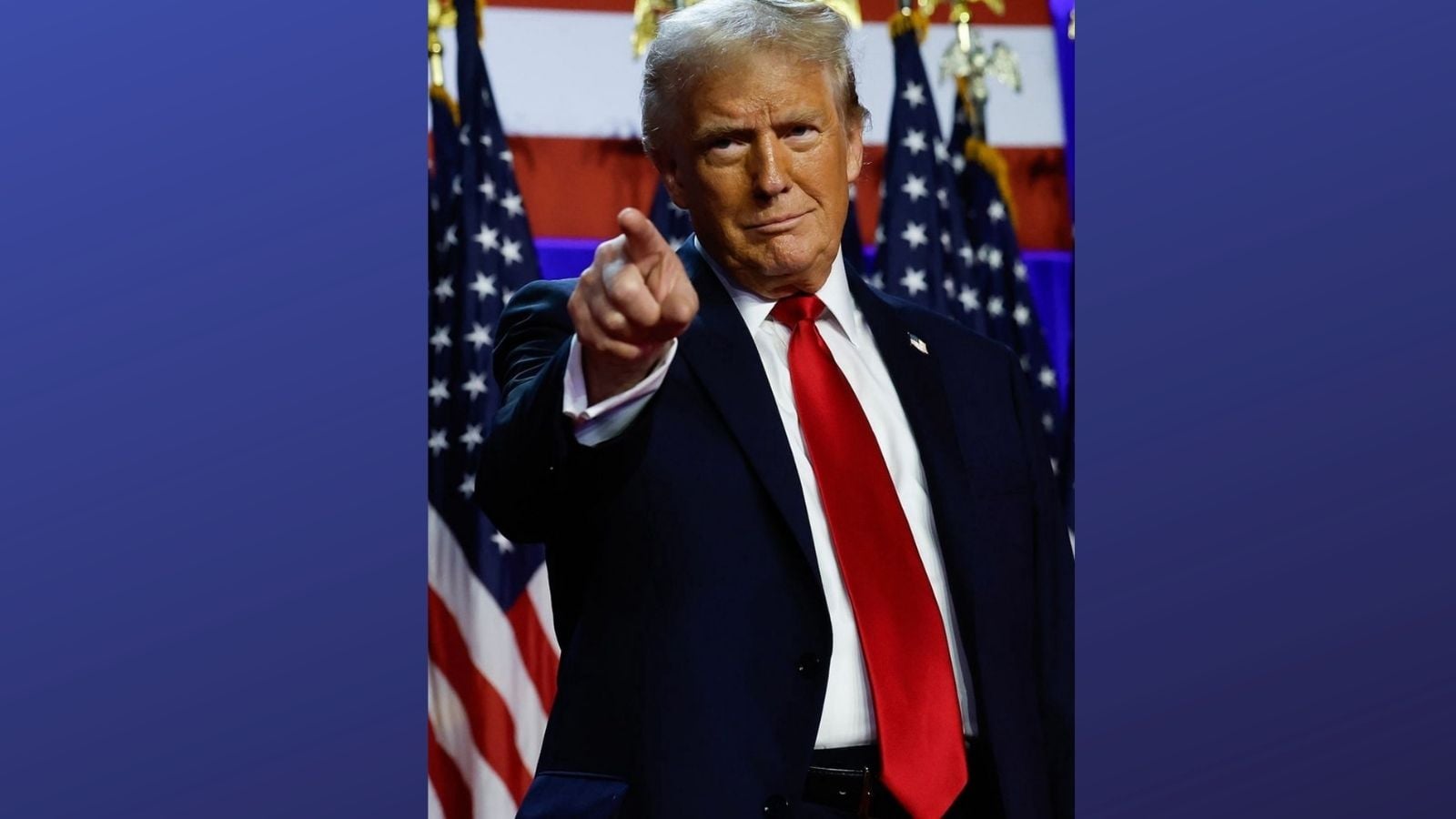
Let’s be real for a second, in the span of just a few weeks, Donald Trump has gone from sparking backlash over a social media post that seemingly cast him in a Jesus-like light, to getting into a very public clash with Pope Leo, to now calmly reading Scripture from the Oval Office like this is just another item on the daily agenda. If you pitched this sequence to a TV network, they would probably ask you to tone it down for realism.
And yet here we are, watching it all play out in real time, with the kind of plot twists that feel less like politics and more like prestige drama. The latest chapter is his participation in “America Reads the Bible,” a weeklong Bible-reading marathon that feels like an equal parts spiritual gathering and cultural spectacle. Naturally, Trump’s contribution lands right in a prime-time slot, because of course it does.
From Viral Backlash to Bible Reading, the Arc Is Immaculate
The event itself runs from April 19 through April 25 at the Museum of the Bible in Washington, D.C., aiming to read the entire King James Bible from start to finish with nearly 500 participants. Trump’s segment is a pre-recorded reading of 2 Chronicles 7, delivered from the Resolute Desk and clocking in at about 2.5 minutes of uninterrupted Scripture. There will be no commentary, no riffing, just a straight reading into the camera. Though knowing the present, that is highly unlikely.
Now, here is where it gets interesting. The specific passage he was assigned is not just any random selection pulled out of a hat.
It includes one of the most quoted verses in American evangelical circles, the one that goes, “If my people, which are called by my name, shall humble themselves, and pray, and seek my face, and turn from their wicked ways; then will I hear from heaven, and will forgive their sin, and will heal their land.”
When The Choice Of Scripture Does A Lot Of Heavy Lifting
Organizers deliberately reserved this passage for Trump, seeing it as both symbolic and historically resonant within American religious life. For decades, that verse has been used during national prayer moments and public calls for reflection, so placing it in the hands of a sitting president was always going to carry weight. It is the kind of decision that feels intentional in a way that invites interpretation from every possible angle.
At the same time, the internet has not exactly moved on from that earlier AI-style image that many Christians criticized as inappropriate. Add in the recent tension involving Pope Leo, and suddenly this Bible reading starts to look less like a standalone moment and more like part of a much bigger narrative arc. The timing is not subtle too, and the public are definitely going to be reading into it accordingly.
“Donald Trump, because he puts his ego first, cannot see anyone in a positive light.”
“I’m not a fan of Pope Leo.”
President Trump rips into Pope Leo for being “very liberal” and accusing him of catering to the left after speaking out against the war in Iran. pic.twitter.com/ULizEUyB4p
— Mohammad Javid (@PhyuLay60937915) April 13, 2026
The Man, the Desk, the Completely Unscripted Irony
From a purely visual standpoint, the setup is striking. A sitting president, seated behind one of the most recognizable desks in the world, reading a passage about humility and repentance with no added commentary. It is simple, direct, and loaded with symbolism, whether intentional or not.
Supporters of the event frame it as a meaningful, even historic, moment, emphasizing the rarity of a president engaging with Scripture in such a straightforward way. Critics, on the other hand, see it through a more skeptical lens, especially given the surrounding controversies. Either way, it has people talking, which in today’s media landscape is basically half the job.
Of Course, The Cabinet Showed Up Too
Trump is far from the only recognizable name in the mix. The event features a long list of administration officials, including Defense Secretary Pete Hegseth, who, may I add, has a very public record of incorporating the Bible into foreign policy matters, especially regarding the war in Iran.
The event will also feature Secretary of State Marco Rubio, Chief of Staff Susie Wiles, and several other cabinet members. It is essentially a full ensemble cast, each taking their turn reading portions of the Bible.
On top of that, a handful of celebrities are also part of the lineup, adding another layer of familiarity and public appeal. The goal is ambitious: to complete the entire Bible within a single week, moving from Genesis to Revelation with hundreds of voices contributing. It is part spiritual exercise, part logistical marathon, and part cultural moment all rolled into one.
What the White House Actually Said
The White House has underscored the significance of the event, describing the Bible as deeply “indelible” to the nation’s identity and presenting the reading as a way to foster renewed faith and unity. This is not campaign-style language or off-the-cuff remarks. It is a formal endorsement of the event as something bigger than a routine appearance.
That distinction matters because it shifts the framing from personal participation to institutional support. It positions the reading as part of a broader narrative about national identity and shared values, rather than just another headline in an already crowded news cycle.
Why This Moment Is Bigger Than the Drama Around It
At its core, this is a sitting president delivering a short, uninterrupted reading of Scripture from the Oval Office and handing it off to be included in a nationwide event. That alone is unusual in modern American politics, regardless of how you feel about the person doing it.
Does it land as meaningful, strategic, ironic, or some mix of all three? It depends entirely on your perspective. What is harder to ignore is how moments like this continue to blur the lines between civic life and religious expression.
For one evening, the Oval Office did not just function as a seat of political power. It briefly took on a tone closer to a pulpit, and that is not a small shift in a country still figuring out where those boundaries really sit.