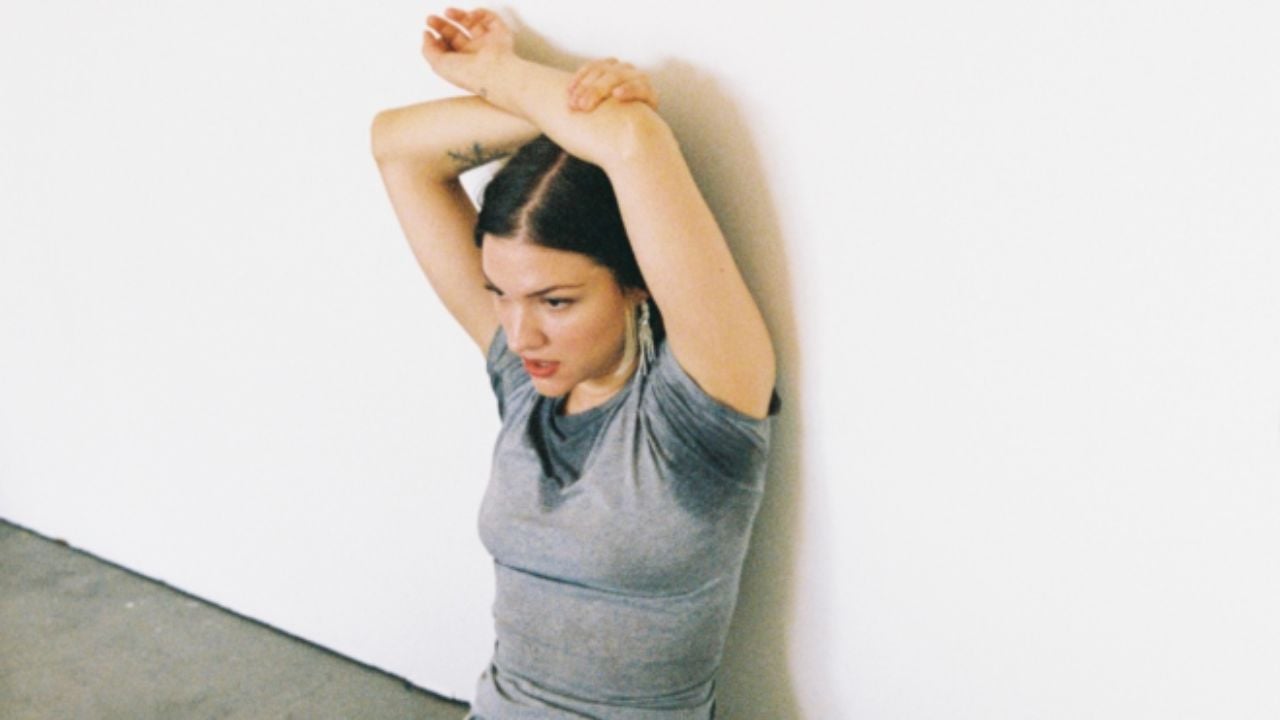
Tove Styrke once joked about wanting “world domination.” Now, the Swedish singer says she would rather reach people who understand her music than perform for an enormous audience that doesn’t. Becoming a mother has helped her reconsider what she wants from her career.
Styrke, 33, released her fifth studio album, I thought this story wasn’t about me, on November 6. The 16-track record arrives more than four years after HARD and takes her music into more experimental territory.
It is also her first album since she and longtime partner Sanna Sikborn Erixon welcomed their daughter in January 2024. Parenthood brought new questions about family and belonging, including reflections on Styrke’s relationship with her own mother.
Those feelings found their way into a project she initially believed concerned a fictional stranger. As she lived with the songs, she recognized her own fears and uncertainties in the protagonist. In her November 6 interview with PEOPLE, she described how that discovery made sharing the finished record especially emotional.
A Fictional Night Out Became a Story Styrke Could No Longer Keep at a Distance
View this post on Instagram
In her November 5 Instagram post, Styrke traced the album’s beginning to an image of someone alone in an apartment at night. That scene became the starting point for a story moving from dusk toward dawn.
The afterparty setting carries a larger meaning than a night of drinking and music. Styrke has described it as a way to explore the feeling that society is approaching an ending or a rebirth. Daylight is inevitable, but the characters cannot know exactly what it will bring.
She originally called the album The Afterparty, announcing the title change in July. During interviews, she had noticed people concentrating on the party references and missing the emotional material underneath. She wanted a name that left more room for the record’s complexity.
The closing track, “Save me,” folds back into the opening. Speaking with C-Heads, Styrke described its acoustic guitar as someone playing at an afterparty while sunlight appears over the skyline. The continuous loop leaves listeners with a new day and a choice about what comes next.
Motherhood Changed Her Studio Routine and the Meaning of ‘Sunflower’
With less uninterrupted time available, Styrke began treating an hour or two alone in the studio as something precious. She became quicker at recognizing ideas that were worth pursuing and moving past those that weren’t.
Asked by FLOOD whether motherhood had changed her artistic purpose, she answered, “Not my purpose, I think, but my speed and clarity.” She told PEOPLE that only one or two ideas were discarded while making the album.
“Sunflower,” released July 3, gave her another unexpected insight into what she was writing. The song had lingered in the background for some time, and she felt there was one more piece the record needed, something resembling a long embrace. Once the collaborators tackled it, the song came together within hours.
Styrke still hadn’t fully understood its subject when Erixon heard it. Her partner recognized a song about their daughter, making clear the source of the vulnerability Styrke had put into the recording.
Their connection began through work. Erixon joined Styrke’s band as a guitarist in 2014, and the singer recalled that neither initially expected them to become close. Their relationship developed through collaboration and friendship before they became partners and parents.
Styrke Finished the Album Before Telling Her Manager or Label
Styrke kept the recording process unusually private, involving just three other collaborators. Her manager and label did not hear about the project until it was finished, leaving the group to develop its ideas without outside interference.
The team consisted of producer and songwriter Magnus Larsson, drummer and producer Joel Kiviaho, and songwriter Linnéa Martinsson, who performs as Lune. Styrke co-produced the entire album.
According to Sony Music Sweden, the recordings use live instrumentation and analog equipment without samples. Vintage synthesizers from the 1970s and 1980s sit alongside live drums and electric bass. The stated influences range from Kraftwerk and Laurie Anderson to Boards of Canada and Adrianne Lenker.
Styrke and Erixon also have a separate musical partnership in Året Var. The Swedish-language band gives them a place to address political and social issues in Sweden that Styrke feels would be harder to express through her English-language solo work. Their debut, Året Var 2026, arrived in September, shortly before the national election.
Gardening and David Bowie’s ‘Lazarus’ Gave Her Room to Experiment
The years between albums included Styrke’s stage-acting debut in a Stockholm production of Lazarus, created by David Bowie and Enda Walsh. Singing another artist’s material and learning to act gave her a different way to approach performance.
She also began studying biodynamic gardening. Borrowing a comparison from Joni Mitchell, Styrke likens moving between creative activities to crop rotation. Writing songs, drawing and acting each exercise different parts of her imagination, allowing her to return to music with renewed energy.
The earliest album ideas emerged during brief visits to her apartment building’s rooftop terrace in early 2024. Between parenting, theater work and studying, she went upstairs to write and sketch, collecting fragments and images before the larger project took shape.
Her views on entering the industry have changed, too. Styrke finished third on Swedish Idol at 17 in 2009 and later toured with Lorde and Katy Perry. In her FLOOD interview, she urged young musicians to develop their own work and skills, arguing that television competitions can exploit talent and give contestants an outdated picture of the business.
Styrke is scheduled to perform at Värmeverket in Stockholm on November 20, presenting material from the new album.