Living through these last two months feels less like keeping up with history and more like binge-watching a showrunner’s worst nightmare. Every morning, the world oscillates between the terrifying promise of total war and a diplomatic “will-they-won’t-they” that feels like a reality TV series that simply refuses to get the axe.
We’ve all been glued to our feeds, watching the Iran situation unfold with a weird mix of genuine, sinking dread and the kind of obsessive, toxic scrutiny you usually reserve for the messiest celebrity breakups.
It’s reached the point where the actual geopolitical stakes have faded into the background, replaced by the sheer absurdity of watching our leaders pivot and stall in real-time.
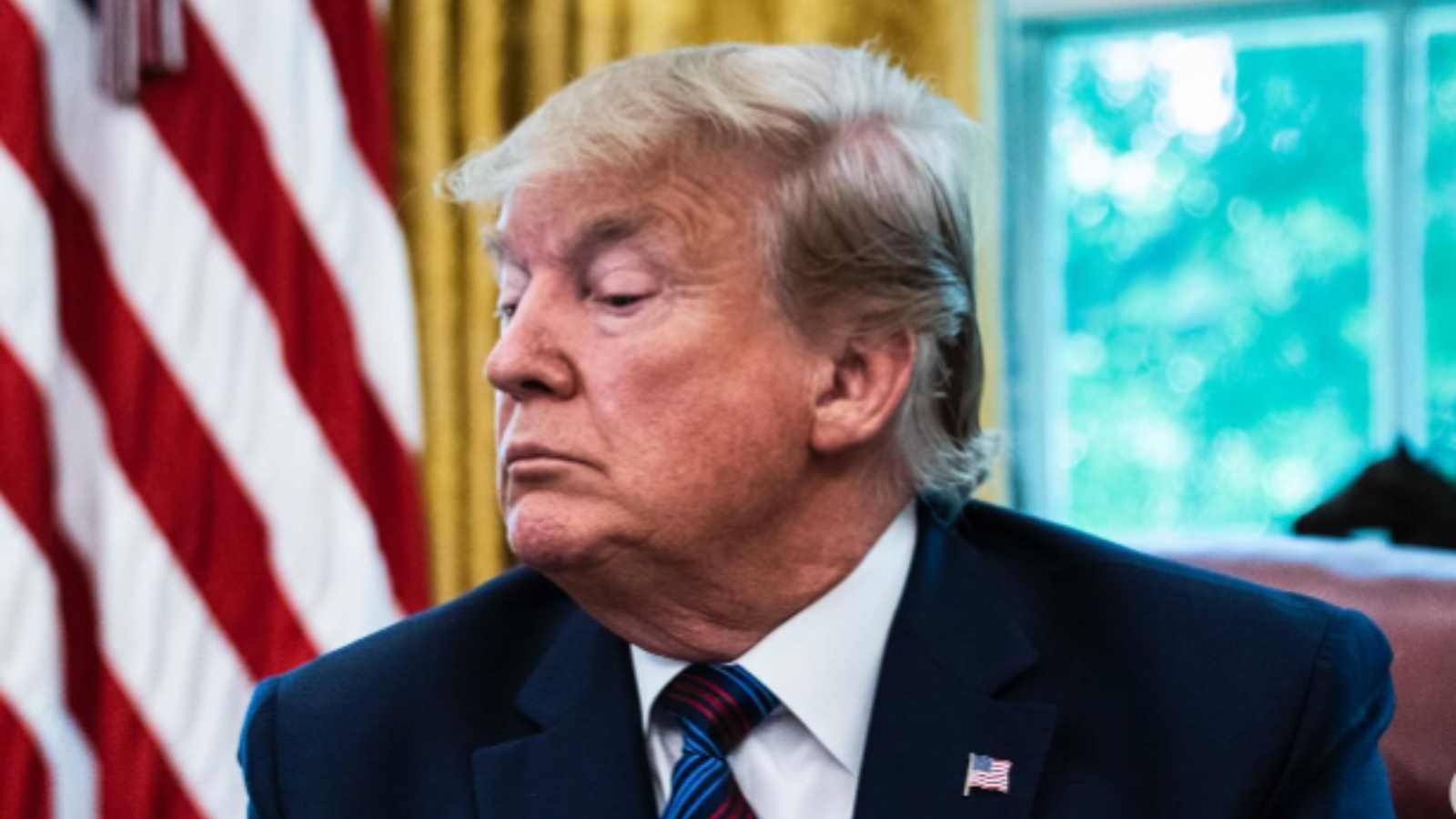
President Trump, never one to let a headline go to waste, just pulled the rug out from under the whole situation again by extending the ceasefire with Iran indefinitely. This wasn’t some minor administrative update; it was a move that left the entire political landscape spinning.
With Vice President JD Vance’s anticipated diplomatic trip to Islamabad unceremoniously yanked off the calendar, we’re left staring at a chessboard where the players seem to have gotten up and left the room, leaving the pieces exactly where they were.
It’s a bizarre, purgatorial state of affairs, and for the average person just trying to have breakfast, it feels less like serious statecraft and more like an improv set that’s gone on for far too long.
The Theater of Perpetual Negotiations
When we talk about the current political climate, it’s impossible to ignore how the narrative surrounding the Iran conflict has moved from the situation room to the living room, becoming a central topic of cultural conversation.
Over on The View, the co-hosts have been parsing these presidential declarations with the same intensity they usually reserve for celebrity gossip or internal network feuds, illustrating just how deeply this crisis has woven itself into our everyday media consumption.
The irony here is thick: while official diplomatic channels are effectively silenced by the postponement of the Vance mission, the commentary machine is louder than ever.
We are watching a unique phenomenon in which the lack of movement, canceled flights, unsubmitted proposals, and indefinite pauses are treated as a plot development in itself.
TRUMP EXTENDS IRAN CEASEFIRE INDEFINITELY: As the war in Iran hits the two-month mark, ‘The View’ co-hosts weigh in on the president’s claims as Vice Pres. JD Vance has postponed his trip to negotiate peace talks. pic.twitter.com/08QLfJ2GIO
— The View (@TheView) April 22, 2026
This is the opposite reality that many political analysts are struggling to articulate: perhaps this “forever stalemate” isn’t a failure of statecraft, but rather a deliberate, if chaotic, form of de-escalation that the administration is leveraging to maintain control without needing a definitive resolution that might backfire.
By refusing to finalize a deal, the White House has effectively turned the pressure onto the Iranian leadership, forcing them to navigate a fractured internal power structure while under a naval blockade that is simultaneously invisible to the consumer yet devastatingly effective for the state.
When the Policy Becomes Pop Culture
We are witnessing a fascinating collision between hard-nosed military posturing and the performative nature of modern executive power, a blend that makes it difficult to distinguish between genuine strategic shifts and audience-pleasing theater.
President Trump’s recent post on Truth Social, where he openly blamed Iran’s “fractured” government for the current delay and justified the ceasefire as a favor to Pakistani mediators, was a masterclass in narrative control. He didn’t just announce a policy change; he framed it as an act of magnanimity.
This approach effectively neutralized the immediate criticism that he was being forced into a deal he didn’t want. Instead, he painted himself as the patient statesman holding the line, while simultaneously reminding everyone that the military is “raring to go.”
View this post on Instagram
It is a calculated move that keeps his base engaged while preventing the kind of rapid-fire escalation that might alienate international allies. Meanwhile, late-night hosts like Stephen Colbert are busy poking at the absurdity of the situation, highlighting the age-related and health-related critiques of the President alongside the sheer strangeness of “endless” ceasefires.
This blending of real-time national security crises with the trivialities of public discourse creates a feedback loop in which the truth becomes subjective, shaped by whoever controls the narrative arc of the day’s events.
The Hidden Cost of the Waiting Game
While we might be tempted to view these developments through the lens of entertainment, there is a very real, tangible weight to the uncertainty that shouldn’t be brushed aside.
The indefinite nature of this ceasefire, coupled with the continued naval blockade, creates a pressurized environment that impacts global energy markets and the daily lives of citizens on the ground in Iran.
We have to acknowledge that the “peace” we are witnessing is not a return to normalcy; it is an economic and military siege prolonged by the lack of clear diplomatic progress.
If we look beyond the political posturing, the reality is that the machinery of war is still fully operational, just paused. The logistical disruption in the Strait of Hormuz is not a subplot; it is the main event for the global economy. By choosing not to force a conclusion, the administration is betting that time is an asset rather than a liability.
This is a gamble of incredible proportions. If the “unified proposal” from Iran never arrives, and given the reported fragmentation of their leadership, that is a genuine possibility, the White House will eventually be forced to choose between breaking the ceasefire or admitting that the blockade has reached the limit of its utility.
There is no middle ground where this can continue forever without eventually spiraling into the very conflict that everyone claims they are trying to avoid.
Navigating the Unknown Forward
As we move past the two-month mark of this conflict, the questions about what comes next are multiplying rather than disappearing. We have to wonder: what does a “successful” conclusion actually look like in the eyes of this administration?
Is it a complete dismantling of Iran’s enrichment capabilities, or is it a symbolic victory that can be played up on social media? Furthermore, what does the indefinite extension mean for Pakistan’s internal political stability, which has positioned itself as a precarious bridge between these two superpowers?
We have seen the Pakistani leadership express gratitude for the extension, but one must ask if their patience will wear thin as the blockade drags on and the prospect of a regional flare-up remains a looming threat.
The absence of a clear roadmap is, in itself, the strategy. By keeping all parties, Iran, Pakistan, and the American public, in a state of perpetual anticipation, the administration is maintaining a grip on the steering wheel that would be lost if a permanent deal were struck.
But this is a fragile peace. It rests entirely on the assumption that no rogue actor or miscalculation will force a resumption of hostilities before the diplomatic dust settles.
To understand the future, we have to stop looking for a “solution” and start managing the stalemate itself. We are not watching a negotiation reach a conclusion; we are watching a negotiation become a way of life.