There is a pattern that tends to surface in media cycles, especially when personalities become larger than the platforms that built them. At some point, the performance and the person begin to separate. And when that gap becomes too wide to manage, what follows is rarely a clean break. It is usually something messier. A recalibration done in public, under pressure, with an audience that is no longer sure what is real and what is positioning.
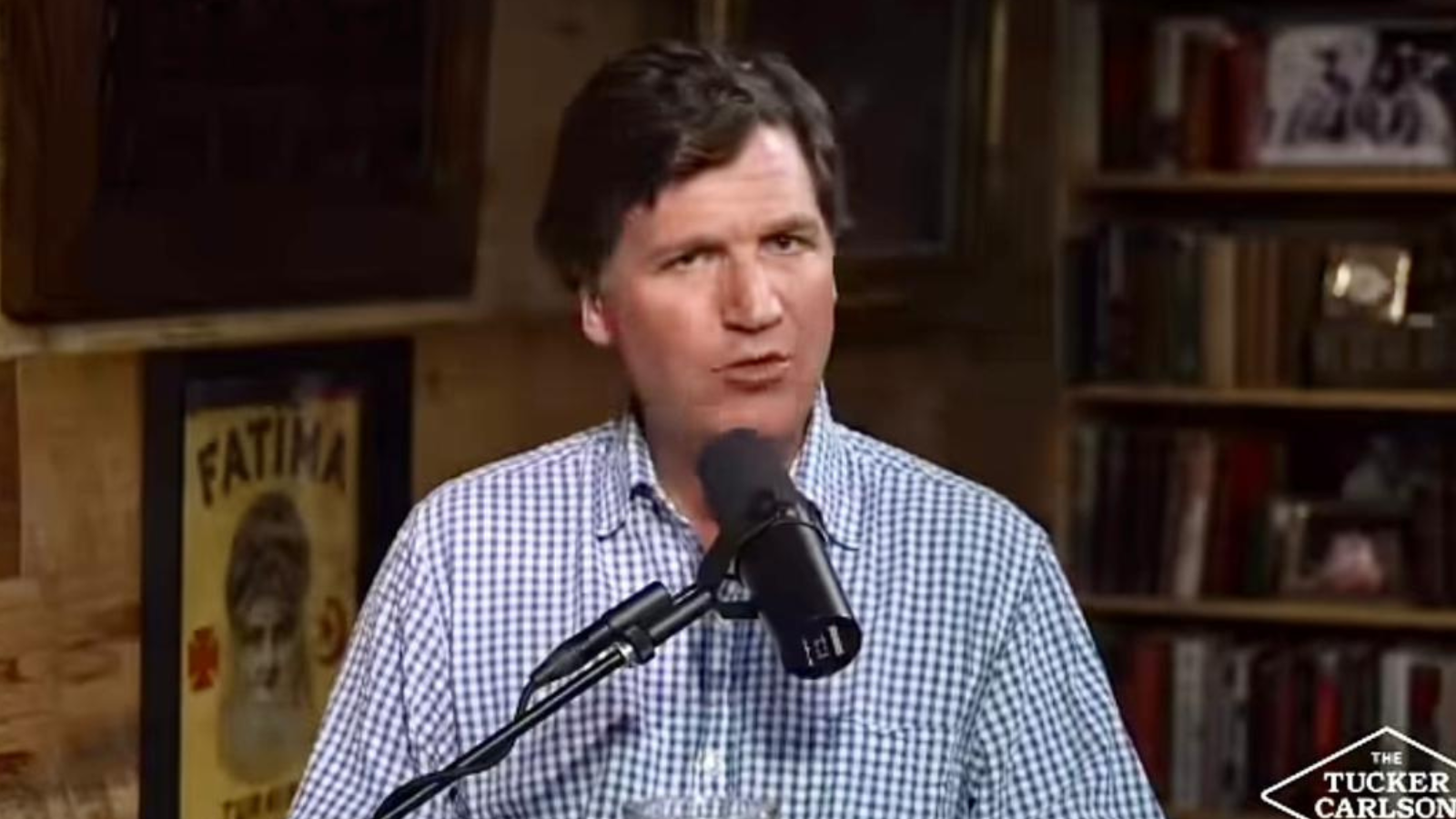
On April 20, 2026, Tucker Carlson published an episode of his independent podcast in which he apologized for his role in returning Donald Trump to the White House in 2024. Not in passing. Not with qualifications buried deep in a monologue. He looked into a camera, said he was sorry for misleading people, and meant it enough to put it on the record.
The episode was recorded with his brother, Buckley Carlson, a former speechwriter for the 2015 Trump campaign who himself voted for Trump three times. The conversation had the quality of two men sitting in the wreckage of a decision they can no longer defend. Tucker was explicit: he and everyone who had campaigned for the president bore some responsibility for what was now happening. He told his audience he was sorry. He said the deception was not intentional. And then he added that the weight of it would likely haunt him for a long time.
That is not the kind of language men in his position use lightly. Or at least, it should not be.
The Architecture of a Public Regret
To understand why this apology landed the way it did, you have to understand what specifically broke the alliance. This was not a slow drift or a philosophical disagreement about tax policy. This was a war. Literally.
The conflict with Iran began intensifying in late February 2026, and from the moment military action became a genuine reality, Carlson positioned himself as one of its loudest opponents within the right-wing media ecosystem. For him, the Iran war was not just a policy error. It was proof of something he had apparently feared privately but hoped would not materialize publicly: that the America First platform, with its insistent, repeated promise of non-interventionism and its explicit rejection of neoconservative foreign policy, had been set aside the moment power was actually in hand.
By early April 2026, Carlson had stopped hedging entirely. He was calling the administration’s foreign policy a neoconservative resurgence, using language that would have been unthinkable from him just eighteen months earlier, when he was hosting tour events and conducting exclusive campaign interviews with the man now in the Oval Office.
He called the president’s social media posts vile. He said the administration had abandoned its core constituency, the very people who had voted on the strength of those non-interventionist promises. The White House’s response was not diplomatic. The president dismissed Carlson publicly as a low-IQ individual.
That specific phrasing matters. It was not a rebuttal. It was a dismissal, the kind designed to signal to the base that the critic is not worth taking seriously. For a man who had been a fixture in the movement’s media apparatus, being labeled that way by the man he helped elect was apparently the final rupture.
The April 20 episode was the result. Not just a policy disagreement aired for ratings. A reckoning. A public accounting.
A Skeptical Reception From the White House Deadline
The legacy media did not exactly extend grace. Nicolle Wallace addressed the podcast clip on her April 21 broadcast of Deadline: White House and made no effort to disguise her position. She did not buy the apology. She did not believe him.
In her reading, the segment was the calculated rollout of a brand new persona, a version of Tucker Carlson built around regret and self-examination, designed for an audience that was now ready to receive that particular product after three election cycles of something else entirely.
Wallace’s critique was pointed in its specificity. She did not simply call him insincere. She asked a harder question: what, exactly, was unknown to Tucker Carlson in 2024 that he is now claiming as a revelation? The Access Hollywood tape existed. January 6 had happened. The character of the man in question had been on public display for nearly a decade.
In her framing, the Iran war was not new information about who this president was. It was just the version of that information that finally became inconvenient enough for Carlson to acknowledge.
That critique cuts deep, not because it is necessarily fair, but because it names the central tension of this entire moment. The loudest critics of this administration now fall into two distinct categories: those who opposed it from the beginning and have consistently said so, and those who are only now declaring themselves among its victims. The gulf between those two groups, as this episode made clear, is almost impossible to bridge.
The Long Road to a Broken Alliance
The public may be processing this as a sudden break, but the private history between Carlson and Trump has never been clean.
As far back as 2016, Carlson was a critic who aligned himself with the movement only after the nomination was locked and the cultural stakes became clear. During the first term, leaked private communications in 2023 told a very different story from his prime-time broadcasts. Those messages described a demonic force and expressed what he characterized as a passionate hatred, words that were not throwaway lines but the documented feelings of a man who had chosen, deliberately, to broadcast something other than what he privately felt.
That gap between what Carlson said on air and what he apparently believed in private is the full context that makes the current apology so layered. He did not just support a candidate; he later changed his mind. He supported a candidate he had, at points, deeply distrusted, suppressing that distrust for the sake of the audience, the movement, and the business of being Tucker Carlson.
The 2024 victory felt, at the time, like a validation of his independent media model. His podcast had become a genuine power center. He had demonstrated that you could leave a major cable network and build something with real political force. That vindication, in hindsight, may have made the eventual collapse feel all the sharper.
Private Interventions and the Failure of Diplomacy
Before the April 20 recording, before the public apology, there was a quieter chapter that deserves careful attention. It reveals how seriously Carlson took the Iran situation and how far the deterioration had already progressed by the time he decided to go public.
According to reporting from The New York Times and The Hill, Carlson met with the president in the Oval Office at least three times specifically to argue against military action in Iran. These were not casual check-ins. He reportedly walked through concrete risks: the potential for American military casualties, the likelihood of a sharp spike in global energy prices, and the cascading instability that a sustained conflict could generate. He was trying to talk the president out of it.
He confirmed as much himself during a March 7 broadcast, telling his audience that he had traveled to Washington multiple times with that singular purpose.
Those meetings produced nothing. The conflict escalated anyway. Carlson was then left with a decision that anyone who has ever been ignored after doing everything right will recognize: either stay quiet and live with the outcome, or speak up and accept what follows. He chose the latter.
What makes the April 20 episode so complicated is that the apology still left significant questions unanswered. He did not specify which campaigning activities weighed most on him. He did not clarify what he meant by ‘misleading people,’ whether it was the act of endorsing the man at all or the act of presenting a version of the man that the public deserved to know was incomplete. There was no outlined plan for what comes next, no roadmap for accountability, just the admission itself and the weight of it hanging in the air.
Conservative Pushback and the Dana Loesch Reaction
If the response from the left was skepticism, the response from within conservative media was something closer to mockery. Which, in its own way, is more revealing.
On April 21, 2026, radio host Dana Loesch addressed the podcast episode on her show. She played clips of Carlson’s remarks, noted that he had recorded the episode barefoot, and her tone made clear that she found the entire performance self-indulgent. Her central argument was direct: no one voted for Trump because of Tucker Carlson.
In her view, Carlson was overstating his own influence, turning a political moment into a personal narrative about his conscience and complicity when the voters who returned Trump to the White House did so for their own reasons. Reasons that had nothing to do with Tucker Carlson’s nightly commentary or podcast presence.
That argument is worth sitting with because it serves simultaneously as a dismissal and an inadvertent defense of the president. If Carlson’s influence was negligible, then his apology means nothing, but so too does any suggestion that the movement was built on media manipulation. You cannot have it both ways. Either his platform shaped something real, in which case the apology and the accountability both matter, or it did not, in which case neither the regret nor the original advocacy carried the weight anyone believed they did.
The fact that Carlson drew fire from both sides of the ideological divide on the same day, from Nicolle Wallace on the left and Dana Loesch on the right, says something interesting about the position he now occupies. He is, at this moment, a man without a coalition.
The Iran conflict is still ongoing, and the national conversation around it is still forming. But what April 20, 2026, may ultimately represent, beyond one man’s conscience and beyond the politics of any single policy dispute, is a visible crack in the architecture of a media ecosystem that was built on certainty.
The whole premise of that world, the one Carlson spent a decade helping construct, was that the people on the other side of the screen were being told the truth. Or at least a version of it that the teller genuinely believed. When one of its primary builders steps back and says he is not sure that was always the case, the question stops being about Tucker Carlson.
It becomes about everyone who trusted the structure he helped raise, and what they are supposed to do with the ground that now shifts beneath them.