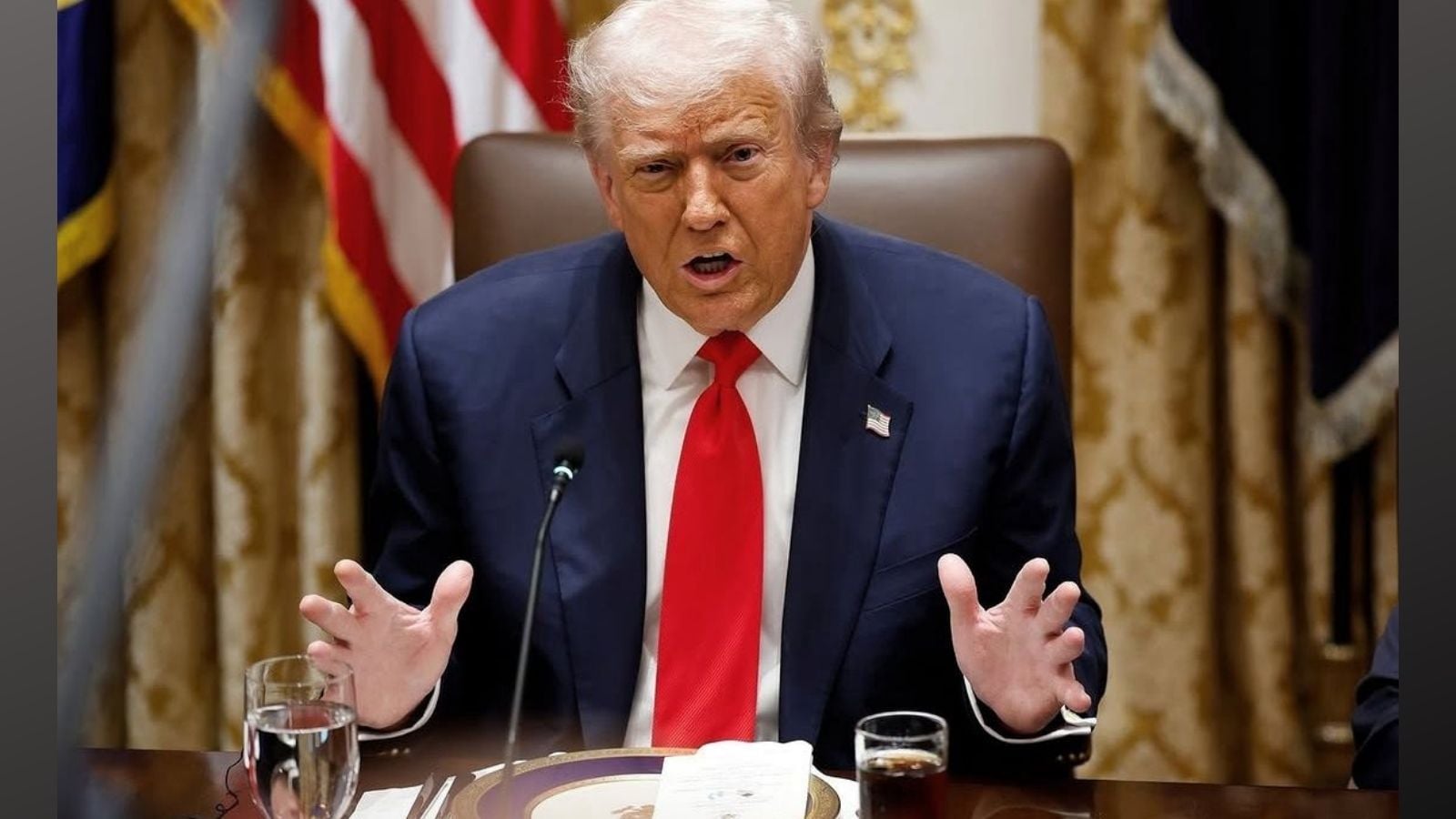
Trump’s Phoenix rally felt more like a victory lap than a campaign stop. He spent a good chunk of time mocking NATO, essentially telling the crowd that the alliance is finally trying to play catch-up with their bills, but as far as he’s concerned, that ship has sailed. The Phoenix crowd loved every second of this ‘left on read’ energy.
Trump claimed NATO reached out to help with the Strait of Hormuz situation only after, according to him, the crisis was basically wrapped up. He framed it like the alliance showed up when the credits were already rolling, and made it clear he was not interested in a last-minute assist.
And in case you missed it, the Strait of Hormuz, one of the world’s most critical oil shipping routes, had just been declared reopened by both the U.S. and Iran earlier that same day, making the timing of Trump’s NATO story feel almost too perfectly scripted.
NATO Finally Called, But Trump Says the Timing Was Too Late
Trump did not exactly soften the story for diplomatic ears. From the stage, he told the crowd that he had basically told NATO their help would have been great two months earlier, but now it was unnecessary because the job was mostly done.
He doubled down with a line that sounded less like foreign policy and more like a viral clapback. In his version, the United States handled one of the most critical global shipping routes alone, while NATO missed the moment entirely and tried to jump in after the fact. He called them “useless” and simply claimed they were never needed. Instead, it was NATO that needed the U.S.
Then came the message he clearly wanted to land. America, he said, cannot rely on outside help and needs to depend on itself. It was equal parts victory speech and warning, delivered like a punchline the crowd already knew was coming.
The Strait of Hormuz Situation Is Officially a “He Said, She Said” Situation
Here is where things stop being neat and start getting messy. Both the United States and Iran announced that the Strait of Hormuz was open again, but their explanations did not seem to match up at all.
Iran linked the reopening to a ceasefire involving Lebanon, suggesting a broader regional context. Trump, on the other hand, insisted the strait was fully open, and noticeably, there was no mention of it having anything to do with Lebanon, thereby creating a situation where both sides are telling completely different versions of the same ending.
At the same time, Trump made it clear that pressure on Iran is not going anywhere. He said a U.S. naval blockade would remain in place until a full transaction with Iran is achieved, which makes the “mission accomplished” tone feel a little more complicated than it sounds.
Ten Wars Ended
Did you think the Hormuz story was the main event? Trump used the rally to roll out what felt like a greatest-hits montage of his foreign policy, and the numbers quickly escalated.
He told the crowd it might be early to say so, but counting Iran and Lebanon would bring the total to 10 wars ended under his watch. It is a bold claim, and one that has been disputed before, but in that room, it landed exactly as he wanted.
He also said that Iran had agreed to give up its enriched uranium, which would be a massive development. The issue is that Iran has already pushed back against that claim, meaning this particular trophy is still very much up for debate.
President Trump said he has ended eight wars and suggested that resolving conflicts involving Iran and Lebanon would bring his total to ten.#NYI pic.twitter.com/IvJD28pzvz
— NewYork-Insight (@NewYork_Insight) April 17, 2026
Pakistan Got a Gold Star, While NATO Got the Cold Shoulder
One of the more interesting shifts of the night was who got praised and who did not. NATO was painted as late and unhelpful, but Pakistan got a very different treatment.
Trump called Pakistan’s leaders “fantastic people” and credited them with helping facilitate dialogue with Iran. He also praised Saudi Arabia, Qatar, the United Arab Emirates, and Kuwait, highlighting their responses to Iranian attacks and their role in the broader situation.
It felt like a full reshuffling of alliances, delivered with total confidence.
It was a lot to pack into one speech, but that was kind of the point. Each moment felt designed to land as its own headline, keeping the energy high and the narrative firmly in his control.
PRESIDENT TRUMP: “This will be a great and brilliant day for the world, because Iran has just announced that the Strait of Hormuz is fully open and ready for business.” pic.twitter.com/AabMAvAb3M
— Fox News (@FoxNews) April 17, 2026
Why This Moment Feels Bigger Than a Rally Speech
What happened on that stage was not just a policy rundown. It was a performance, and a very calculated one at that. Trump turned alliance politics into something that felt personal, visual, and easy to understand, even if the details remain complicated.
Casting NATO as the friend who shows up late to help you move is not a technical explanation, but it is one people instantly get. That framing, whether accurate or not, is what made the moment land with the crowd.
The bigger picture is hard to ignore. This is foreign policy being delivered like pop culture, where soundbites matter as much as substance, and perception can move just as fast as facts.
By the time the crowd left, the story was already set, America handled it, NATO missed it, and the rest of the world is still arguing about what really happened.