The nation was still shaking off the absolute shock of what happened at the White House on April 26. We were all collectively glued to our screens, trying to process the terrifying reality of a shooting, a shooting so close to President Donald Trump, and the air just felt heavy with that raw, post-crisis tension.
However, in Washington, the “moment of silence” usually lasts about five seconds before the gears start turning again. Before the literal dust had even settled on the driveway, the somber mood shifted into something much sharper and more aggressive as a new political firestorm began to brew.
For those who follow the intersection of Hollywood’s deep pockets and the capital’s make-or-break power plays, the air carried more than tension… it carried scrutiny.
While the world was still reeling from the headlines of the assassination attempt, a 99-second video clip dropped onto the timeline like a digital grenade, reminding everyone that in the world of media and money, the timing is rarely accidental and the stakes are almost always measured in millions.
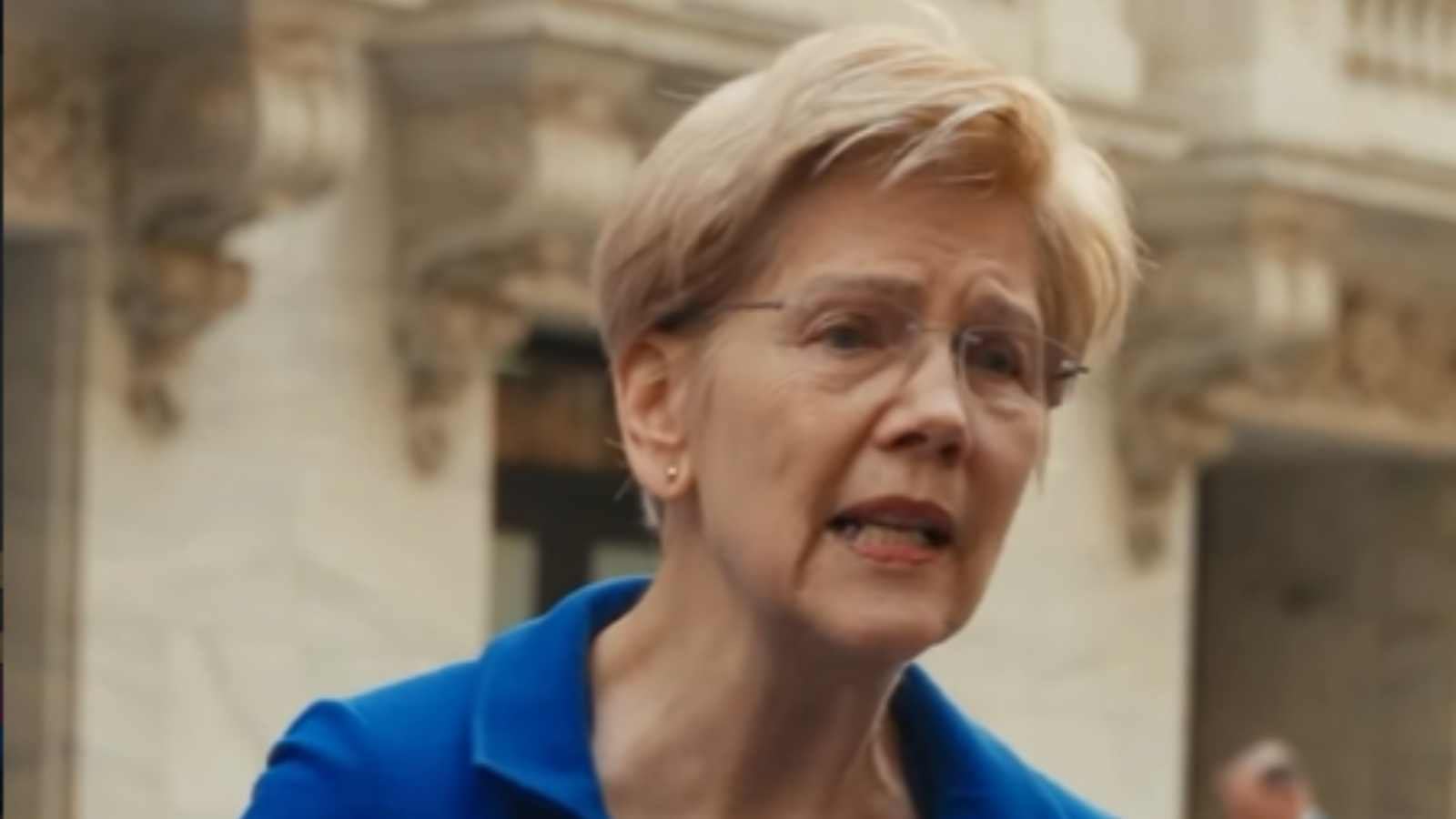
Senator Elizabeth Warren did way more than just walk into the room; she flipped the table on what was supposed to be a standard corporate acquisition.
On April 28, 2026, the Senator released a video that immediately sent shockwaves through both the beltway and the boardroom of Amazon MGM Studios.
The subject? A massive $40 million purchase of the film Melania by Jeff Bezos, a project directed by Brett Ratner and executive-produced by the First Lady herself.
Warren obviously didn’t care about the lighting or how the story played out. Instead, she pointed her finger directly at the eye-watering price tag, which included an additional $35 million in promotion, calling the entire $75 million investment a “possible bribe” linked to Donald Trump’s library fund and a lingering trail of past lawsuits.
My review of the Melania movie. pic.twitter.com/DmLG1MrAvE
— Elizabeth Warren (@SenWarren) April 28, 2026
The timing of Warren’s critique has become a lightning rod of its own. Just 48 hours prior, the nation watched in horror as President Trump survived a shooting, an event that usually triggers a period of political cooling. In the video, Warren’s tone is clinical yet piercing.
She questions why a studio would pour $75 million into a project that flopped at the box office, earning only $16 million during its theatrical run. “When a giant corporation overpays by tens of millions for a product that the public has already rejected, we have to ask what they are actually buying,” Warren stated in the clip.
Her argument hinges on the idea that this wasn’t a business deal based on projected viewership, but rather a calculated attempt to curry favor with a political figure currently navigating a complex web of legal and financial obligations.
The backlash from the other side of the aisle was instantaneous and fierce. Representative Nancy Mace was among the first to fire back, labeling Warren’s video “tone-deaf” and “disgraceful,” especially considering the physical danger Trump had faced only days earlier.
The Republican narrative has shifted to one of defense, arguing that Warren is weaponizing a standard media deal to continue a personal vendetta. However, the numbers at the heart of the controversy are hard to ignore.
For a film to lose nearly $60 million before hitting Prime Video is a massive setback, even for a titan like Amazon. This financial gap is exactly where Warren has set up her camp, suggesting that the “missing” millions are effectively a contribution disguised as a licensing fee.
The Mathematical Mystery of a Box Office Bomb
To understand why this has sparked such a firestorm, one has to look at the cold, hard reality of the entertainment industry’s ledger. In a typical Hollywood scenario, a studio buys a film based on its potential to turn a profit or at least break even through international sales and streaming residuals.
Melania did neither. Directed by the controversial Brett Ratner, the film was already navigating a sea of public relations hurdles before it even reached the screen. When box office receipts topped $16 million, most industry analysts expected the project to quietly fade into the depths of a streaming library.
Instead, the $40 million acquisition price and the $35 million marketing blitz suggest a level of confidence… or perhaps, as Warren suggests, a different motive that doesn’t align with the film’s actual performance.
This discrepancy has fueled a broader conversation about “political laundering” through media deals. Warren’s video specifically highlights the connection between the payout and Trump’s library fund, as well as the timing of various lawsuits that have been weighing on the president’s resources.
By framing the deal as a possible bribe, she is forcing a conversation on whether corporate entities are using entertainment contracts to bypass traditional campaign finance laws or to provide a financial lifeline to political figures under the guise of “content creation.”
For the average viewer, this moves the story from a simple movie review to a complex investigation into how power is bought and sold in the modern era.
A Different Lens on Corporate Risk and Political Branding
While the prevailing conversation focuses on the potential for corruption, an alternative perspective often gets lost amid partisan shouting. In the modern era of the “attention economy,” traditional metrics such as box-office returns are becoming less relevant to tech giants like Amazon.
For a company of that scale, $75 million is a drop in the bucket compared to the value of “owning the conversation.” One could argue that Amazon MGM wasn’t buying a successful film, but rather a guaranteed seat at the table of the most discussed family in the world.
In this view, the investment isn’t a bribe, but a calculated, albeit expensive, branding exercise intended to draw a specific demographic of viewers to their platform who feel underserved by mainstream Hollywood.
View this post on Instagram
This “loss-leader” strategy is common in Silicon Valley but rare in the film world, which is why it looks so suspicious to outsiders. If the goal was simply to acquire content that would generate headlines for months, then the Melania deal succeeded beyond its wildest dreams.
Every time a politician like Warren mentions the film, she is effectively providing the “earned media” that the $35 million promotion budget was intended to buy. From a purely cynical marketing standpoint, the controversy is the product.
This doesn’t necessarily excuse the financial optics, but it offers a window into a world where data and influence are more valuable than ticket sales, suggesting that the “bribe” might actually just be a very aggressive, very expensive play for cultural relevance.
The fallout from this clash is likely to linger far longer than the film’s stay in the “New Releases” category. With the White House shooting still fresh in the public consciousness, the intersection of political violence, corporate spending, and legislative oversight has created a volatile environment.
Warren’s push for accountability has resonated with those who are wary of corporate influence, while her critics see it as an opportunistic strike at a vulnerable moment.
As the investigation into the deal’s specifics continues, one thing is certain: the line between the entertainment industry and the political arena has never been more blurred, and the price of entry has never been higher.