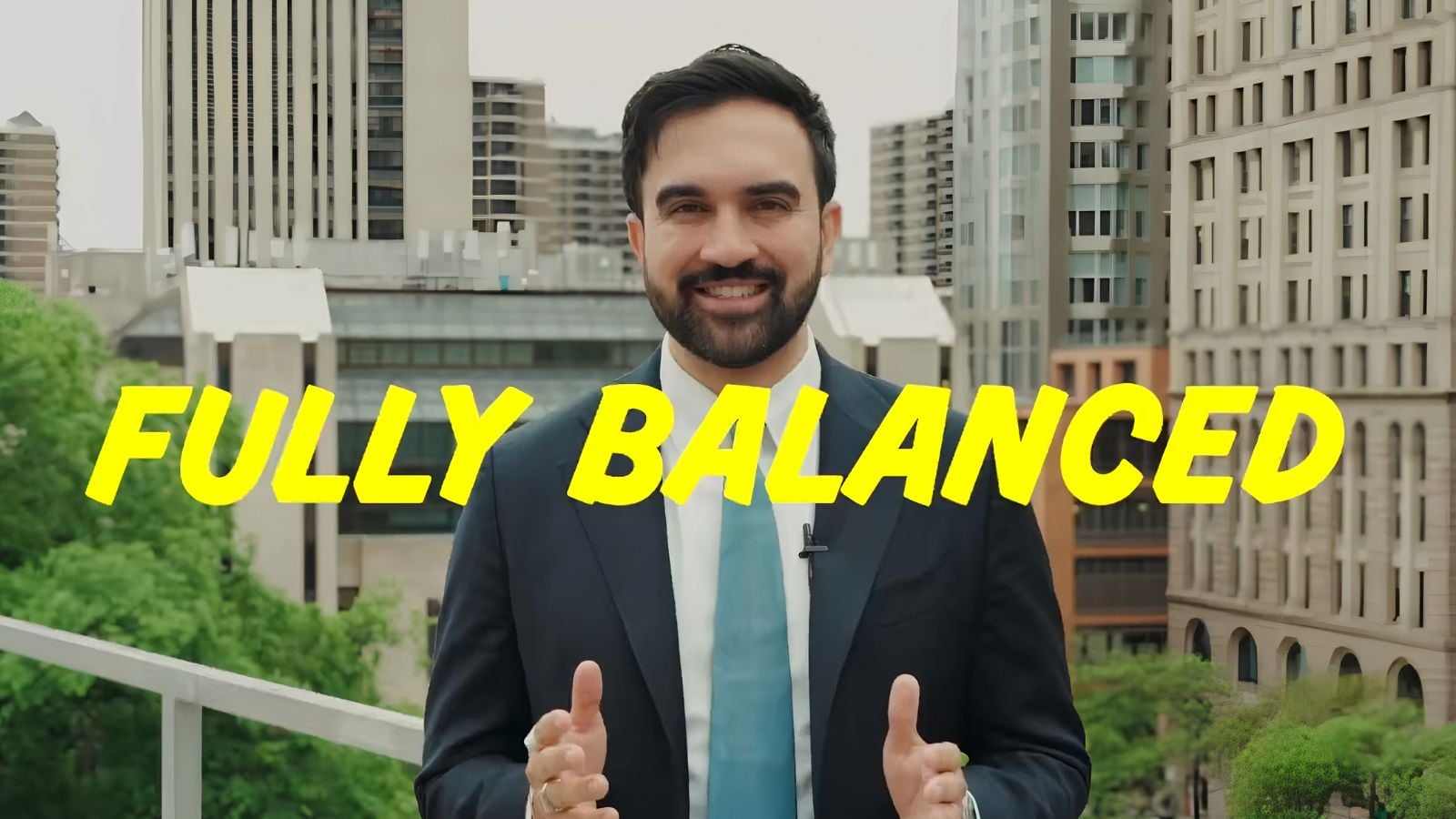
New York City’s mayor is facing sharp criticism after declaring that his administration erased a massive $12 billion budget deficit while still funding public services, housing programs, libraries, parks, and public safety initiatives.
In a post on X, the mayor framed the achievement as proof that government can still “deliver for the people who make this city run,” describing the approach as everything from “Pothole Politics” to “Democratic Socialism.”
But the reaction online quickly shifted the conversation away from the mayor’s victory lap and toward a more fundamental question:
Did New York City actually solve its financial problems, or was it simply rescued by state-level support and temporary funding measures?
The Mayor Presented the Turnaround as Proof Government Can Still Deliver
The mayor’s message attempted to project competence, stability, and a defense of activist government at a time when many large American cities are struggling with deficits, rising costs, homelessness, public safety debates, and growing voter frustration.
His argument was straightforward:
- The city inherited a massive budget hole.
- The administration closed it without deep austerity measures.
- Public services were maintained.
- Investment in housing and infrastructure continued.
And the burden, according to him, was not placed directly on ordinary workers.
Politically, the messaging was designed to reinforce a broader progressive argument that government spending and social investment do not automatically require collapse or painful cuts. The problem is that critics immediately challenged the premise itself.
When we came into office, we uncovered a $12 billion budget deficit.
Today, I’m proud to say we brought it down to zero.
We didn’t close the gap on the backs of working people.
We closed it while funding parks, libraries, safer streets and making historic investments in public… pic.twitter.com/TbNu6fhvjs
— Mayor Zohran Kwame Mamdani (@NYCMayor) May 12, 2026
Critics Say the City Was “Saved,” Not Financially Repaired
A large share of the backlash focused on one central accusation: The city allegedly did not independently eliminate the deficit at all.
Critics argued that New York State assistance played the decisive role in stabilizing the city’s finances, with some users accusing the mayor of taking credit for what they described as an effective bailout.
That distinction matters because it changes the narrative entirely.
There is a major political difference between a city restructuring its finances through efficiency, growth, or spending discipline and a city receiving outside financial support that temporarily fills the gap For critics, the mayor’s framing sounded less like fiscal management and more like political branding.
Many reactions reflected frustration that public officials often present transferred funds or external aid as evidence of economic success, even though taxpayers elsewhere within the state still ultimately absorb the burden.
The Debate Exposed a Bigger Ideological Divide About Government Spending
Beyond the immediate dispute over the numbers, the backlash revealed something deeper about modern political economics. Supporters of activist government tend to view public spending as an investment mechanism capable of improving quality of life, stabilizing communities, and preventing social decline.
Critics increasingly argue the opposite. They believe many governments have normalized structural overspending while postponing difficult fiscal decisions through borrowing, bailouts, subsidies, and financial transfers.
One reaction captured that frustration directly by arguing that government itself does not generate wealth. That argument reflects a broader conservative economic worldview that private sector workers, businesses, investors, and producers generate economic output. Government redistributes part of that output through taxation and spending.
So when politicians claim they solved problems “without hurting working people,” critics argue the money still ultimately came from those same workers in some form. That tension sits at the center of nearly every modern debate over taxation, public spending, debt, welfare systems, and social programs.
“Democratic Socialism” Has Become Both a Rallying Cry and a Political Target
The mayor’s decision to openly reference “Democratic Socialism” was also politically significant. For supporters, the phrase signals investment in public goods, expanded services, infrastructure, housing, labor protections, and a government more willing to intervene in economic inequality.
For opponents, it represents dependency on public spending, rising taxation, bureaucratic expansion, and unsustainable fiscal policy. That divide explains why reactions became emotional so quickly. To supporters, maintaining services during a budget crisis looks responsible and humane.
To critics, maintaining or expanding spending during financial strain looks reckless unless accompanied by serious structural reform.
The Real Political Risk May Come Later
The deeper issue for the mayor may not be today’s backlash. It may be what happens if economic conditions worsen later.
Large cities across the United States are already facing mounting pension obligations, infrastructure costs, housing pressures, migrant-related expenses, and slowing commercial real estate revenues in post-pandemic downtown areas.
That means claims of financial recovery are politically powerful now, but they also create future expectations. If service cuts, tax increases, layoffs, or new deficits emerge later, critics will likely revisit statements like this one and argue the recovery was overstated from the beginning.
That is why budget narratives matter politically, and numbers alone rarely drive public perception. The bigger fight is usually over what those numbers actually mean.
If balancing a city’s budget depends on outside financial support and continued public spending, is that real fiscal recovery or just a temporary political victory?