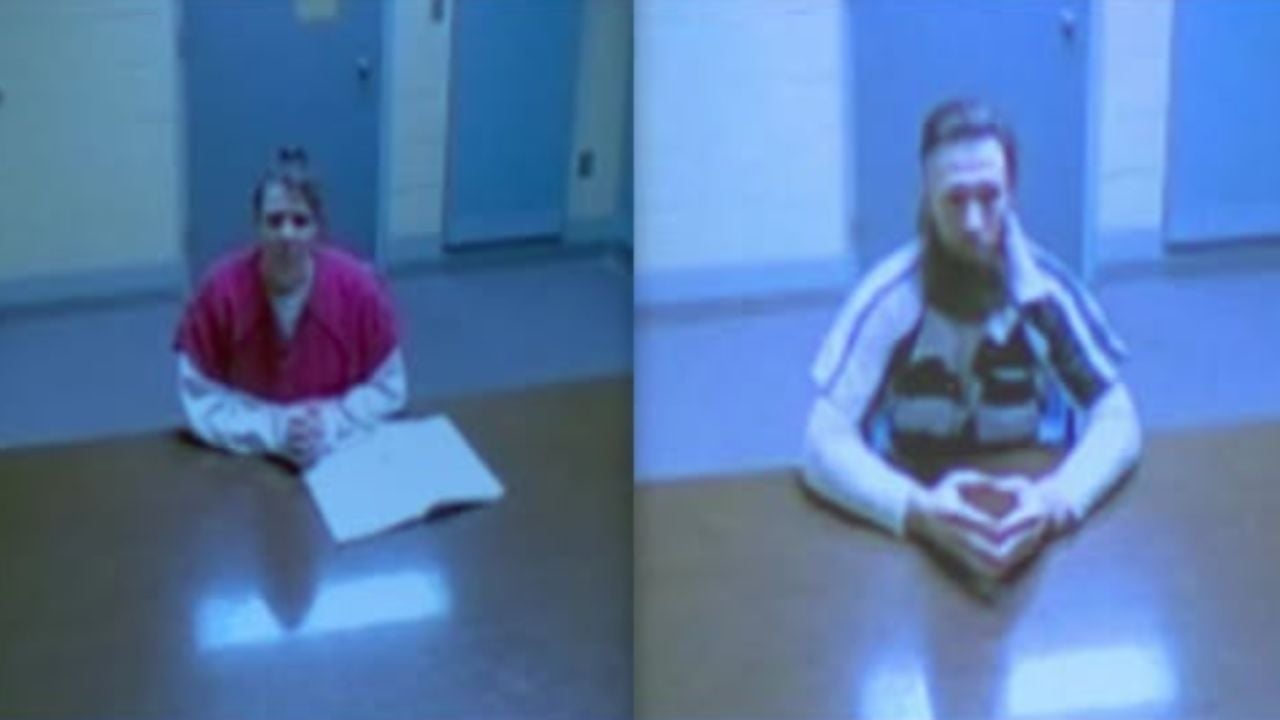
A Wisconsin couple lost more than $620,000 in a gold scam before deputies intercepted another planned pickup worth $380,000. An FBI affidavit alleges that one of the suspected couriers had already received a police warning about a separate scam when he texted his girlfriend: “Take the gold and run.”
Carissa Snow, 37, and Reese Lightner, 39, are among 10 defendants named in a November 5 Justice Department announcement.
Each faces one count of conspiracy to commit wire fraud and mail fraud and another count of conspiracy to commit money laundering in the Northern District of Florida.
Their Wisconsin prosecutions are also continuing. At a November 9 hearing, Snow’s attorney questioned her client’s knowledge of the alleged operation, according to FOX6’s court reporting.
A Fake Amazon Warning Led to Repeated Gold Deliveries
The Burlington couple’s ordeal began with a message claiming their Amazon account or payment card had been compromised. After calling the supplied number, they were transferred to someone claiming to represent the Federal Trade Commission, according to WISN’s account of the state complaint.
The caller used the name Benjamin Wiseman and supplied an FTC reference number, the station reported. He persuaded the couple that they were assisting an identity theft investigation and should liquidate assets and buy gold for safekeeping.
WISN described earlier handoffs on March 12, April 7 and May 1. By the time investigators intervened in the next collection, the victim in the Wisconsin investigation had already lost approximately $621,895, according to the federal affidavit.
Deputies Stopped the Next $380,000 Pickup
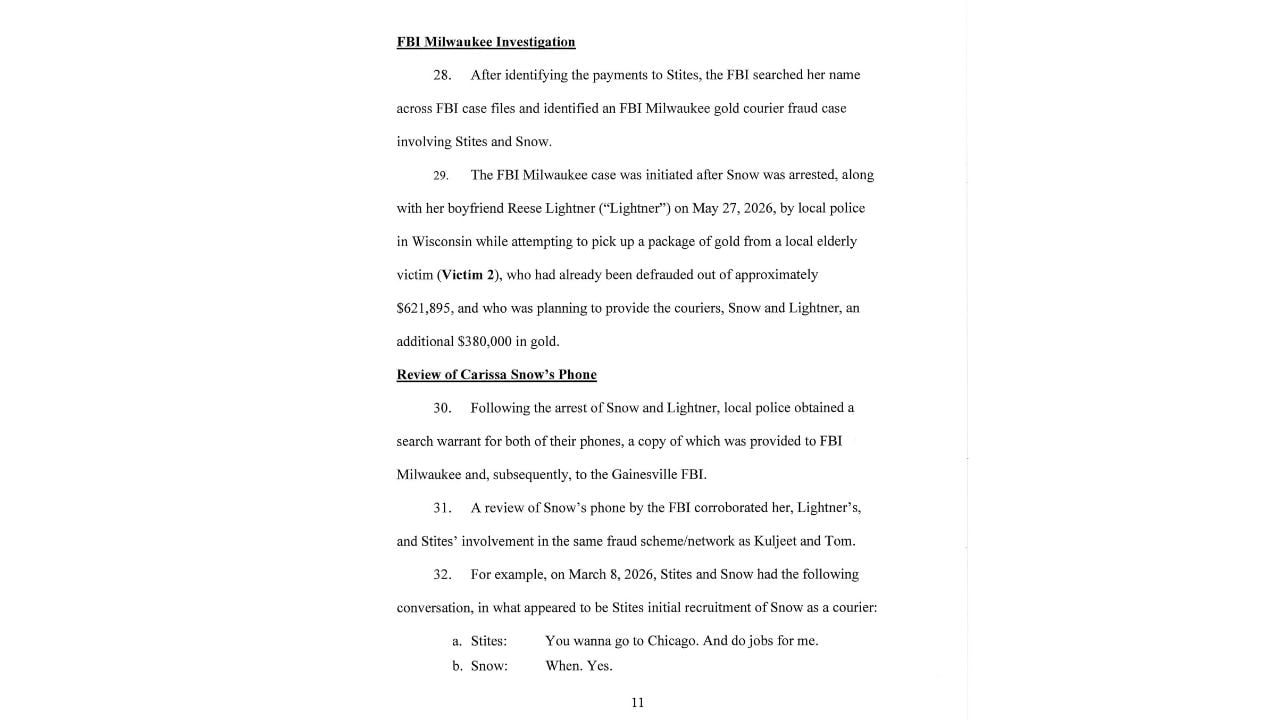
The October 8 federal complaint affidavit says Snow and Lightner were arrested May 27 while attempting to collect another $380,000 in gold from the Wisconsin victim. That proposed pickup was separate from the money already lost.
Racine County deputies worked with the victims to arrange a controlled exchange at the Benson Corners convenience store in Kenosha County. Surveillance video showed a package handoff beside the store before deputies moved in, WISN reported.
In an interview described in the federal affidavit, Lightner said a man called Tom had promised him $1,000 to collect the package. He told investigators that he and Snow asked what it contained, but Tom would not answer.
FBI Examined Texts, Pickup-Day Calls and a Rental Car
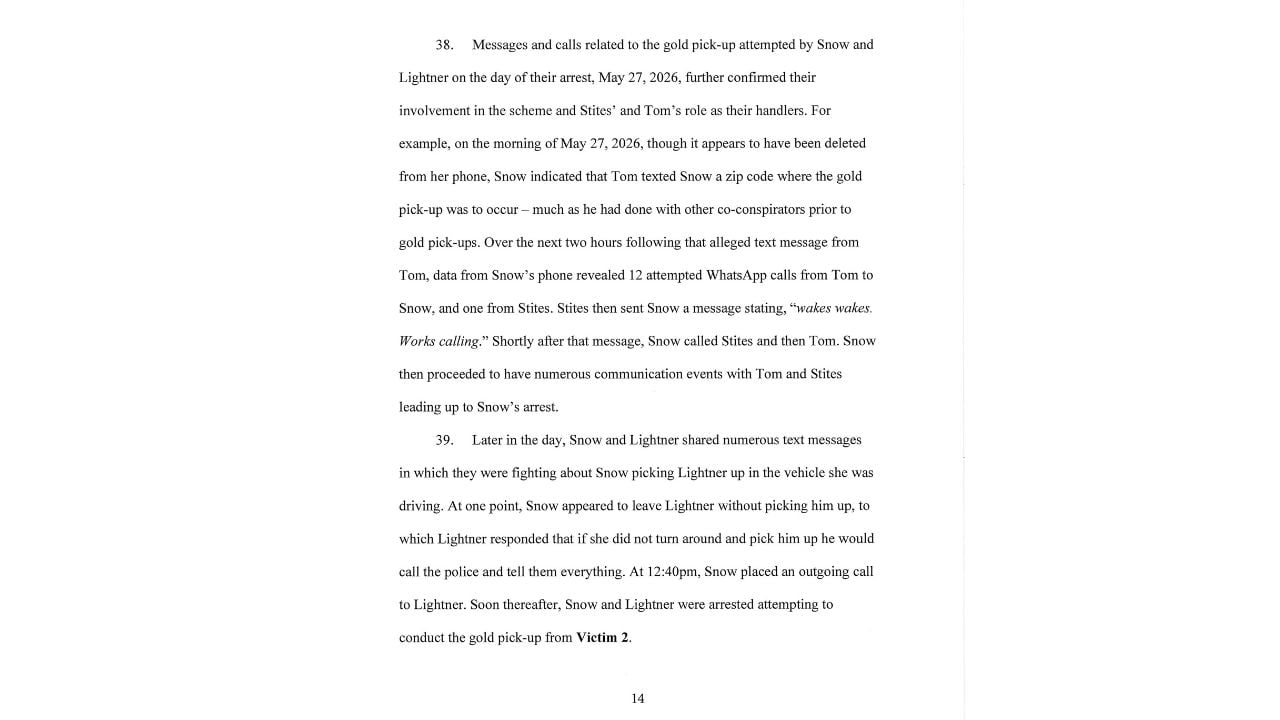
The affidavit also describes a May 22 message in which Lightner allegedly told Snow, “Take the gold and run.” FBI Special Agent Brett Heil wrote that the message came after Madison police had told Lightner a separate attempted collection involved approximately $400,000 in gold coins from a scam victim.
After the May 27 arrests, police obtained warrants to search both defendants’ phones. The FBI said Snow’s communications with Tom used the same WhatsApp number associated with other alleged participants in the wider investigation.
On the morning of the planned Wisconsin pickup, phone data showed 12 attempted WhatsApp calls from Tom to Snow within two hours, according to the affidavit. It also describes an argument later that day in which Lightner allegedly threatened to call police and tell them everything unless Snow returned to pick him up.
Investigators traced the Chevrolet Equinox used for the pickup to an Enterprise rental. The affidavit says company records showed that Sierra Stites, another defendant in the federal case, had booked and paid for the vehicle.
Defense Questions What Couriers Knew as Cases Proceed
At Snow’s November 9 hearing, defense attorney Erin Preston questioned Investigator Andrew Sparks about what Snow knew of the packages. FOX6 reported that the defense also suggested Snow may have been pressured into participating or may not have understood the operation. Sparks said Lightner’s account indicated the pair had limited knowledge of what the packages contained.
Court Commissioner Sally Hoelzel nevertheless found probable cause for Snow’s case to proceed, with her next appearance scheduled for December 7. The finding allows the prosecution to continue; it is not a determination of guilt.
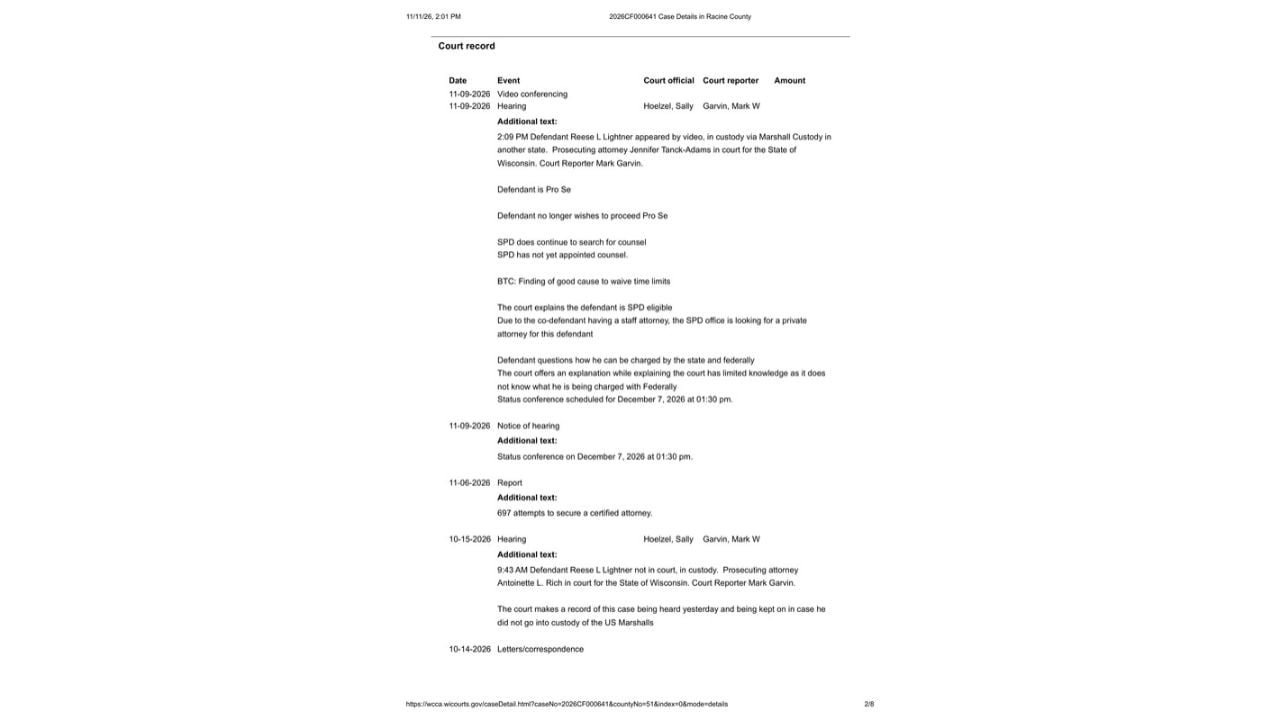
Lightner’s Racine County court register lists one Class F felony count of theft by false representation involving more than $100,000, with a party-to-a-crime modifier. The case, 2026CF000641, was filed May 28 and remained open in the November 11 record.
The November 9 entry records that Lightner appeared by video from federal custody and no longer wished to represent himself. He was still awaiting appointed counsel, and the court scheduled a status conference for December 7 at 1:30 p.m.
In the separate federal prosecution, the Justice Department said all 10 defendants had appeared for arraignment in Gainesville, with a jury trial scheduled for December 30. Snow, Lightner and the other defendants are presumed innocent unless proven guilty.
Government Agencies Will Never Ask You to Deliver Gold for Protection
The Federal Trade Commission warns that demands to buy gold bars and hand them over to protect your money are scams. The same applies to instructions to move savings into a supposedly secure government account or surrender cash for safekeeping.
If an unexpected security alert directs you to call a number, verify the account issue through the company’s official app or website instead. End contact with anyone demanding a protective transfer, and speak with someone you trust before moving money or valuables.
The FBI recommends reporting government-impersonation scams to local law enforcement and its Internet Crime Complaint Center. If a courier pickup has already been arranged, contact police before any further exchange. Reports can also be submitted at ReportFraud.ftc.gov.