

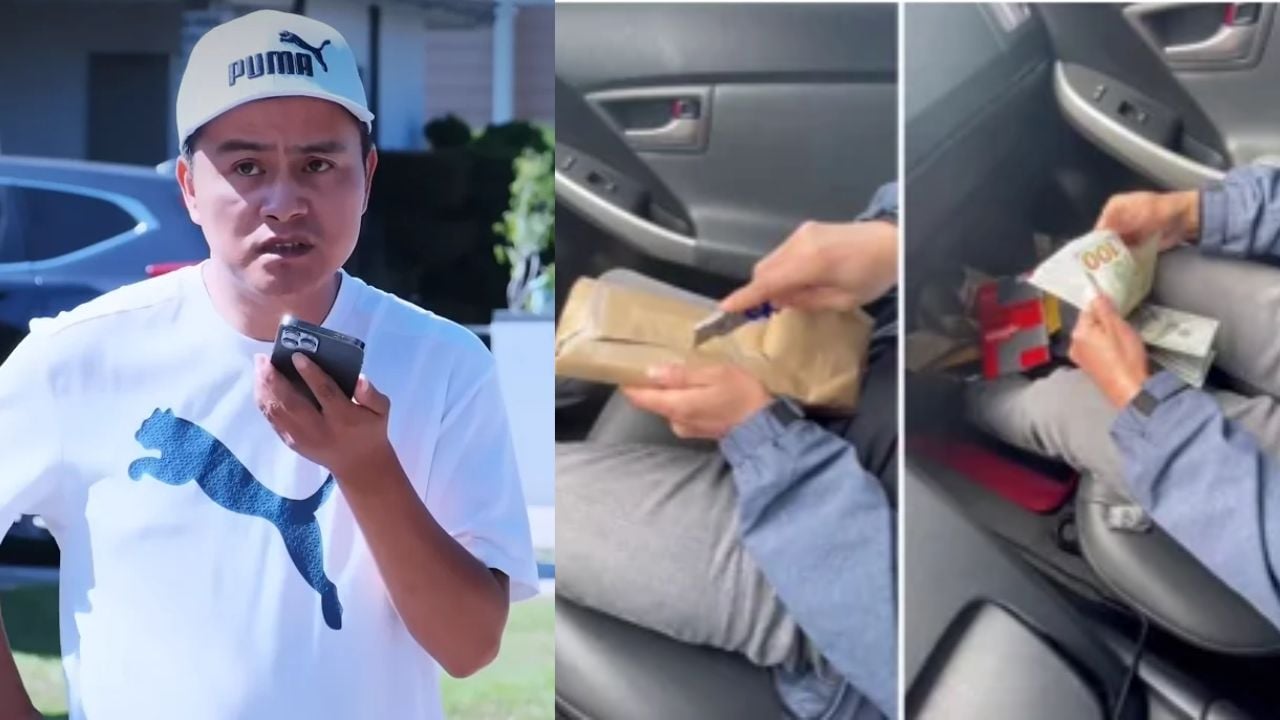
A cash collector arrived at a Los Angeles-area home expecting money from someone he believed was an elderly fraud victim. Instead, he encountered a fake funeral staged by YouTube creators who confronted him about working for a scam organization.
Jiandong Chen, 42, known as “Little Tiger,” was sentenced November 13, 2026, to 78 months in federal prison. U.S. District Judge Robert S. Huie imposed the sentence after Chen pleaded guilty to conspiracy to commit mail and wire fraud and conspiracy to launder monetary instruments.
Investigators identified more than 2,000 elderly victims nationwide and over $27 million in losses linked to the multinational operation. Callers impersonated businesses, banks and government agencies to persuade people to surrender their savings.
Chen admitted that more than $9.5 million in victim losses occurred during his participation in the conspiracy. He was one of five defendants named in a federal indictment unsealed in 2024.
YouTubers Staged a Funeral to Confront the Cash Collector
The encounter occurred in July 2023, according to prosecutors. Ashton Bingham and Art Kulik, the creators behind Trilogy Media, confronted Chen when he arrived for the supposed cash pickup.
Their video, published August 19, 2023, presented a staged funeral for a fictional man named Mortimer. Both creators attended Chen’s sentencing. In the Justice Department’s announcement, U.S. Attorney Adam Gordon praised their contribution to the effort against fraud.
A Supposed Refund Became a Demand for the Victim’s Savings
The Justice Department’s April 2 guilty plea announcement describes how India-based call centers reached victims through unsolicited calls, emails and pop-up advertisements. Some victims were persuaded to install remote desktop software, giving scammers access to their computers.
In one version of the fraud, a caller claimed a retailer owed the victim a small refund for an unauthorized charge. The scammers then made it appear that an excessive refund had reached the victim’s account and demanded that the supposed overpayment be returned.
No such overpayment had occurred. Victims withdrew their own money and sent it to people presented as representatives who would correct the mistake.
Fake Recipient Names Matched the IDs Used to Collect Cash
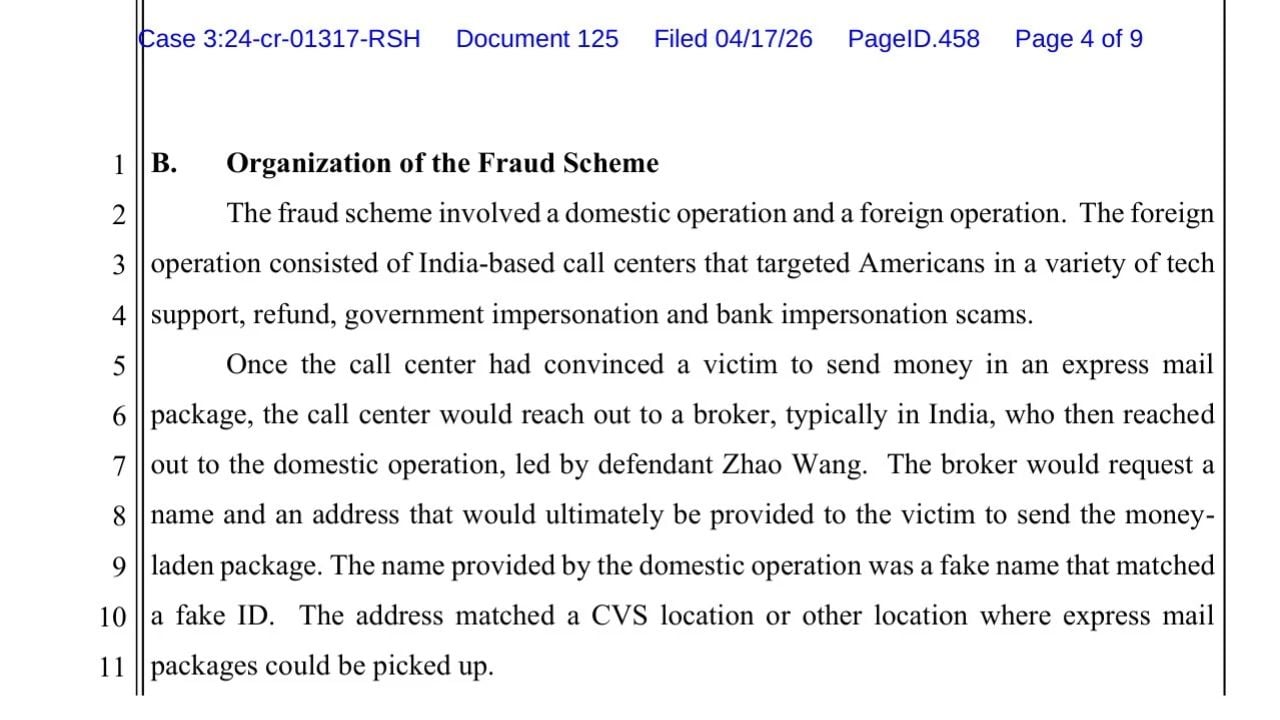
A five-page excerpt of prosecutors’ sentencing memorandum for co-defendant Zhao Wang, filed April 17, explains the connection between the overseas callers and American collectors. After persuading a victim to send cash, a call center contacted a broker who obtained a recipient name and pickup address from the U.S. operation.
The names were fictitious and matched false identification documents. Pickup addresses included CVS stores and other retail locations that accepted express deliveries, according to the filing.
Chen admitted using fraudulent driver’s licenses or other IDs matching the recipient names to retrieve victims’ packages, the Justice Department said. The government memorandum also describes collectors photographing or filming the cash they retrieved and sending those records to Wang.
Chen Continued Collecting Packages After an Earlier Arrest
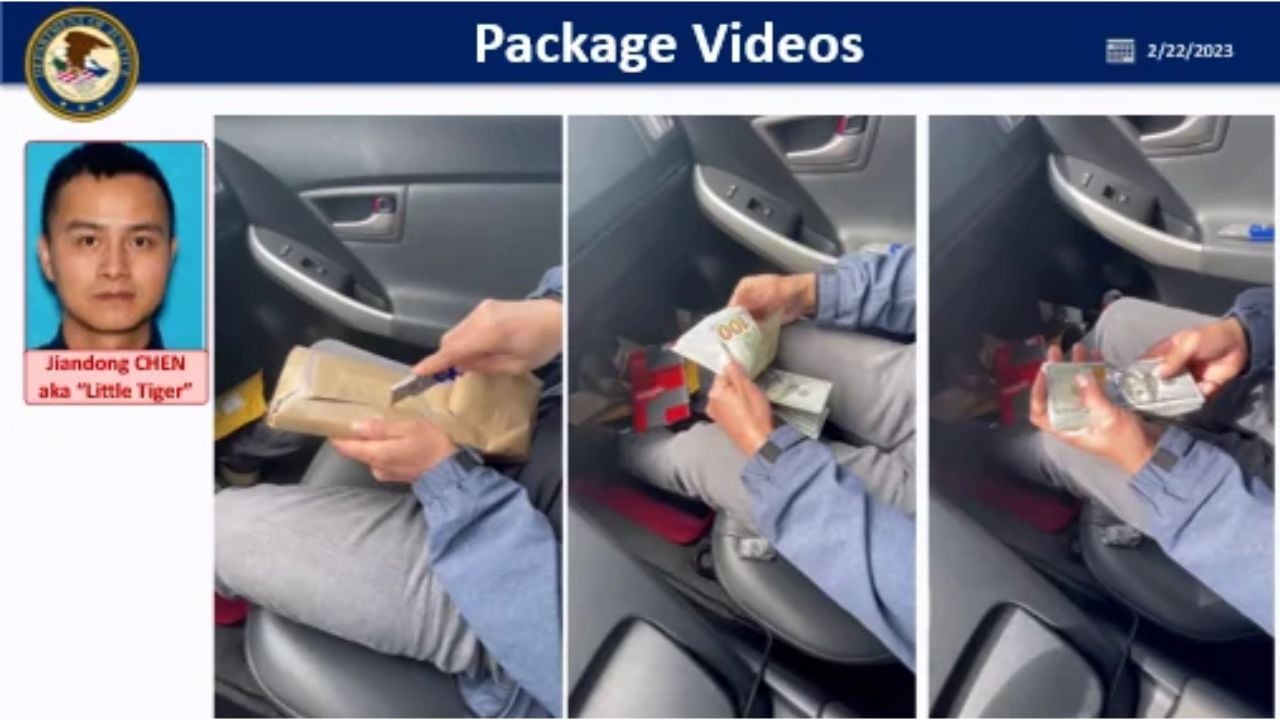
Prosecutors said videos showed Chen participating in the operation by February 2023. Some showed him collecting packages and counting cash while wearing clothing also seen in the later YouTube confrontation.
Local authorities arrested him in June 2023, but his involvement continued through at least December 22, when federal agents encountered him attempting to retrieve more victim packages in Upland, California. Chen also admitted frequently relocating to evade law enforcement, according to the sentencing announcement.
Collected Cash Was Converted Into Cryptocurrency
The government’s sentencing memorandum describes the U.S. operation consolidating collected cash, retaining a share and sending the remainder to an India-based broker through cryptocurrency. Chen separately admitted that laundering transactions paid overseas associates and conspirators and financed travel for further cash collections.
Wang, known as “Oscar,” oversaw the American side of the operation, according to prosecutors. The Justice Department announced his separate 151-month sentence May 8.
Verify Refund Claims Before Giving Computer Access or Sending Money
The Federal Trade Commission warns about fake refund overpayments used to persuade people to send their own money to scammers. If an unexpected caller claims a refund went wrong, end the conversation and contact the company and your bank through independently verified numbers. Do not install remote access software or let an unsolicited caller control your computer.
The FBI has specifically warned about refund scammers directing older adults to ship cash to retail pickup locations. If you have sent money, contact your bank immediately and report the incident at IC3.gov. Preserve messages, transaction records and shipping information, including the recipient name and destination address.