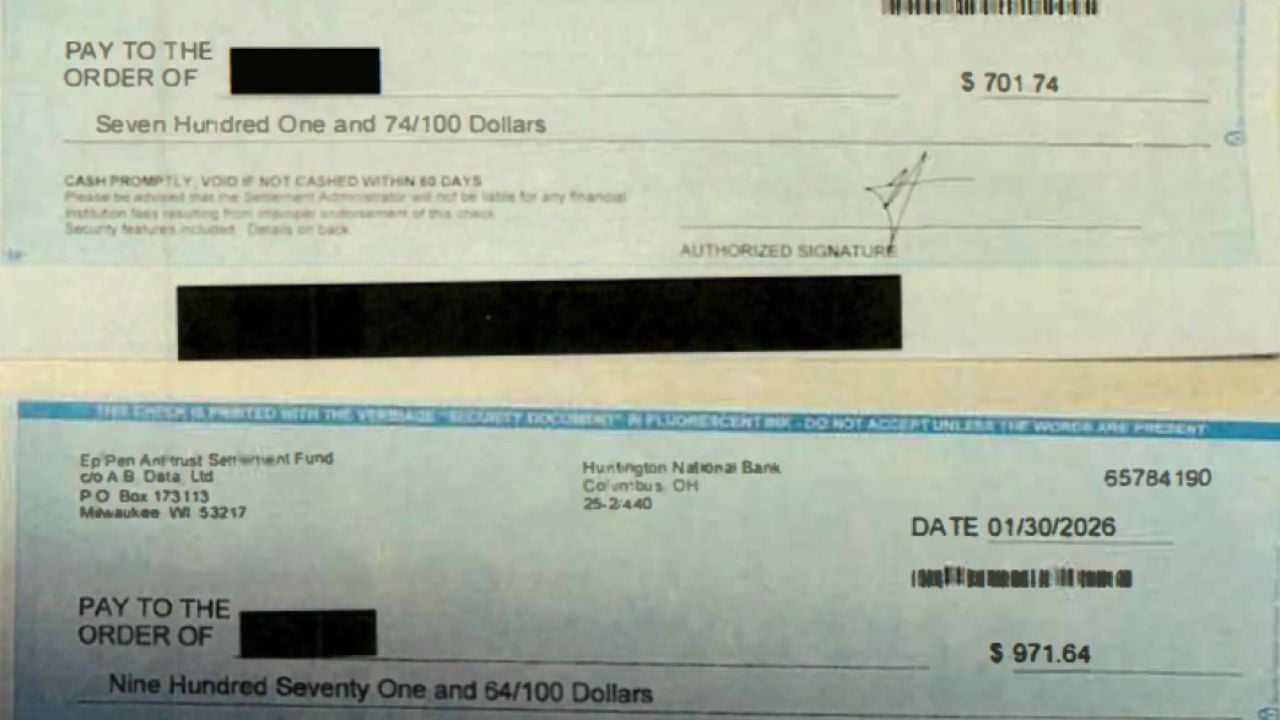
A Greece, New York, man is facing federal charges after prosecutors said he collected about $1.3 million by filing false claims in class action lawsuit settlements.
Federal prosecutors identified the defendant as Phillip Digennaro, 38, of Greece, according to the U.S. Attorney’s Office for the Western District of New York.
He is accused of submitting thousands of false settlement claims over several years, using fictitious names, fake documents, forwarded mail, and hundreds of financial accounts to collect payouts he was not entitled to receive.
Digennaro was charged by criminal complaint with conspiracy, wire fraud, aggravated identity theft, and money laundering. The charges are allegations, and he is presumed innocent unless proven guilty.
Prosecutors Say 107 Settlements Were Targeted
The alleged scheme ran from January 2022 through December 2025, according to prosecutors.
During that period, prosecutors said Digennaro received approximately 27,052 payments totaling about $1,303,060.59 from roughly 107 class action lawsuit settlements.
Class action settlements often pay eligible consumers, customers, employees, product owners, or other class members through third-party claim administrators.
Fake Driver’s Licenses Were Allegedly Used to Support Claims
Between Jan. 25, 2022, and May 19, 2023, Digennaro allegedly received nine payments totaling $27,060 from that settlement fund.
Investigators said he submitted at least five fraudulent driver’s licenses to support those claims.
WXXI News reported that Digennaro allegedly identified potential settlements online, used a name generator, obtained fake IDs from the dark web, and paid a third party in Colombia $600 a month to file false claims through a proxy.
Mail Forwarding and Hundreds of Accounts Were Part of the Case
According to WXXI, investigators claim Digennaro told agents he attached fake names to valid addresses and then set up mail forwarding to his personal address.
Federal prosecutors said he used more than 480 bank accounts at eight financial institutions, along with PayPal, to carry out the alleged scheme.
Those institutions included Synchrony Bank, Alliant Bank, Chase Bank, Key Bank, M&T Bank, PNC Bank, Discover Bank, and Barclays Bank, according to the Justice Department.
Federal Agents Seized More Than $1.2 Million
On May 21, 2026, law enforcement executed a federal seizure warrant and seized approximately $1,224,497.27 from accounts controlled by Digennaro.
That same day, investigators searched his residence and seized multiple checks issued from class action settlement funds and payable to people other than Digennaro, prosecutors said.
Federal authorities also reported finding electronic devices containing extensive class action filing records, photoshopped documents with fake names, and a folder labeled “ready for claims” with subfolders for different class action lawsuits.
Crypto Losses Were Background, Not the Charged Scheme
WXXI reported that court records say Digennaro admitted to the fraud during the FBI search and said he came up with the idea after being unemployed during the COVID-19 pandemic and losing money in cryptocurrency.
The outlet also reported that Digennaro had filed separate lawsuits tied to crypto losses. One lawsuit involved 50 Ethereum tokens he said he could not transfer out of Binance, while another alleged unauthorized crypto transfers and listed total damages of $750,000.
Class Action Payouts Should Go Through the Official Settlement Process
People who receive an unexpected settlement check, notice, claim confirmation, or tax form for a class action they did not file should contact the settlement administrator through the official settlement website or court notice, not through a link or phone number from an unknown message.
If someone’s name, address, driver’s license, Social Security number, or bank information may have been used in a false claim, the FTC says identity theft can be reported at IdentityTheft.gov, which gives victims a recovery plan and an Identity Theft Report. Fraud, scams, or bad business practices can also be reported at ReportFraud.ftc.gov.
Suspected class action settlement fraud can also be reported to the settlement administrator, the court handling the settlement, local law enforcement, and the FBI’s Internet Crime Complaint Center at IC3.gov.