
The comments did not wait for the facts to settle. They went somewhere familiar fast.
“Sex boy for a female executive?…is the position still open?” — 481 likes.
“Working under her would not be a bad role for most men.” — 324 likes.
“applicants are forming a line around the country.”
“Hold on a second, a seemingly physically attractive, smart, very wealthy, independent, successful, woman is down on her knees giving you the business, and your reaction is… you cry? I’ve seen enough. Case dismissed, turn in your man card.” — 992 likes.
Within hours of the lawsuit going public — before JPMorgan’s internal investigation became the lead, before the chatbot screenshots surfaced, before the filing was marked for correction — one loud reaction was that a man should be grateful for being allegedly drugged, coerced, and assaulted, provided his alleged abuser looked the part.

That instinct deserves examination, separate from whether Chirayu Rana is telling the truth.
The lawsuit was ugly before it got messy
Rana, identified in reports as the former JPMorgan staffer behind the John Doe filing, accused executive director Lorna Hajdini of forcing him into a “sex slave” arrangement, drugging him with Rohypnol and Viagra, and threatening to slash his bonus if he did not comply. The complaint described Hajdini allegedly arriving unannounced at his apartment and forcing him into sex.
Hajdini’s lawyers said she “categorically denies the allegations” and said she had “never even been to the location where the alleged sexual assault supposedly took place.” JPMorgan said its internal investigation reviewed emails, phone records, and witness statements before finding no supporting evidence. Rana, the bank said, refused to provide facts central to his own allegations. He had reportedly tried to negotiate a payoff “running into millions” before filing.
The court filing was later removed and marked for correction.
Then the chatbot blew a hole in the story
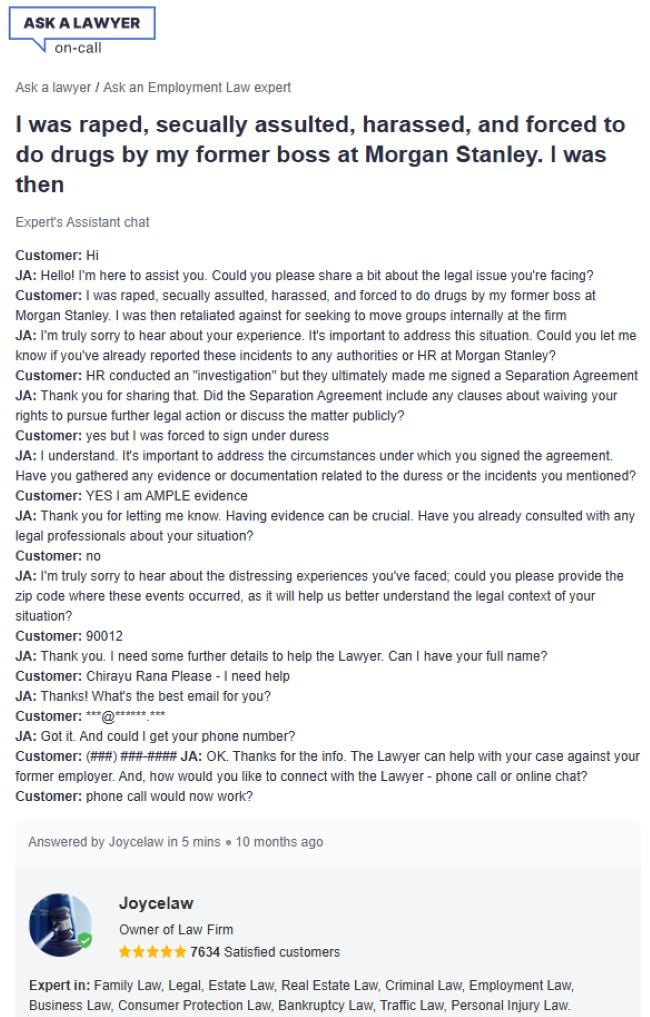
About 10 months before the lawsuit was filed, a public page on the legal-advice platform AskALawyerOnCall.com showed a user identifying himself as Chirayu Rana and describing being “raped, secually assulted [sic], harassed, and forced to do drugs” by a former boss at Morgan Stanley. The user said HR investigated and made him sign a separation agreement under duress. He also said he had “AMPLE evidence.”
In that exchange, the alleged abuser was described with male pronouns. The current lawsuit is against a woman.
The contradictions matter. They make the lawsuit’s credibility a legitimate question. None of them retroactively justify the response that arrived before most readers had any of them.
The internet convicted him by photo
The “should have enjoyed it” framing was not buried in fringe corners. It was sitting near the top. Other variants stacked underneath, including racist and ableist mockery of Rana’s appearance — comments comparing his face to cartoon characters and suggesting someone who looks like him could not credibly accuse someone who looks like her.
“Not trying to be mean, but I knew it was false just from the photos lol” — 603 likes.

The translation is brutal. The people rewarding that comment were not evaluating the chatbot exchange, the internal investigation, or the legal filing. They were saying that a man who looks like Rana, alleging assault by a woman who looks like Hajdini, failed the visual test for credibility before evidence entered the room.
That is the script. A male victim of an attractive female perpetrator is not credible by appearance. A male victim who cries about it has surrendered some part of his claim to legitimate harm.
The man-card defense showed up right on cue
RAINN’s guidance on male sexual assault survivors describes the framework: shame, pressure to “man up,” confusion over physical response, and masculinity myths that frame sexual contact as something men are supposed to want. RAINN explicitly notes that physical response does not equal consent or enjoyment. Many male survivors are not taken seriously because the cultural script says men should always want it.
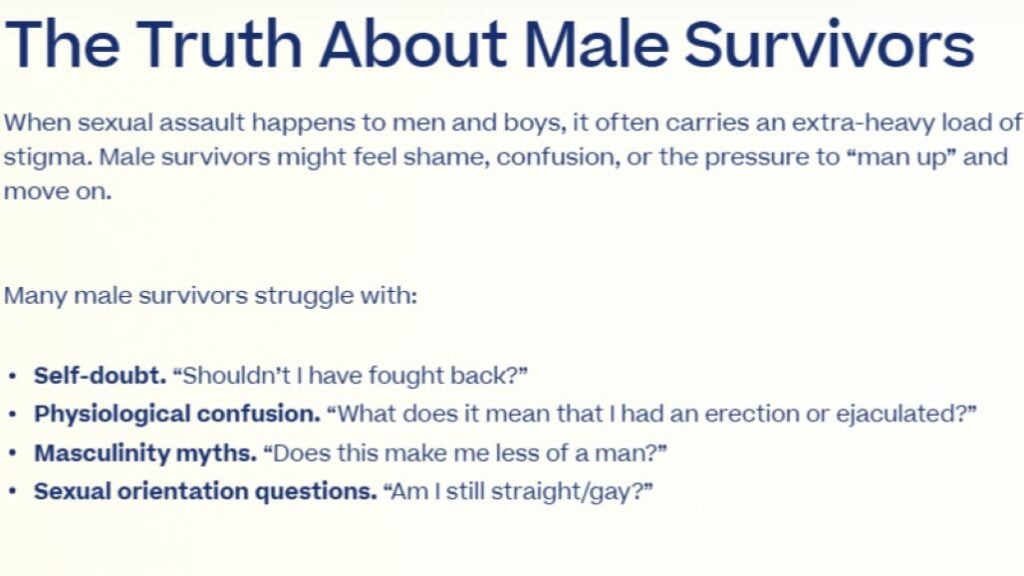
Every one of those scripts shows up in the screenshots. “Turn in your man card.” “She’s attractive, wealthy, successful — what’s there to cry about?” A man alone with an attractive woman has no standing to call it assault. A man who cries forfeits the protection of being taken seriously.
So which rule are we using?
Rana’s story has credibility issues that may worsen. The filing was marked for correction. The chatbot exchange shows a similar narrative with different details. JPMorgan says its investigation found no supporting evidence. None of that should be brushed aside.
But the reaction did not wait for any of it. It arrived before the inconsistencies were widely publicized, and told a man alleging assault — by an alleged abuser who fit a desirable profile — that his suffering was either funny or proof he was insufficiently masculine.
Pick the rule we are operating under. Credibility gets evaluated by evidence, or by whether the alleged victim looks the way we expect a victim to look.
It cannot be both.