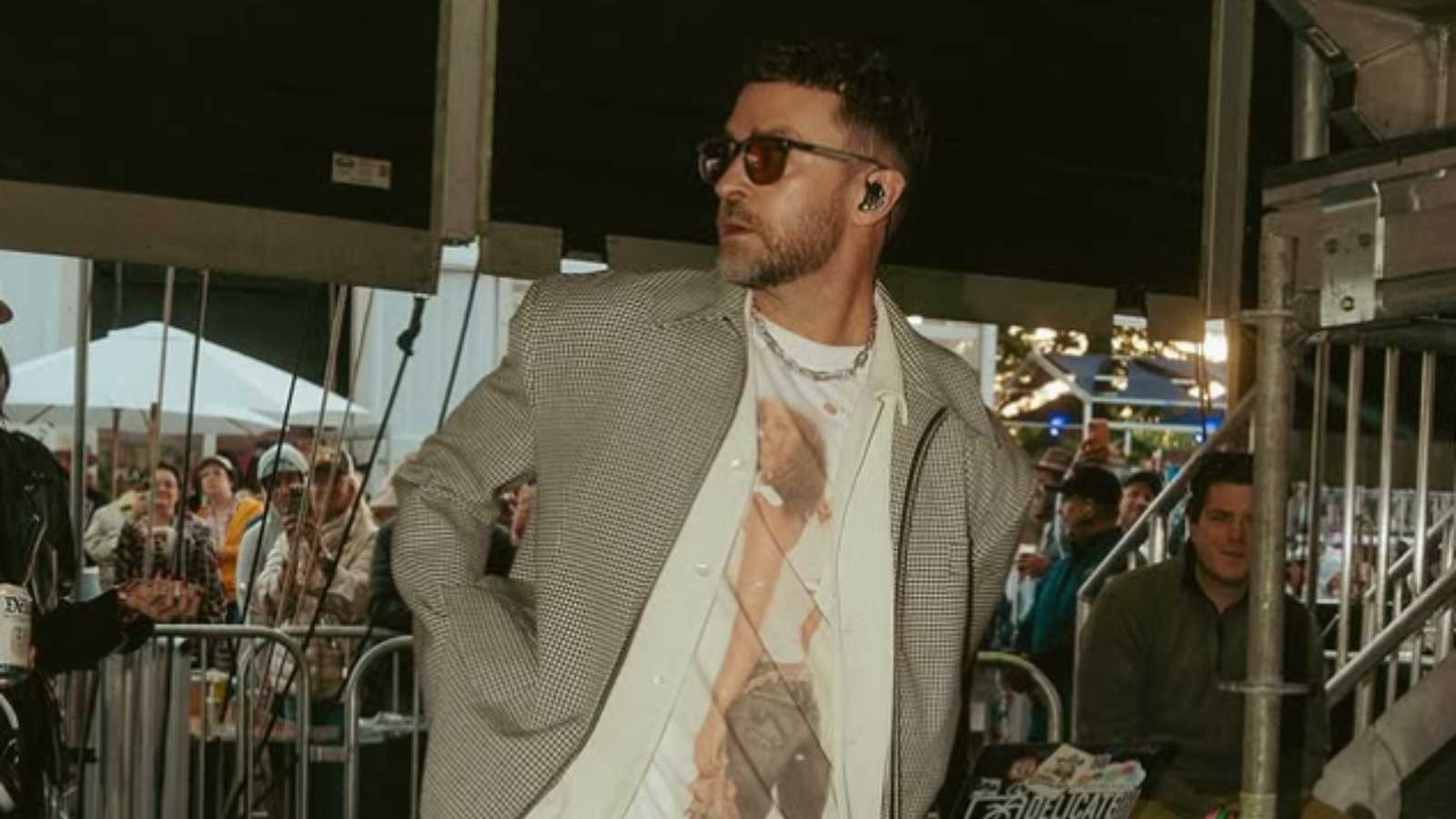
There’s a particular kind of silence that falls when a global superstar gets pulled over on a quiet road. Not the screaming kind. Not the scandal-hungry kind. Something softer. Something very… human. That’s where this story begins.
It’s easy to imagine Justin Timberlake in motion, on stage, in rhythm, bathed in light, choreographing moments that feel larger than life. It’s, however, harder to picture him under fluorescent bulbs, standing on the side of a road, trying to balance on one foot while an officer watches closely.
But that’s exactly where things unraveled in the early hours of June 18, 2024. In Sag Harbor, a small, almost storybook town tucked into New York’s Hamptons, Timberlake was pulled over after police said he ran a stop sign and drifted out of his lane.
What followed wasn’t dramatic in the cinematic sense. There were no raised voices. No chaos. Just something arguably more unsettling: visible confusion, nerves, and a man clearly out of his element.
Recently released body camera footage, made public after a long legal tug-of-war, captures Timberlake in that fragile space. At one point, he says what anyone might say under pressure: “These are, like, hard tests.” And suddenly, the myth collapses into something much smaller.
The Detail People Missed

Here’s what most headlines gloss over: this wasn’t a high-speed chase or a defiant standoff. It was, in many ways, painfully ordinary. Timberlake reportedly told officers he had consumed “one martini.”
He refused a breathalyzer test, a decision that, under New York law, automatically triggers penalties like license suspension regardless of ultimate guilt. And while his legal team initially pushed back hard, even arguing he wasn’t intoxicated, the case ultimately ended in something quieter than a courtroom spectacle.
By September 2024, Timberlake pleaded guilty, not to DWI, but to a reduced charge: driving while impaired, a non-criminal traffic violation. He paid a fine. He completed community service. He recorded a public safety message urging others not to drink and drive. Case closed… Or did it?
Then the Footage Became the Story
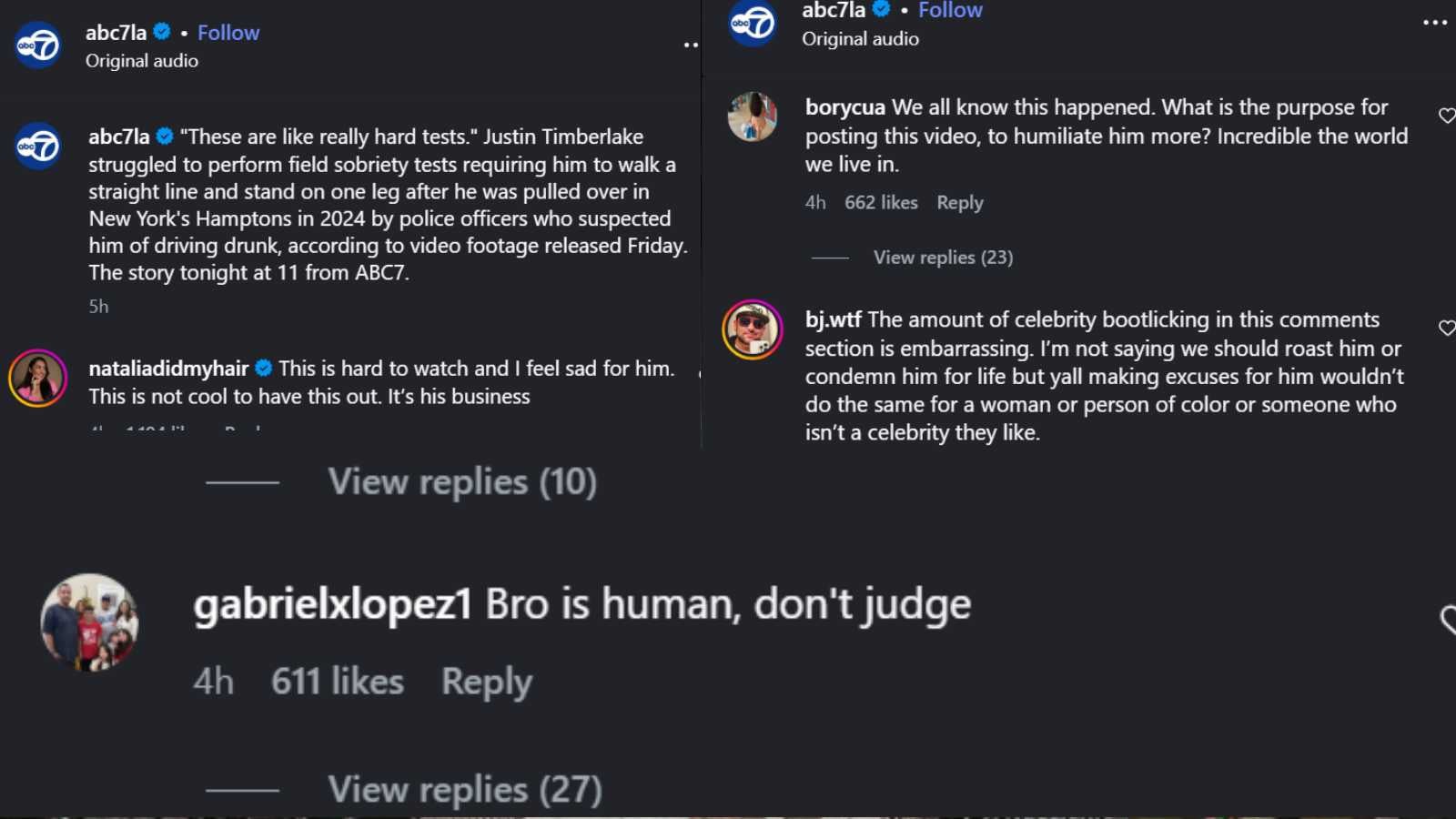
If the arrest was the spark, the footage became the wildfire. For nearly two years, Timberlake fought to keep the bodycam video from public view, arguing that it showed him in what his legal team described as an “acutely vulnerable state.” He wasn’t trying to relitigate the case; he had already accepted responsibility in court, but to control what came next: perception.
Because in 2026, reputation doesn’t live in court records. It lives in clips. And clips don’t care about nuance. The eventual release of redacted footage, after public records requests and legal negotiations, didn’t reveal anything shocking in the traditional sense. No dramatic confession.
No explosive behavior. Just a man who seemed anxious, slightly disoriented, and increasingly aware that something had gone very wrong. And maybe that’s exactly why it resonated.
This Isn’t Just About Accountability

Let’s be clear about one thing: driving under the influence is serious. It’s dangerous. It ruins lives. Timberlake himself acknowledged that, urging people to “take an Uber” instead of risking it.
But here’s the uncomfortable question that lingers beneath all of this: When does accountability end, and spectacle begin? Timberlake faced legal consequences. He admitted fault. He fulfilled the court’s requirements. By the standards of the justice system, the matter was resolved.
So, what purpose does releasing hours of footage serve after that resolution? Public transparency is the usual answer. And it matters, especially in cases involving law enforcement. But this case sits in a gray area.
The footage doesn’t expose misconduct. It doesn’t reveal systemic failure. It doesn’t even clarify the legal outcome. What it does reveal is something else entirely: vulnerability. And in the age of viral moments, vulnerability is currency.
Fame… Flattened

There’s a quiet irony in how this played out. For decades, Timberlake’s image has been meticulously curated, boy-band heartthrob turned solo powerhouse, actor, cultural mainstay. A man who seemed to move through fame with a kind of practiced ease.
But the footage strips away all of that. No stage. No spotlight. No choreography. Just a person trying… and failing to follow instructions on a roadside. And here’s where it gets interesting: the public reaction hasn’t been purely condemning. There’s criticism, yes. There always is.
But there’s also something else woven into the discourse… recognition. Because, for all the wealth and fame, this feels… familiar. No, not the celebrity part. The human part. The moment when you realize you’ve misjudged something. T
he creeping awareness that you’re no longer in control. The quiet panic masked by nervous laughter. “My heart’s racing,” he says in the footage. And for a second, he sounds like anyone.
The Culture of the Replay Button

What makes this story linger isn’t the arrest itself. It’s the replay. In a different era, this would’ve been a brief headline, maybe a late-night joke, and then, eventually, forgotten. But now, the moment doesn’t just exist. It loops. Over and over. Clipped. Captioned. Shared.
There’s a kind of digital permanence to public mistakes now, especially for celebrities. And the bar for “public interest” has quietly expanded to include not just what we need to see, but what we want to see. That distinction matters. Because once accountability turns into consumption, something shifts. The focus moves from consequence to curiosity. From justice to judgment.
Where the Story Really Lands

In the end, Timberlake’s DWI arrest isn’t a story about a fall from grace. Not really… It’s a story about scale. A small mistake, made by someone with a very large spotlight, becomes something bigger than itself. Not because of what happened, but because of how many people are watching it happen.
And maybe that’s the part worth soaking in. Because if there’s anything more revealing than the footage itself, it’s our reaction to it. The way we lean in. The way we replay. The way we dissect a moment that, stripped of context, looks less like a scandal and more like a snapshot of human error.
None of these excuses what had happened. It doesn’t soften the risks or the responsibility. But it does remind us of something easy to forget: Even the people we place on pedestals still have to stand on the same uneven ground as the rest of us. And sometimes, they lose their balance… just like the rest of us.