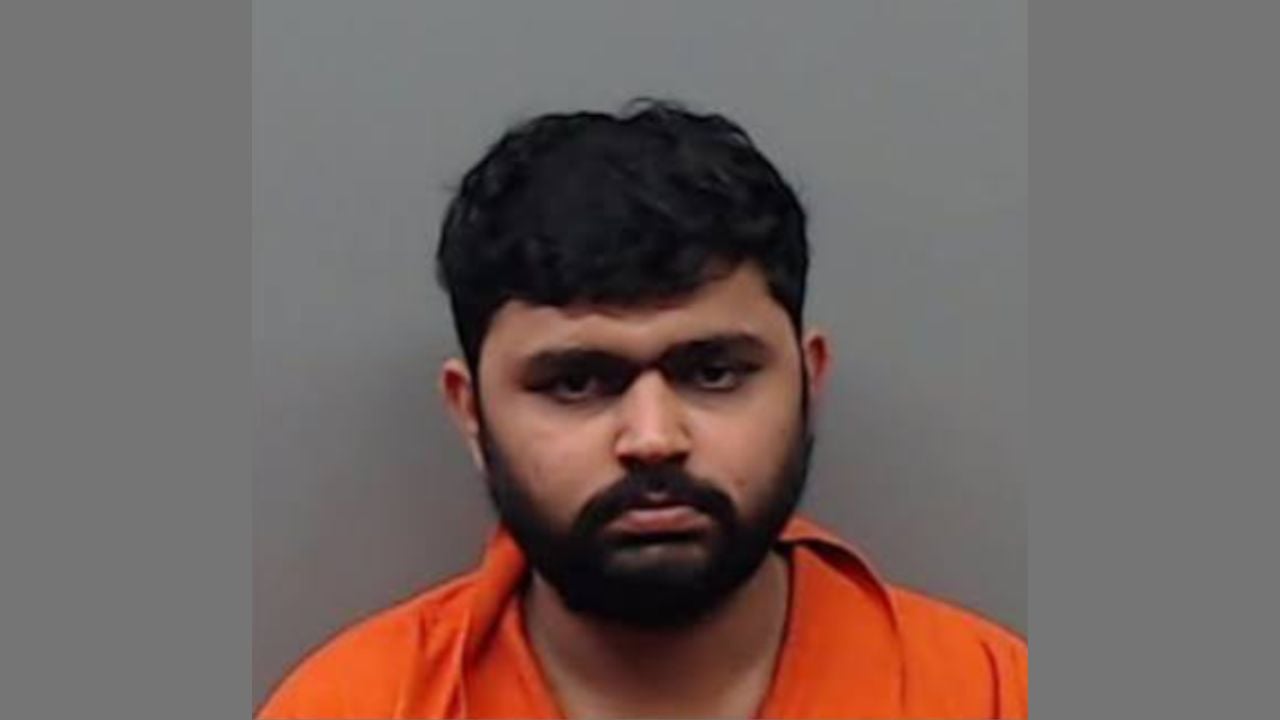
A Texas traffic stop led investigators to a 74-year-old Longview widow and has now put the man accused of collecting her cash and gold before a Smith County jury.
Smith County court records show Anuj Ashishbhai Modi of Arlington is charged in two separate felony cases in the 7th Judicial District Court. One alleges engaging in organized criminal activity, while the other alleges financial abuse of an elderly person involving between $30,000 and $150,000. Both are listed as second-degree felonies and carry an alleged offense date of March 3, 2026.
KLTV’s courtroom reporting says the Longview widow testified that callers claiming to represent the Federal Trade Commission and federal investigators spent about two weeks convincing her that her financial accounts were tied to serious criminal activity. The calls progressed from threats and demands for secrecy to instructions involving gift cards, cash and gold.
Prosecutors allege Modi acted as a courier. Smith County jail records identify the Texas Department of Public Safety as the arresting agency and record his arrest on March 3, followed by his booking into the county jail the next morning.
The Calls Turned Fear Into Cash and Gold

The widow told jurors that the people contacting her claimed her accounts had been compromised and linked to drug trafficking and child pornography. They warned her not to discuss the supposed investigation with anyone and threatened her with arrest warrants if she failed to cooperate.
She initially sent approximately $13,000 through gift cards. The demands then escalated, with the callers directing her to convert more of her assets into gold. According to her testimony, she purchased about $103,000 worth of gold and withdrew another $15,000 in cash from Spring Hill State Bank on March 3.
The callers arranged for someone to collect the property at her home and supplied a passcode she could use to identify the courier. During the trial, the woman identified Modi as the man who arrived, confirmed the password and took the bag she placed in the back seat of his vehicle.
A Traffic Stop Interrupted the Pickup
A DPS trooper testified that he stopped Modi on Interstate 20 near Hideaway Lake for following an 18-wheeler too closely. Modi told the trooper he had been visiting an uncle in Longview, but the trooper said license plate reader data showed the rental vehicle arrived in the Longview area around 3 p.m. and was heading west again roughly an hour later.
The trooper testified that Modi remained nervous even after learning he would receive only a warning. Modi initially consented to a vehicle search and then withdrew that consent, according to the testimony. A K-9 unit was subsequently called to the scene.
Video shown to jurors documented a shoebox containing $15,000 in cash along with gold, including one-ounce bars and coins. The trooper detained Modi after discovering the box.
The Smith County jail record independently identifies DPS as the arresting agency, lists March 3 as the arrest and offense date, and records Modi’s booking on March 4 at 8:35 a.m. It lists engaging in organized criminal activity and financial abuse of an elderly person involving at least $30,000 but less than $150,000 as the two charges associated with the booking.
Investigators Found Messages and Evidence of an Earlier Pickup
A DPS special agent testified that Modi consented to a search of his phone. Investigators found WhatsApp conversations with people in India, GPS coordinates, discussions involving cryptocurrency transactions and photographs of cash and gold.
The agent also testified about another $30,000 pickup in Big Spring. According to the testimony, investigators found a photograph connected to that money on Modi’s phone.
The agent said Modi told investigators that a friend in India had instructed him where to collect packages and where to take them afterward.
Two Smith County Felony Cases Track the Charges
The Smith County court records show that prosecutors filed two separate indictment-based cases against Modi on April 16.
Case 007-0552-26 lists one count of financial abuse of an elderly person involving at least $30,000 but less than $150,000 under Texas Penal Code Section 32.55(d)(5). The docket classifies the charge as a second-degree felony.
Case 007-0551-26 separately lists engaging in organized criminal activity under Texas Penal Code Section 71.02(b), also as a second-degree felony. That docket also records an amended indictment filed August 14.
The court records independently document pretrial litigation over the evidence. Both dockets list a motion to suppress filed June 8 and an order denying a motion on August 14.
During the September trial, KLTV reported that defense attorney Erick Platten challenged the legality of the traffic stop and moved to suppress video evidence from it. Judge Kerry Russell denied the request, and jurors were subsequently shown footage from the stop.
The organized-crime docket shows jury-trial proceedings on September 21, September 22 and September 23. It records jury selection on September 22 and also lists another jury-trial setting for September 24.
Under Texas Penal Code Section 32.55, financial abuse of an elderly individual includes the wrongful taking, appropriation, obtaining, retention or use of another person’s money or property, as well as assisting in that conduct. The statute makes financial abuse involving at least $30,000 but less than $150,000 a second-degree felony.
Modi is presumed innocent unless and until proven guilty in court.
Real Federal Agents Do Not Send Couriers for Gold
The scheme described in the widow’s testimony closely matches a Federal Trade Commission warning. The FTC says scammers may claim that someone’s accounts or identifying information are connected to crimes, pose as government or law enforcement officials and then instruct the target to withdraw money or purchase gold supposedly to protect it.
The agency says real government officials will not instruct someone to buy gold bars, withdraw cash or hand valuables to a courier. The FTC advises anyone receiving such a demand to stop communicating with the caller and report the scam rather than surrendering the money or gold.