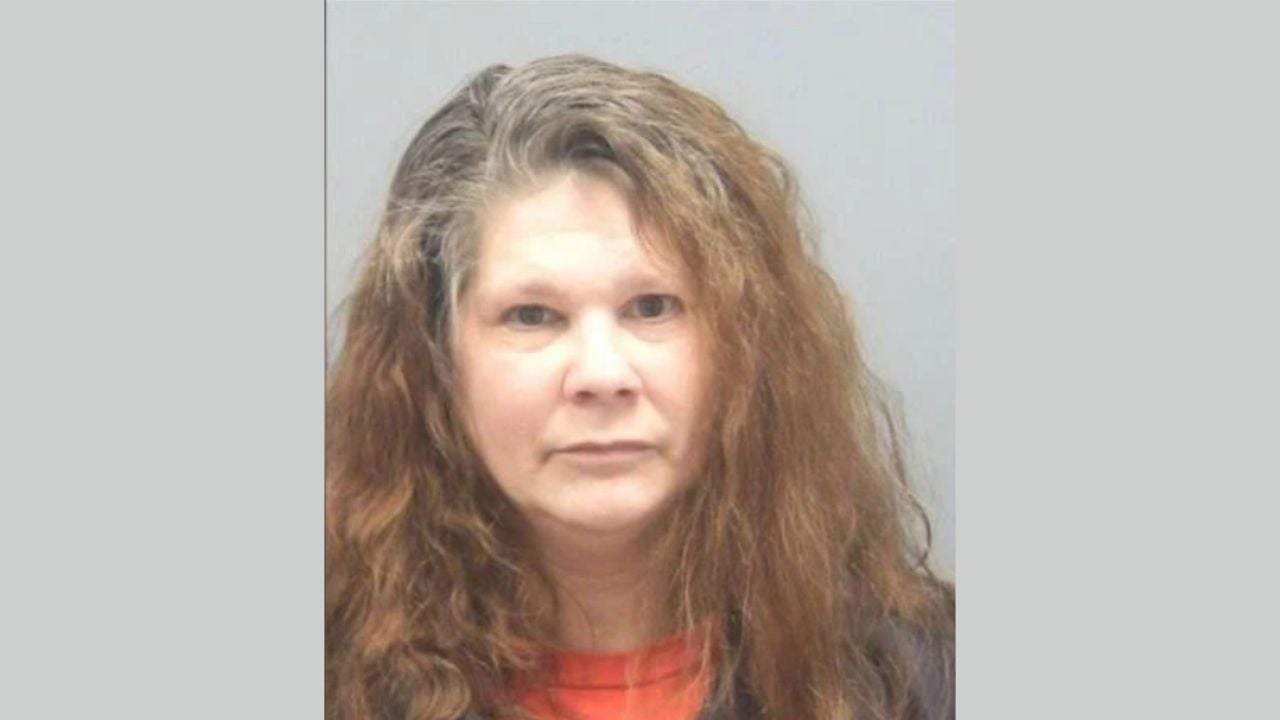
An Idaho couple discovered that someone had withdrawn money against their home equity after a woman allegedly walked into a credit union with a passport in the wife’s name.
Kimberly Irene Schwartfigure, 50, faces felony burglary and grand theft charges in Bannock County over the March 2026 transactions at Lookout Credit Union in Pocatello. The charges concern withdrawals from the couple’s credit line, with investigators alleging that the visitor used the wife’s identity to satisfy the credit union’s security checks.
The case widened when employees at another Idaho bank questioned a woman trying to access a home equity account the following day. Schwartfigure was arrested there, while Pocatello investigators later used surveillance footage to connect her to the earlier withdrawals.
The Idaho State Journal reported on October 16 that police linked her to suspected bank fraud beyond the area. She also has a separate Twin Falls County conviction; the Pocatello charges remain pending.
The Passport Carried the Wife’s Identity but Someone Else’s Photograph
On March 18, a woman went to Lookout Credit Union in Pocatello and sought cash from a customer’s home equity borrowing account. According to a criminal-complaint account published by East Idaho News, staff believed the visitor was the account holder’s wife.
The passport she allegedly presented included the wife’s correct name and date of birth but displayed Schwartfigure’s photograph. The visitor also supplied the wife’s Social Security number when questioned. Investigators were later told that the real wife had no passport at all.
Local station KBAR reported two cash withdrawals of $9,000 and $2,000. Both were allegedly drawn against the couple’s home equity credit rather than taken from a checking account.
Bank Employees in Another Idaho City Recognized a Suspected Fraudster
On March 19, officers in Kimberly, a city west of Pocatello, responded to D.L. Evans Bank after employees became suspicious of another attempted withdrawal from a home equity line. Court documents described by East Idaho News say the woman at the counter struggled to answer basic questions about the account.
The employees had received photographs of a suspected fraudster circulated by the Idaho Falls Police Department. They believed the visitor matched those pictures and contacted law enforcement. Kimberly police arrested Schwartfigure and took her to the Twin Falls County Jail.
During the booking process, officers found an extraditable warrant from Bremer County, Iowa, according to the Kimberly police records described by East Idaho News. A separate Twin Falls fugitive-warrant docket, case CV42-26-1349, identifies the Bremer County matter as FECR011842.
A Higher Home Equity Balance Exposed the Pocatello Withdrawals
On April 1, Pocatello police contacted the husband after he noticed that his outstanding home equity balance was greater than expected. He told officers that he and his wife had not authorized the withdrawals.
Investigators obtained credit union surveillance footage showing the person who completed the transactions and sent it to a crime analyst. The analyst identified Schwartfigure as a suspect connected to similar incidents and advised that she appeared to be traveling west. By April 9, Pocatello detectives had learned she was already being held in Twin Falls County.
A home equity line of credit lets borrowers draw against the equity in their property. An unauthorized advance can therefore appear as additional debt, sometimes with interest and repayment obligations, rather than as an obvious reduction in a bank balance.
A Separate Twin Falls Conviction Brought Suspended Seven-Year Prison Terms
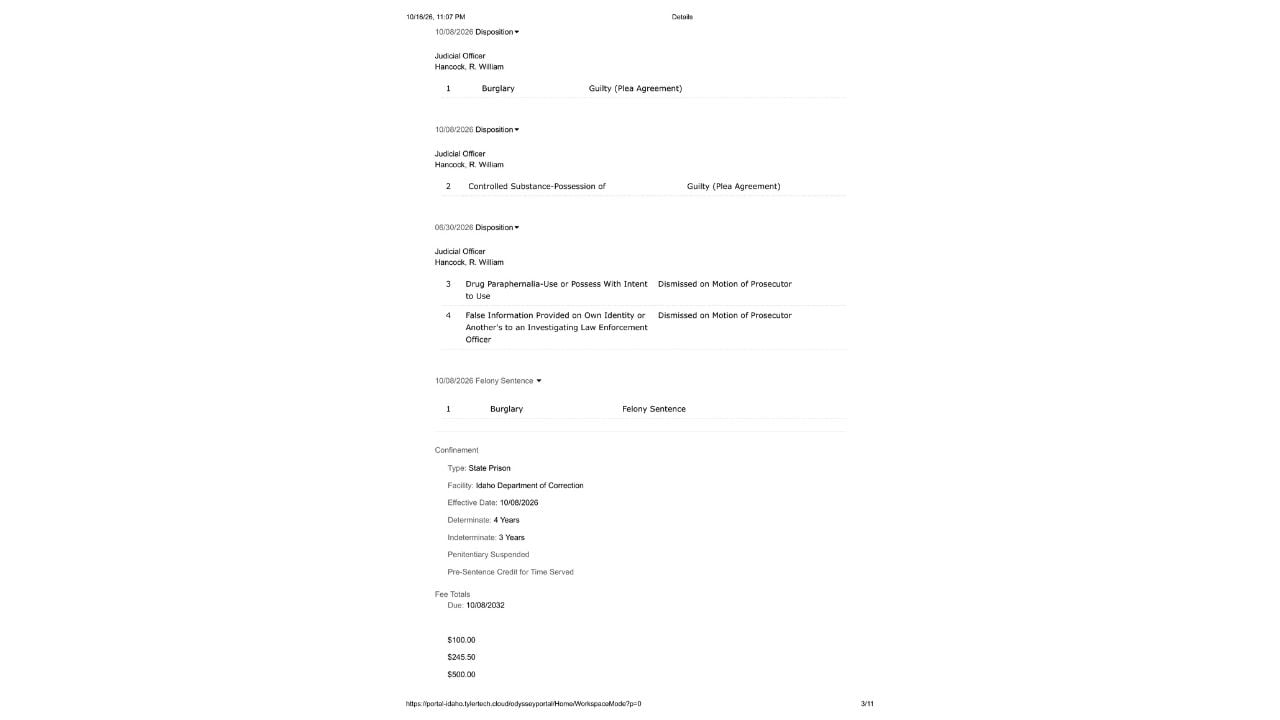
The March 19 arrest led to a separate Twin Falls criminal docket, case CR42-26-2693. The original charges included burglary and felony possession of a controlled substance, as well as misdemeanor counts alleging drug-paraphernalia possession and false information to law enforcement.
Schwartfigure pleaded guilty to the two felony charges on June 29. The paraphernalia and false-information counts were dismissed on the prosecutor’s motion. On October 8, District Judge R. William Hancock imposed concurrent seven-year unified prison sentences, with four years determinate and three years indeterminate, then suspended them in favor of five years of felony probation.
The sentence for controlled-substance possession also includes 100 hours of community service. These convictions arose from the Kimberly bank arrest, while the March 18 Pocatello withdrawals are the subject of the separate pending Bannock County case.
New Burglary and Grand Theft Charges Bring a $125,000 Bond

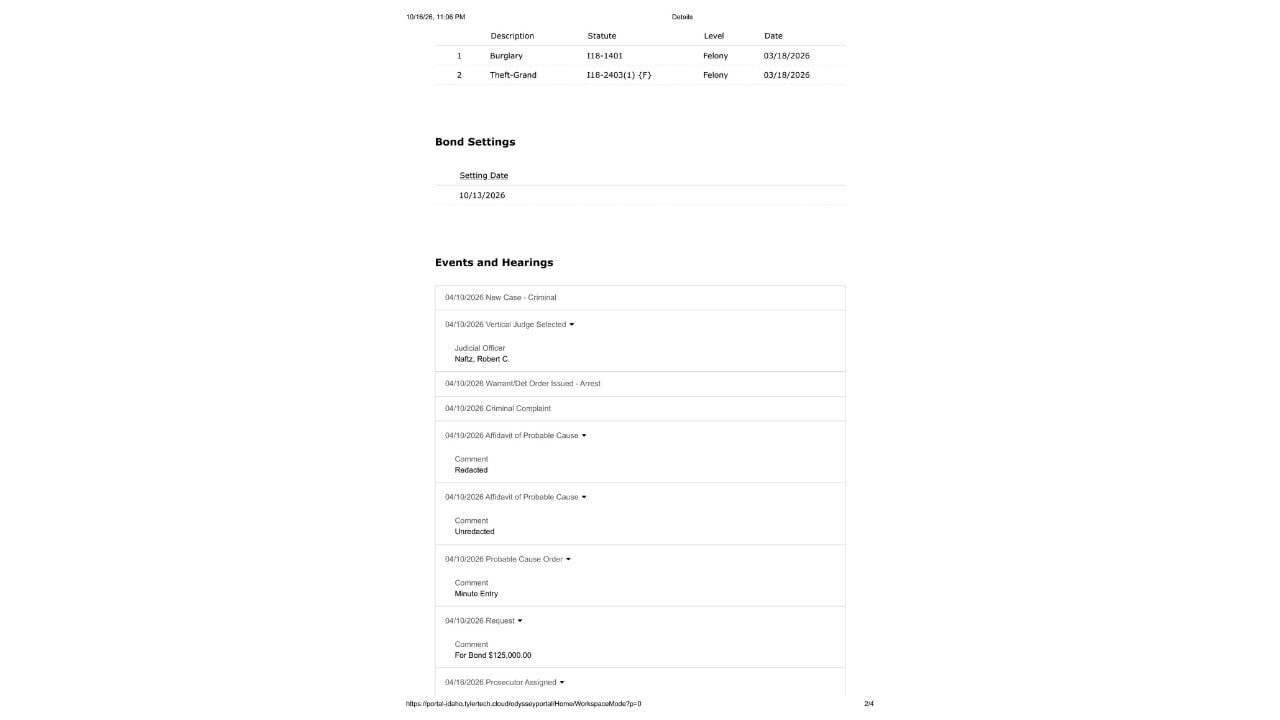
The Bannock County criminal docket, case CR03-26-03788, was filed April 10 and lists felony burglary and grand theft charges with an alleged offense date of March 18. The court recorded the criminal complaint and a probable-cause affidavit on the filing date.
On October 13, Magistrate Judge Eric S. Hunn presided over a video arraignment, set bond at $125,000 and appointed a public defender. Local reporting said Schwartfigure was transferred to Bannock County custody October 14. The court has scheduled her preliminary hearing for October 27 at 10:30 a.m. before Magistrate Judge David W. Cousin.
KBAR reported that prosecutors are also seeking a persistent-violator enhancement based on earlier felony convictions. Under Idaho Code Section 19-2514, qualifying previous felony convictions can increase the penalty if she is convicted of the current charges. Schwartfigure is presumed innocent of the Bannock County allegations unless proven guilty.
Why a Withdrawal at an Open Bank Can Lead to a Burglary Charge
Idaho’s burglary statute covers entering a building, including an ordinary store or business, with the intent to commit theft or another felony. Prosecutors do not have to allege a forced entry for the charge to apply.
Under the state’s grand theft statute, theft involving property valued at more than $1,000 generally qualifies as grand theft, among other defined categories.
What Homeowners Should Check on Their Home Equity Accounts
The National Credit Union Administration advises account holders to review financial statements and promptly report unfamiliar transactions. For households with a home equity line, that means monitoring draws and outstanding loan balances as well as ordinary checking and savings activity.
If a suspicious advance appears, contact the lender’s fraud department through an independently verified number, dispute the transaction and ask whether further draws can be restricted while the account is investigated. Preserve statements, transaction dates and correspondence. Anyone whose identity details were used without permission can also begin an identity theft recovery plan at IdentityTheft.gov.