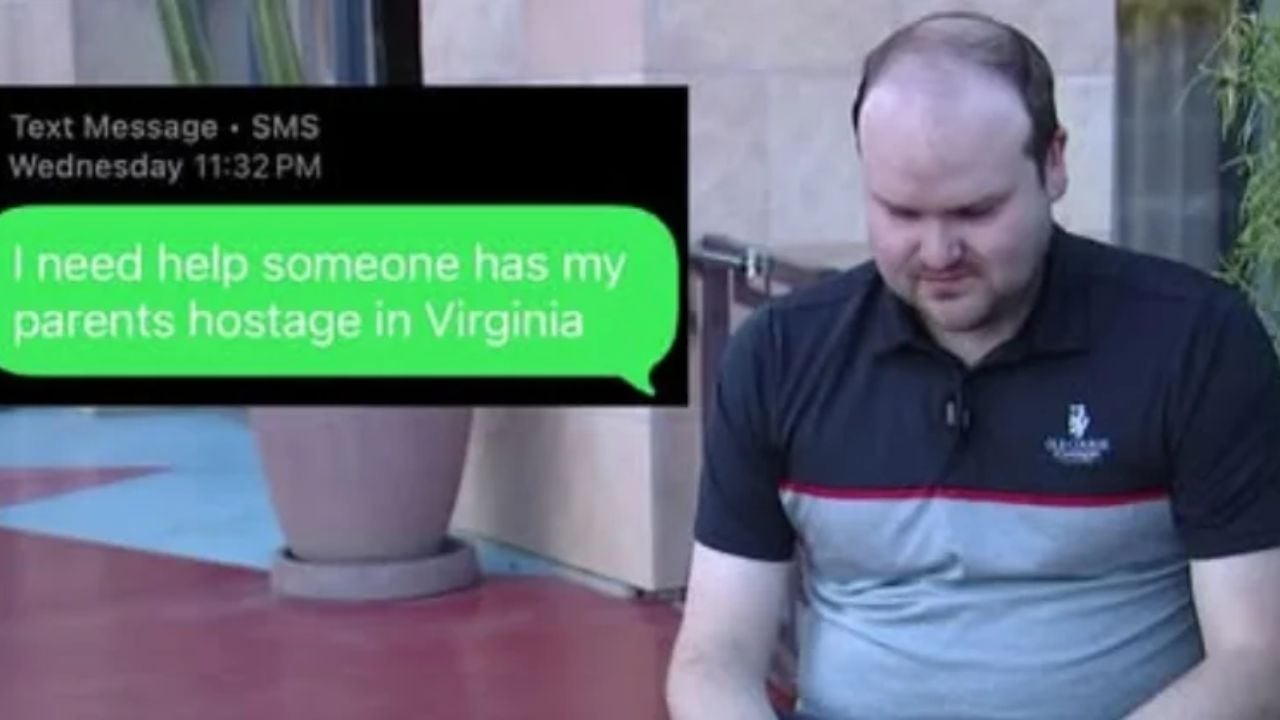
A Scottsdale man sent more than $4,000 to a stranger who claimed to be holding his parents at gunpoint. The ordeal began with a late-night call displaying his father’s phone number, even though Curtis Indyke was in Arizona and his parents were across the country in Virginia.
The caller threatened to shoot Indyke’s parents unless he paid, according to an Arizona’s Family report published October 26. Indyke said he contacted Scottsdale emergency dispatchers while the threats continued but still transferred money to two telephone numbers.
Police in Virginia later checked on his parents and found them safe, according to his account. Indyke said the payments remained pending when he spoke to the television station, and he hoped to recover the money.
His Father’s Number Appeared on the Screen at 11:30 P.M.
Indyke was asleep at approximately 11:30 p.m. on Wednesday, October 21, when his phone rang. The number appeared to belong to his father in Virginia, where it was nearly 2:30 a.m. Thursday.
He told Arizona’s Family that the disappearance of Nancy Guthrie, the mother of “Today” show host Savannah Guthrie, in Arizona earlier this year had come to mind. He feared that a similar situation might be unfolding with his own family.
He Texted 911 While Sending Money to Two Phone Numbers
While the threatening caller remained on the line, Indyke texted Scottsdale’s 911 emergency dispatchers to report that his parents were supposedly being held hostage in Virginia. He said the threats continued as he tried to obtain help.
Indyke transferred more than $4,000 through Apple Pay to two separate telephone numbers. The caller also demanded another $1,000 in what Indyke described as “crypto gift cards,” a payment method he said he had never encountered despite working in IT.
His bank blocked the attempted additional purchase. The Federal Trade Commission warns that unexpected demands for money through payment apps, cryptocurrency or gift cards are common signs of fraud, particularly when callers insist on immediate payment.
A Callback Went Unanswered Before Police Found His Parents Safe
After the threatening call ended, Indyke attempted to reach his father using the same number. Nobody answered, leaving him worried that the stranger might actually have access to his father’s telephone.
Police in Virginia later visited the parents’ residence for a welfare check. Both were safe and had been unaware of the supposed hostage situation, Indyke said. The family was shocked to learn that he had been threatened and had sent money.
Dawn Alexander, a network specialist with AARP Arizona, told Arizona’s Family that virtual kidnapping scams depend on creating fear intense enough to prompt immediate action. By threatening someone close to the recipient, callers try to secure payment before the claimed emergency can be independently verified.
Scammers Can Make a Call Appear to Come From a Family Member
The FTC explains that caller ID spoofing allows a caller to display another person’s number, including one the recipient recognizes and trusts. The number displayed on a phone does not establish who is actually calling.
The FBI’s Phoenix office warned Arizona residents about virtual kidnapping extortion in December 2020. Its warning described criminals claiming to hold loved ones hostage, threatening violence and demanding quick payments before families could discover that no abduction had occurred.
The FBI identifies attempts to keep recipients on the telephone and discourage contact with the supposedly kidnapped person as warning signs. The agency advises trying to reach the relative directly through another means and contacting law enforcement immediately when someone may be in danger.
What to Do if a Ransom Payment Is Still Pending
Indyke said he planned to file a fraud claim after the transfers cleared. The FTC recommends contacting the payment provider and bank immediately after sending money to a scammer and requesting that the transaction be stopped or reversed.
For person-to-person Apple Cash transfers, Apple’s guidance says payments can be canceled while they are pending acceptance by the recipient. Once a transfer is completed, it cannot be canceled through that feature. The available options depend on the payment service and the transaction’s actual status.
Anyone receiving a similar kidnapping threat can attempt to contact the relative independently while reporting the emergency to police. The FBI also accepts internet-enabled crime complaints at IC3.gov, where victims can provide the caller’s number, payment details and other records of the incident.