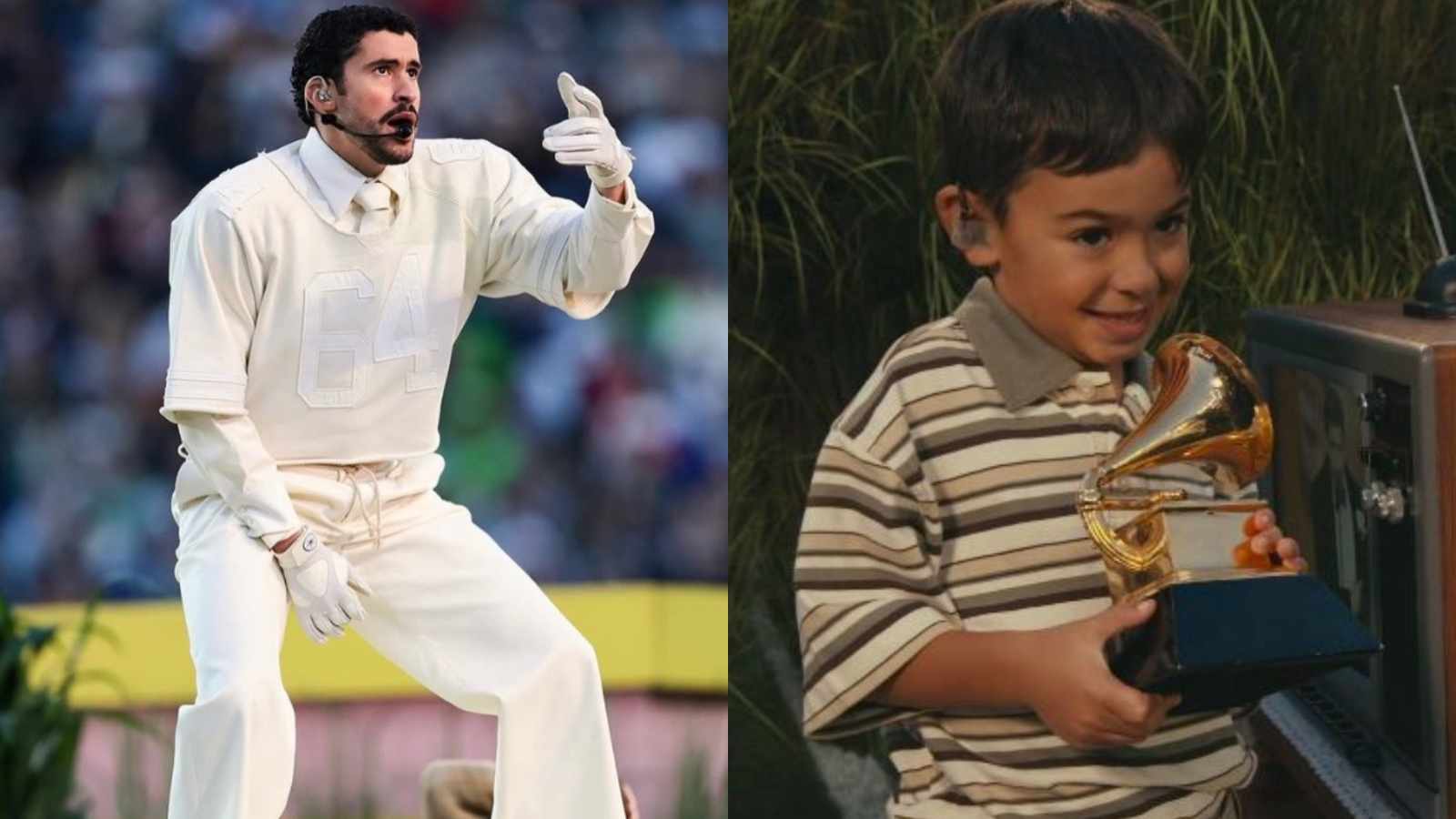
One of the most talked-about moments from Bad Bunny’s Super Bowl LX halftime show wasn’t a choreographed dance break or a special guest cameo; it was when he walked over and handed one of his own Grammy awards to a young boy in the middle of his set. The gesture lit up social media almost instantly and became one of the night’s most shared clips. But as the moment spread online, so did a swirl of speculation and emotion surrounding who that child was and why the moment felt so powerful.
Bad Bunny’s performance was historic in its own right. His Super Bowl set was delivered entirely in Spanish and celebrated Puerto Rican and Latin culture with dancers, flags, and symbolic imagery. But the real heart of the moment came when he passed one of his Grammys to a little boy, captured in a quiet, brief but unforgettable scene.
A Heartfelt Gesture That Broke the Internet
When Bad Bunny stepped onto the living-room-style set during his halftime performance and handed his Grammy to a young boy, viewers at home reacted instantly. Many began speculating that the child was Liam Conejo Ramos, the 5-year-old Minnesotan whose detention by U.S. Immigration and Customs Enforcement (ICE) earlier in January had gone viral. That story had touched a nerve online, and seeing a similar scene at such a high-profile event triggered a flood of emotional posts on X and TikTok.
— mídias poponze (@vitalmidias) February 9, 2026
Shortly afterward, credible outlets and social posts clarified that the boy on stage was not Liam Ramos. Instead, he was identified as Lincoln Fox, a 5-year-old child actor who took to Instagram after the show, sharing a clip of the moment with the caption, “I’ll remember this day forever! @badbunnypr — it was my truest honor.” The hashtags he used hinted that his role was symbolic, portraying a young version of Bad Bunny himself.
Why the Grammy Hand-off Resonated With Audiences

Part of what made the Grammy hand-off so powerful is that it was unexpected in the context of a Super Bowl performance. Halftime shows are known for spectacle, celebrity cameos, and huge production numbers. Bad Bunny’s set was no exception. It featured a cast of Latin performers and cultural references that celebrated diversity and identity.
But this moment was intimate. It wasn’t flash or fireworks; it was a simple gesture of passing something meaningful to a generation much younger than the headliner himself. Given that Bad Bunny had just won three Grammys, including Album of the Year for DeBí TiRAR Más FOToS, the act felt like a symbolic passing of inspiration to the next generation.
Unlike surprise costumes or guest stars, this wasn’t about entertainment; it felt personal. The imagery of a child receiving a Grammy from one of the biggest musical stars in the world fits neatly into the narrative of “anything is possible,” something fans online are still talking about days later.
How Rumors Changed the Story Online

When footage of the gesture first hit social media, many viewers assumed the boy was Liam Ramos because a recent viral story about his ICE detention had dominated online discussions. That confusion shows how quickly meaning can be attached to images in real time, especially when a moment involves a child and an emotional backstory that was already trending.
Some users on Reddit and other forums pointed out how fast misinformation spread, mixing goodwill with inaccurate assumptions. Comments reflected a mix of sympathy for the Ramos family, curiosity about whether Bad Bunny had included a political message in his show, and surprise at how social media culture races to interpret moments before the full facts are known.
The speculation was understandable. Observers saw a child receiving something meaningful from a beloved performer, and they made emotional connections based on real-world events that had already stirred public feeling.
What the Moment Symbolized on a Bigger Stage
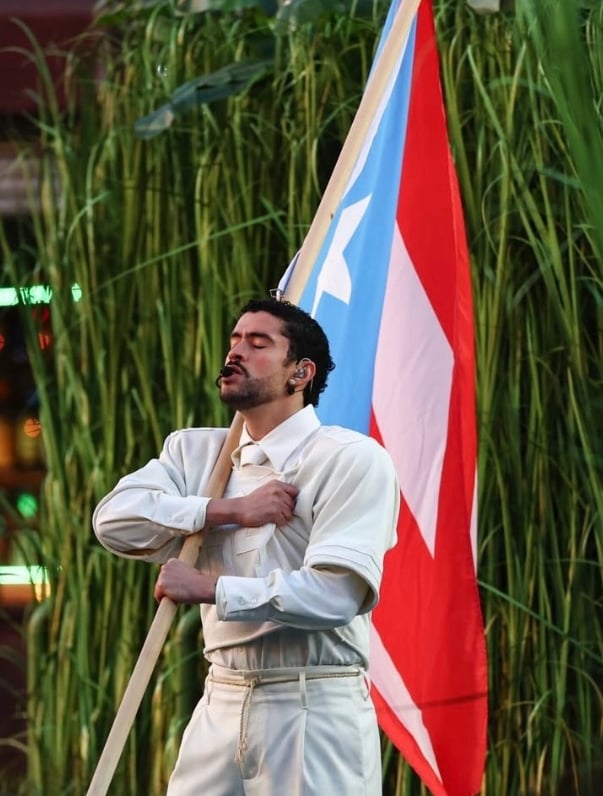
Bad Bunny’s halftime show was historic in several ways: he was the first Spanish-language solo artist to headline the Super Bowl, and his set leaned into cultural pride, musical range, and unity more than pure spectacle. He included creative stage design, dancers waving flags from across the Americas, and messages about togetherness that resonated beyond the field.
The act of giving a Grammy to a young child, even as part of a staged narrative, fit into that theme of aspiration and imagination. It wasn’t just about performance art; it felt like a message: dream big, and know you belong here too. Sending that to a five-year-old in front of millions doesn’t just create a sweet visual; it becomes a memorable moment of inclusion and representation.
The Boy Who Became Part of History

Lincoln Fox isn’t just a random face in the crowd; he’s a child actor who was part of the halftime show’s cinematic staging. According to his talent agency and multiple news reports, his role was designed to visually reflect the concept of a young Bad Bunny watching and receiving a Grammy as a form of encouragement.
After the performance, a video he shared on Instagram quickly circulated online, adding a human layer to the moment. His reaction, awe, joy, and pride, reminded many viewers of what the big stage represents for artists and dreamers alike.
While the gesture wasn’t a literal altruistic gift of a Grammy trophy to a child in the crowd, the symbolic act felt generous, which is part of why people connected to it so deeply. It wasn’t about the award itself, but what it stood for: achievement, visibility, and possibility.
Beyond the Viral Clip

Bad Bunny’s Super Bowl halftime show will likely be remembered not just for the choreography and guest appearances, but for moments like this that make people feel something. The Grammy hand-off wasn’t a planned political statement or a pointed commentary; it was part of a larger artistic expression and storytelling moment.
That it sparked widespread conversation, including incorrect speculation, shows how powerful shared cultural moments can be in the social media age. They become part of a larger online narrative that blends fact, emotion, and interpretation. The moment clearly resonated far beyond the stadium.
And as the clip continues to be shared and talked about, it will likely remain one of the most memorable snapshots from a halftime show that many viewers around the world still consider one of the most meaningful in years.