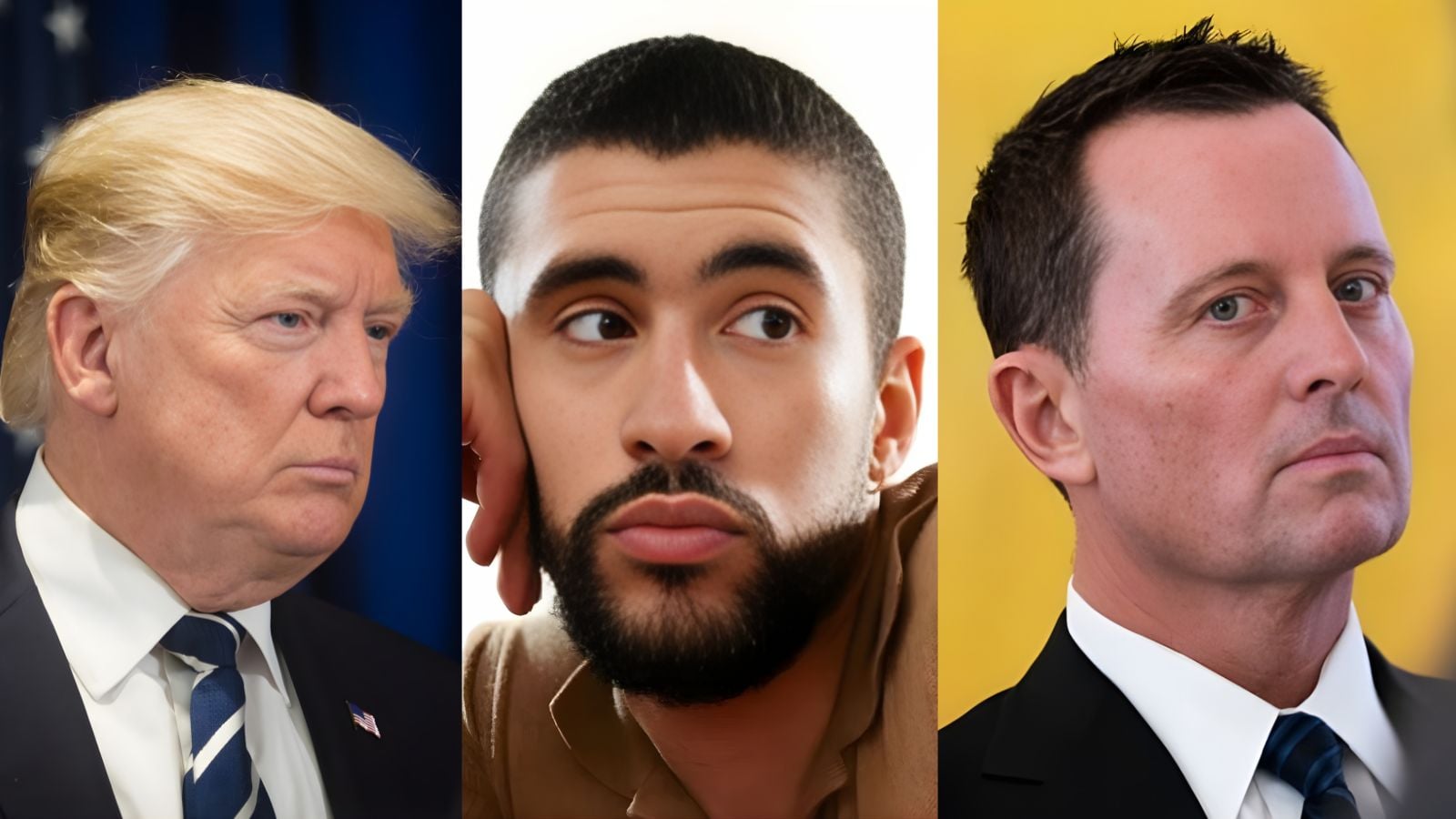
Bad Bunny headlined the Super Bowl 60 halftime show as the New England Patriots and Seattle Seahawks retreated to their locker rooms. The performance was designed to be cinematic, symbolic, and global in tone. Yet almost as soon as it began, backlash erupted online, led largely by conservative commentators and MAGA-aligned figures, with criticism quickly spreading across broader social media circles.
The Puerto Rican superstar delivered a show packed with choreography, visual storytelling, and surprise guest appearances. Lady Gaga and Ricky Martin joined him on stage, adding star power and cross-generational appeal. Despite the scale of the production, reaction to the show revealed a deep divide over what the Super Bowl halftime stage should represent.
For many viewers, this was not just about music. It became a cultural flashpoint.
Conservative Figures Lead the Criticism Online
One of the loudest critics was Nick Adams, a best-selling author endorsed by President Donald Trump. Adams took to X to condemn the performance in stark terms, calling Bad Bunny “vile” and claiming the show was inappropriate for families watching at home. His post framed the performance as morally offensive and argued that the NFL owed viewers an apology.
Bad Bunny is absolutely vile.
I can’t understand a word of it but I just know it’s foul, vulgar, and demonic.
Cover your kids’ ears.
The NFL owes millions of Americans an apology.
— Nick Adams (@NickAdamsinUSA) February 9, 2026
Political commentator Benny Johnson also weighed in, but from a different angle. He highlighted the competing Turning Point USA-sponsored alternative halftime broadcast, boasting about its live viewership numbers. His post suggested that a sizable audience was actively rejecting the official NFL presentation in favor of ideologically aligned content.
The tone across conservative commentary was consistent. The criticism focused on language, cultural symbolism, and what critics saw as a mismatch between the performer and the event’s national stature.
Sports, Media, and Entertainment Voices Join In
Disapproval did not stop with political figures. Several voices from sports media and entertainment echoed similar sentiments, though often with less ideological framing.
Matt Turck, a venture capitalist at FirstMark, described the performance as feeling more like a “half-time movie” than a traditional Super Bowl show. The Hodgetwins podcast account offered a blunt assessment, calling the performance “awful” without elaboration.
Bad bunny is awful
— Hodgetwins (@hodgetwins) February 9, 2026
Former college football champion Will Lowery expressed disbelief that the NFL selected Bad Bunny for such a massive platform, describing the choice as a major miss. Streamer Chelly, who said she enjoys Bad Bunny’s music, still criticized the halftime show itself, separating her appreciation for the artist from her disappointment in the execution.
How did the @NFL miss this horribly with Bad Bunny for the halftime show?? Goodness this is awful
— Will Lowery (@jwlowery29) February 9, 2026
Sportsnet Central host Tim Micallef added a layer of humor, joking that Bad Bunny gained more yards on the field than the Patriots did in the first half. While lighthearted, the comment reinforced the sense that the performance had failed to captivate a large segment of the audience.
Polls and Comparisons Fuel the Debate
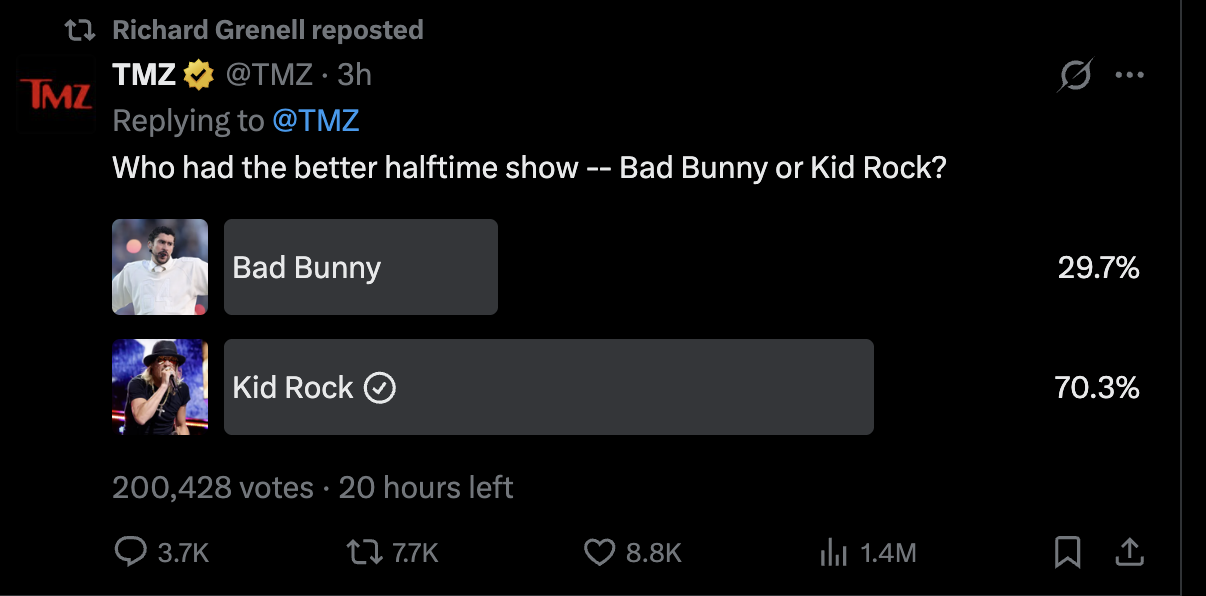
Comparisons between Bad Bunny and other artists quickly followed. Richard Grenell reposted a TMZ poll asking viewers to choose between Bad Bunny and Kid Rock as the better halftime performer. With hours still left in voting, Kid Rock holds a commanding lead, a result widely shared by critics as proof of public disapproval.
Sage Steele also entered the discussion, posting that English subtitles might have helped during “America’s greatest sporting event.” Her remark reflected a recurring theme among critics who argued that the language barrier alienated parts of the audience.
These reactions underscored how the halftime show has become a proxy battle over identity, inclusion, and tradition.
Donald Trump Delivers a Direct Rebuke
President Donald Trump offered the most high-profile condemnation of the performance. In a series of social media posts, he labeled the halftime show “absolutely terrible” and described it as one of the worst in Super Bowl history.
Trump argued that the performance failed to reflect American success, creativity, or excellence. He criticized both the music and choreography, claiming they were inappropriate for children and confusing for viewers. His comments framed the show as an insult to the country and dismissed anticipated positive media reviews as disconnected from everyday Americans.
Trump also used the moment to attack the NFL’s new kickoff rule, calling for its immediate replacement. The post blended cultural criticism with policy grievances, reinforcing how tightly sports and politics have become intertwined.
Supporters Push Back and Defend the Message
Despite the wave of criticism, Bad Bunny’s supporters were just as vocal. Many viewers argued that the performance was a celebration of America’s diversity rather than a rejection of it. Some pointed out that Super Bowl halftime shows have long featured artists who challenge mainstream expectations.
Others praised the production quality, choreography, and symbolism, even if the music style was not their personal preference. Several fans argued that discomfort with the show revealed more about the critics than the performer.
Bad Bunny himself ended the performance with a clear message displayed on screen: “The only thing more powerful than hate is love.” He closed by saying, “God bless America,” while flags representing different communities were shown, reinforcing the inclusive theme of the show.
A Halftime Show That Won’t Be Forgotten
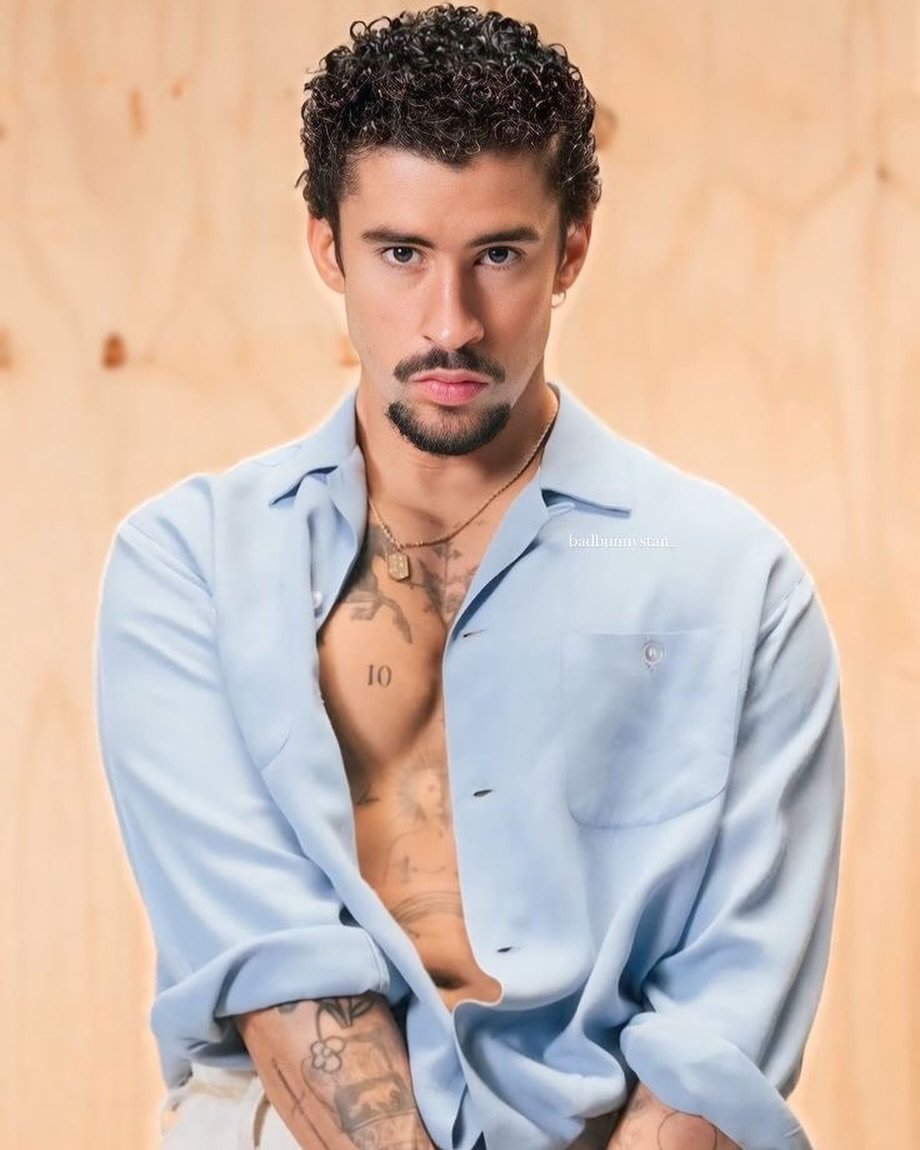
The Super Bowl 60 halftime show will be remembered less for who won the game and more for the reaction it sparked. Bad Bunny’s performance exposed deep cultural fault lines, turning a musical showcase into a national debate.
Love it or hate it, the show achieved one thing without question. It got people talking.
What do you think?