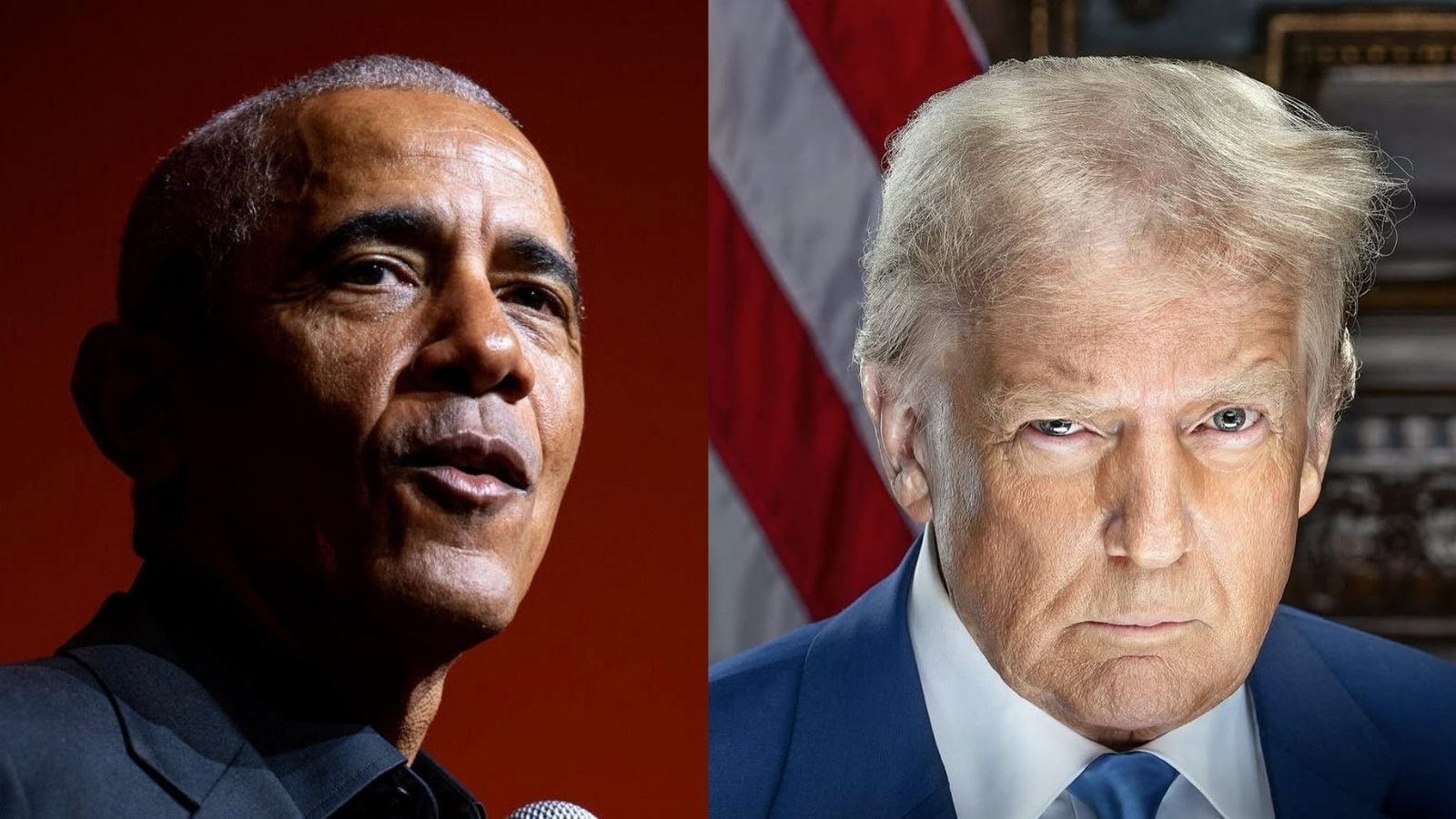
Some insults are never just insults. They appear as jokes, memes, or political punches, but underneath the surface, they carry older, uglier meanings. That is why certain images land differently. They do not simply mock one person in one moment. They pull from a history that many people recognize immediately, even when the person sharing them pretends it is harmless.
That is why the AI-generated video involving Barack Obama did not just fade out after a few news cycles. It stuck around, partly because of where it was posted and partly because of what it showed. By the time Obama addressed it in an interview, the conversation had already moved beyond the clip itself to what it represented.
A Video, and What It Carried
In a new interview with The New Yorker, Obama addressed the controversy sparked back in February when Trump shared an A.I.-generated clip on social media depicting the former prez and wife Michelle Obama as apes — imagery that ignited immediate backlash.
Obama’s take? He’s not… pic.twitter.com/nfO2e0jwCQ
— TMZ (@TMZ) May 5, 2026
At 11:44 p.m. ET on February 5, 2026, a 62-second video went up on President Donald Trump’s Truth Social account. It began with claims about fraud in the 2020 election tied to voting machines in swing states.
Then the tone shifted. Barack and Michelle Obama’s faces appeared to have been edited onto the bodies of apes dancing in a jungle setting, with “The Lion Sleeps Tonight” playing in the background. As the clip continued, more apes appeared overhead, and it ended with Trump portrayed as a lion labeled “King of the Jungle,” while other Democrats were depicted as various animals.
The video did not originate from an official government source. It came from a meme account known for producing synthetic media, including earlier clips that pushed similar boundaries. One of its previous videos showed Trump in a fighter jet dropping feces on protesters, which gives a sense of the tone it usually operates in.
The post stayed up for about 12 hours before it was taken down, and by then the reaction had already picked up serious momentum. Senator Tim Scott, who has generally been aligned with Trump, called it “the most racist thing I’ve seen out of this White House.” California Governor Gavin Newsom described it as “disgusting,” reflecting how widespread the backlash was across different corners of politics.
Timing also played a role in how the clip was received. It surfaced during Black History Month, which made the imagery feel even more pointed to many people watching it unfold. The White House described it as a reference to The Lion King, but that explanation did not really ease the criticism.
Trump himself did not walk it back. When asked about the post, he said, “I didn’t make a mistake.” A White House official later described the upload as “erroneous” and blamed it on a staffer, though there was no clear explanation of how that kind of content ended up on the president’s account in the first place.
View this post on Instagram
The Distinction He Drew
Obama first spoke about the video in late February 2026 during a conversation with podcast host Brian Tyler Cohen. At that point, his response was brief, calling the imagery “deeply troubling” without going much further. It felt more like an acknowledgment than a full reaction.
The New Yorker interview, published on 4th May 2026, gave him space to expand on that. He approached it carefully, drawing a line between what was directed at him personally and what involved his family. That distinction shaped everything he said about the situation.
“I don’t take it personally,” he explained, referring to the attacks aimed at him. That part, in his view, comes with the territory of public life. What bothered him was something more specific and, to him, more unnecessary.
He focused on the decision to include Michelle and their children in the imagery. “I’m always offended when my wife and kids get dragged into things, because they didn’t choose this,” he said. He added that even people he strongly disagrees with politically should recognize that boundary.
He also made it clear that this is a line he tries not to cross himself. “I would never talk about somebody’s family in that way,” he said, laying out a standard he believes should still exist in political discourse. It was less about asking for respect and more about pointing out what he sees as a basic expectation.
Beyond the single video, Obama pointed to a broader pattern he has been watching. He mentioned other instances of AI-generated content linked to the current administration that either trivialize serious issues like war or depict citizens in ways he finds concerning. In that sense, the video was not an isolated case but part of a larger trend.
What the Presidency Has Cost at Home
The interview did not stay focused on the video for long. It opened up into a wider conversation about what the current political climate has meant for Obama’s personal life, especially his relationship with Michelle.
He described “genuine tension” in their marriage, but not because of the video itself. The strain comes from the ongoing expectation that he remain active in politics, even though he had planned to step back. That expectation has not really eased since Trump returned to office.
Michelle’s perspective came through clearly in what he shared. “She wants to see her husband easing up and spending more time with her, enjoying what remains of our lives,” he said. It is a simple request, but one that has been harder to meet given the current demands.
Away from that pressure, Obama has been trying to maintain a quieter rhythm. He has been writing, advising within the party, and focusing on his foundation’s work. While the Foundation’s 77 Neighborhood Tour had been connecting with communities across Chicago since mid-2025, the focus earlier this year shifted to Community Tourism Prep Sessions designed to help local businesses prepare for the Center’s upcoming launch.
Even with those personal projects, the sense that his voice is needed remains. Democrats have continued to call on him to appear in campaign ads, attend events, and publicly respond to policies on issues such as immigration detention and travel restrictions. Even after leaving office, there is still a sense that his voice is needed in moments of political tension.
The Old Argument in New Clothes
The imagery used in the February video did not start with AI. It connects to a much older pattern, one that has appeared in political cartoons, newspapers, and caricatures for generations. The tools have changed, but the underlying idea has been around for a long time.
Most conversations about AI in politics have focused on deepfakes or fabricated statements. Those remain a concern, especially in elections and public trust.
Obama, for his part, kept his focus narrow. He drew a clear line around his family and left the rest open to interpretation.