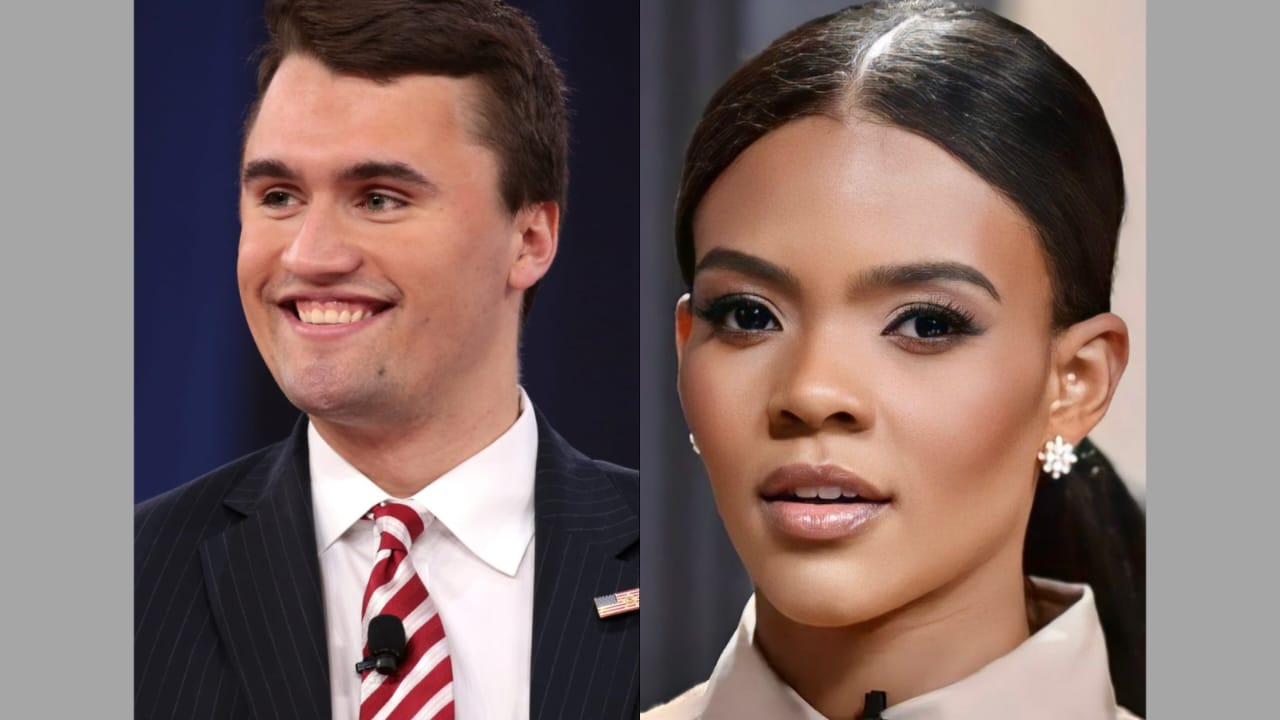
When a public figure dies violently, the mourning rarely stays clean. Someone always knows something. Someone always has receipts. And the people closest to the center of it are usually the last ones left standing with any credibility, if they’re lucky.
What is happening around the legacy of Charlie Kirk is not entirely surprising if you have watched this pattern play out before. It is, however, worth watching closely because it says something uncomfortable about how movements mourn and what happens when the person holding everything together is suddenly and violently gone.
Kirk was 31 years old when he was fatally shot in the neck while speaking at an outdoor debate event at Utah Valley University in Orem on September 10, 2025. It was shortly after noon, Mountain Time. A 22-year-old named Tyler Robinson had positioned himself on a rooftop approximately 200 yards away. By mid-afternoon, Donald Trump had confirmed Kirk’s death via Truth Social.
The co-founder of Turning Point USA, one of the most recognizable faces of a generation of American conservatism, was gone. And the questions that followed were not just legal or political. They were personal, organizational, and, increasingly, conspiratorial.
The Architecture of a Midday Ambush
The criminal case has moved with relative clarity, which is somewhat unusual given the noise surrounding it. Robinson surrendered to the Washington County Sheriff’s Office the following day and now faces seven charges, including aggravated murder and felony discharge of a firearm. Prosecutors are seeking the death penalty. His DNA was found on the rifle’s trigger, various parts of the weapon, the cartridge casing, and the towel used to wrap the firearm.
His motive, as prosecutors have framed it, was rooted in a personal exhaustion with what Robinson himself described as “hatred.” He left a note for his roommate explicitly naming Kirk as his target. Text messages corroborated that intent.
The FBI, which received over 7,000 leads and tips in the aftermath, initially found no ties between Robinson and organized groups, though Director Kash Patel later announced in late September 2025 that investigators were examining Discord chat logs and potential visitors to Robinson’s residence. His mother told investigators that her son had grown increasingly political in the months leading up to the shooting, gravitating toward leftist views.
The forensic trail is fairly straightforward. It is everything around it that has become complicated.
The Weight of Late Regrets
Since the week leading up to Charlie’s death, I have had vivid dreams. They have been unceasing.
I wish he were alive so I could tell him that I don’t doubt him anymore and that it weighs so heavily on my heart that I didn’t see it sooner.
There is a deep sense I have that I… pic.twitter.com/mnhObuMZzq— Candace Owens (@RealCandaceO) May 5, 2026
On May 5, 2026, Candace Owens posted screenshots to her social media accounts that she claims show a private conversation with Kirk before his death. In the alleged messages, Kirk wrote that he was “not sure if I will live to see the end of this revolution,” and added that since the early days of Turning Point USA, he had carried “a gut feeling” that he might be killed at any point. He described it not as fear, exactly, but as a quiet knowing.
What gives the post its particular sting is what Owens says she told him in response. She reportedly dismissed the concern as “fear manifestation rather than actualization.” It is the kind of exchange that, in retrospect, lands differently. Whether or not that was the right thing to say in the moment is almost beside the point now. What matters is how she chooses to use it and why now.
Owens has been vocal about her belief that something more than one gunman’s personal grievance is at play. She has alleged a “cover-up,” warned unnamed parties that “they will not get away with what they did to him,” and has urged Kirk’s supporters to stop donating to Turning Point USA. None of these claims has been substantiated by evidence or corroborated by law enforcement. That distinction matters, even when the underlying grief feels genuine.
A Legacy Divided by Allegation
The fractures inside Kirk’s movement became visible almost immediately after his death. Erika Kirk, his widow, was appointed CEO of Turning Point USA just eight days after the shooting. In December 2025, Owens sat with Erika for a four-and-a-half-hour recorded conversation that both women initially described in measured terms. That civility did not last long.
The relationship has since deteriorated into something more adversarial. On May 1, 2026, Kirk’s former head of security filed a 69-page defamation lawsuit against Owens, alleging that she had engaged in a coordinated campaign to falsely implicate him in a conspiracy. The filing is specific in its accusations and significant in its scope. It marks the moment when the battle over Kirk’s memory formally left the court of public opinion and entered an actual court, where the rules around evidence and truth are considerably more rigid.
This is almost painfully ironic because Kirk built a platform around clarity of conviction and combative public discourse. The movement he leaves behind is now consuming itself in exactly the kind of murky, allegation-driven conflict he likely would have pointed to as a symptom of cultural rot in someone else’s house.
The Silence of the Official Record
Meanwhile, the criminal case continues its slower, more methodical pace. As of May 5, 2026, Utah prosecutors confirmed they are prepared to move forward with a preliminary hearing against Robinson without waiting for additional DNA analysis. Defense attorneys have requested delays, citing over 600,000 discovery files, which constitute a genuinely voluminous record for any case.
At a CBS News town hall, Erika Kirk was asked what she would say to those who are actively spreading theories about her husband’s death. Her answer was one word: “Stop.” It was not a dramatic moment. It was a tired one. There is a meaningful difference between those two things, and that difference is worth sitting with.
What she is asking for is not silence about Charlie Kirk. It is silence about the version of Charlie Kirk that is currently being assembled and disassembled in real time across social media, pieced together from screenshots and inference, and the particular kind of certainty that grief sometimes produces. That version is not him. It is a projection built over him, and it is getting harder to see the real story underneath.
The tragedy here is layered in ways that go beyond politics. A man died on a stage in Utah. A widow is trying to hold an organization together while defending herself against insinuations. A former ally is airing private messages and making unsubstantiated allegations. And somewhere beneath it all, a legal case with actual forensic evidence is slowly making its way through a system that does not move at the speed of a social media cycle.
The texts Owens shared may or may not be authentic. The theories she is promoting may or may not lead anywhere. But the impulse behind all of it, the need to find a larger betrayal when the simpler answer feels unbearable, is a very human response to a very sudden loss. Understanding why it happens does not mean it should go unchallenged. It just means we should be honest about what we are watching.