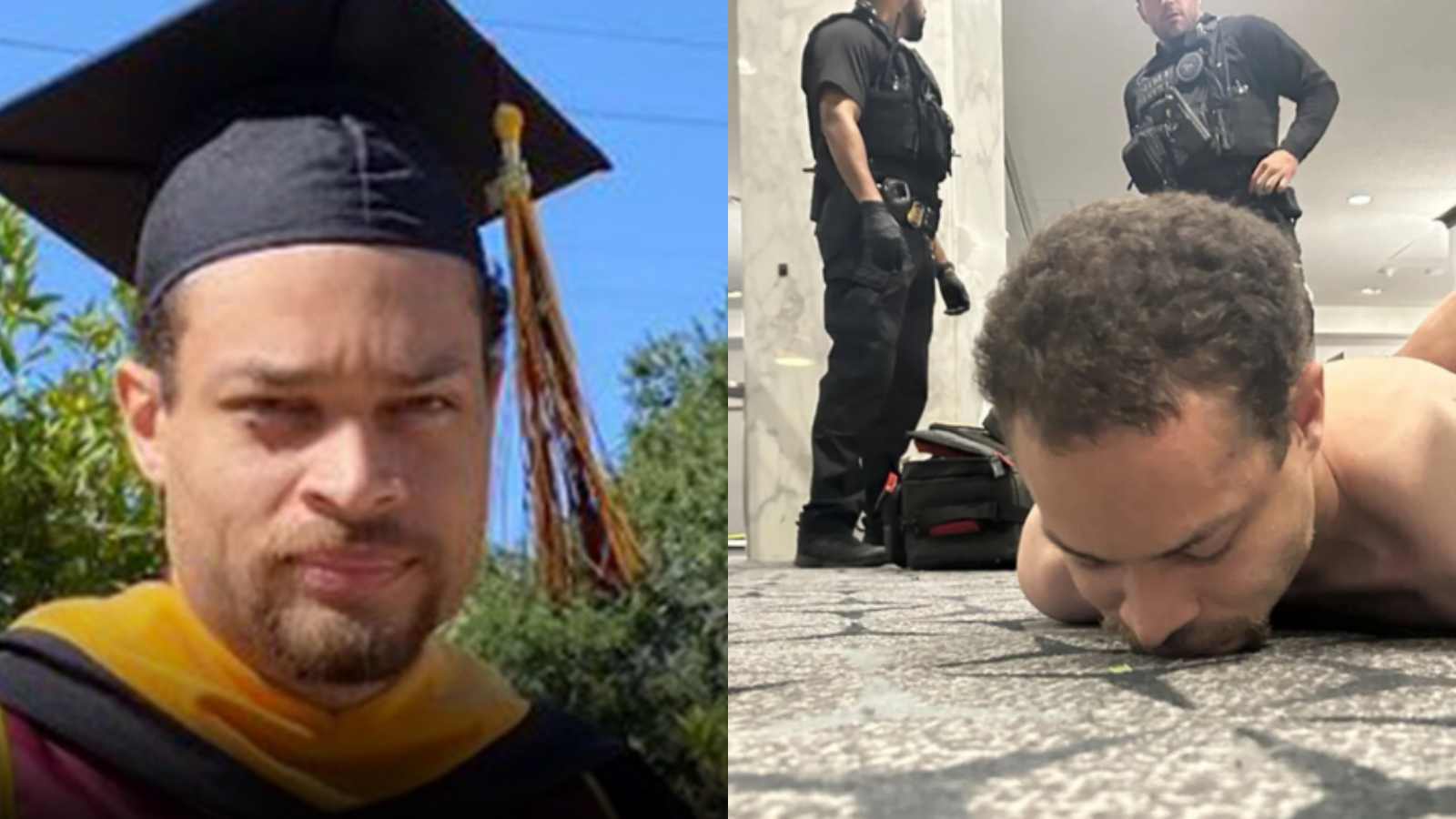
The glamour of the Washington Hilton is usually reserved for clinking champagne flutes and the sharp wit of late-night comedians, but on the evening of April 25, 2026, that polished veneer shattered into a thousand jagged pieces.
Within those storied walls, where the elite of media and politics gathered for the White House Correspondents’ Dinner, the air was suddenly tinted with the metallic tang of gunpowder rather than the scent of expensive perfume.
It was a night meant for celebration that transformed into a frantic blur of tuxedoed guests diving beneath tables and Secret Service agents forming human shields.
At the center of this storm was Cole Tomas Allen, a 31-year-old educator from California who, in a heartbeat, went from being an award-winning teacher to the most notorious man in America.
Now, as everything starts to settle and the legal machinery begins its relentless grind, the conversation has shifted from the terror of the ballroom to the stark, padded confines of a jail cell where Allen is fighting a new kind of battle against the very system designed to keep him alive.
The transition from the sun-drenched streets of Torrance to a high-security federal holding facility has been anything but smooth for the man authorities have dubbed the “Friendly Federal Assassin.”
Since his arraignment in U.S. District Court, where he faced chilling charges including the attempted assassination of President Donald Trump, Allen has been held under a microscope… quite literally.
Prison officials placed him under rigorous suicide precautions, a move that his defense team argues is less about mental health and more about a systematic stripping of human dignity.
In a series of provocative legal filings, Allen’s attorneys, including federal public defenders A.J. Kramer and Tezira Abe, have pushed back with surprising force.
They contend that their client has never displayed a single “suicidal ideation” and that the current restrictions, which include being housed in a padded “safe cell” and forced to wear a restrictive vest, are a blatant violation of his Due Process rights.
It is a bold move for a man accused of such a high-profile crime, yet it highlights a growing tension between the state’s duty to protect a high-value defendant and the individual’s right to maintain their personhood.
Let us look back at the calculated path Allen took to the Washington Hilton to fully understand how we reached this legal impasse. This wasn’t a spontaneous eruption of violence but a cross-country odyssey fueled by a singular, dark purpose.
On April 6, 2026, while most were planning their spring wardrobes, Allen was busy booking a three-night stay in the heart of D.C. He didn’t fly; he took the train, a slow-burning journey from Los Angeles to Chicago, and then finally into Union Station.
By the time he checked into the Hilton on April 24, he was a ghost in the machine, carrying a black bag containing a 12-gauge pump-action shotgun, a Rock Island Armory 1911 .38-caliber pistol, and multiple knives.
The planning was meticulous, right down to the “scheduled send” email he fired off to family and a former employer just minutes before he charged the security checkpoint.
In that final digital missive, signed with the chilling alias “coldForce,” he offered a haunting apology: “I wish I could have said anything earlier, but doing so would have made none of this possible. “I’m deeply sorry for the mess I’ve left in my wake.”
The confrontation itself was a masterclass in chaos. At approximately 8:40 p.m., Allen bypassed the heavily monitored hotel areas by using an interior stairwell, emerging onto the Terrace Level just yards from the ballroom foyer.
When he ran through the magnetometer, the silence of the evening was punctured by a single, deafening blast. A Secret Service officer, whose identity remains a closely guarded secret, took a buckshot pellet directly to the chest.
It was a moment that could have changed the course of history, but the officer’s ballistic vest held firm, absorbing the impact that would have otherwise been fatal. The response was instantaneous; the officer drew his service weapon and fired five times, missing Allen but sending him crashing to the floor.
As guests inside the ballroom were rushed to safety, Allen was subdued and taken into custody, effectively ending a plot that FBI Director Kash Patel described as a “brazen attempt to assassinate the president and numerous high-ranking U.S. government officials.”
A Divergent Perspective on Pre-emptive Punishment
While the public outcry for justice remains deafening, a quieter, more complex argument is brewing over the treatment of defendants like Allen before they ever see a jury.
The defense’s move to vacate the suicide watch isn’t just a legal maneuver; it’s a direct challenge to the “safety at all costs” mentality that often defines high-stakes incarceration.
If a man has shown no history of self-harm and was not flagged during his initial booking, does the government have the right to subject him to what Magistrate Judge Zia M. Faruqui called “seemingly unprompted solitary confinement”?
There is a fine line between a protective measure and a punitive one. By forcing a defendant into a padded cell and a strait-jacket-like vest, the system risks breaking the very mind it is supposed to be preserving for trial.
It raises the uncomfortable question: are these precautions truly about saving a life, or are they a form of “pre-trial punishment” designed to exert control over a person who has dared to strike at the heart of the establishment?
This perspective suggests that the dignity of the individual should not be the first casualty of a high-profile arrest. Allen’s lawyers have been vocal about the fact that these restrictions make it nearly impossible to communicate with their client, hindering their ability to build a defense against a charge that carries a potential life sentence.
They argue that the Department of Corrections is using the “suicide watch” label as a convenient cover for extreme isolation. This isn’t just about Allen; it’s about the precedent it sets for any high-profile detainee.
If the state can unilaterally decide that a person is a risk to themselves without any clinical evidence, the concept of “innocent until proven guilty” becomes a very thin shield indeed.
View this post on Instagram
It is a sentiment that has even found a small echo in the court, with Judge Faruqui expressing “grave concerns” over the conditions of Allen’s confinement, suggesting that even in the face of alleged villainy, the law must remain anchored in basic human rights.
As we look toward the upcoming legal proceedings, several questions remain unanswered that are vital to completing the narrative of that harrowing night. While we know the “what” and the “how,” the “why” remains locked behind Allen’s invocation of his right to remain silent.
What was the specific catalyst in late 2025 that turned a respected educator into a man who would purchase a shotgun with such lethal intent? Furthermore, while the FBI has mentioned a “written manifesto,” the full contents of that document have yet to be disclosed to the public.
Was there a specific policy or event within the Trump administration that triggered this radicalization? Finally, the role of the “scheduled send” email raises a technical curiosity: did Allen have accomplices or digital mentors who helped him navigate the security blind spots of the Washington Hilton?
Until these gaps are filled, the story of Cole Allen remains a haunting puzzle, a reminder of how quickly the pursuit of a story can turn into a struggle for survival.