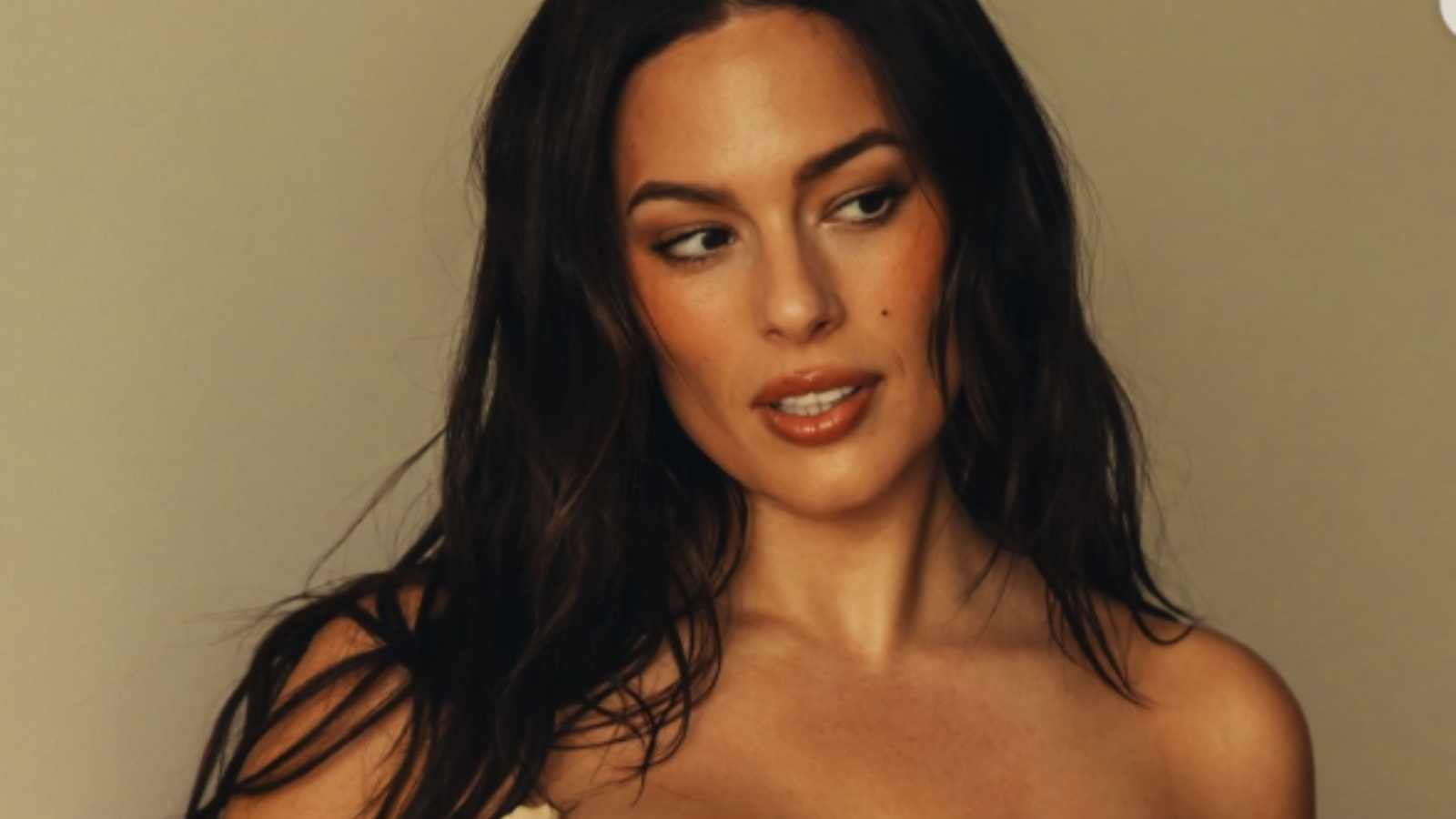
For those of us who spent the last decade watching Ashley Graham dismantle the “skinny-is-the-only-beautiful” narrative brick by brick, the current cultural climate feels a bit like watching a sandcastle succumb to a particularly aggressive tide.
There was this glorious, defiant era when the runway started to look like the real world, when “plus-size” stopped being a whisper and became a shout, and when cellulitis was finally invited to the party without a layer of airbrushing.
We were told… and we finally believed that our worth wasn’t a number on a scale. But then, almost suddenly, the conversation went from self-love to a weekly injection in almost the blink of an eye.
The “GLP-1 craze” didn’t just enter the chat; it hijacked it, turning every red carpet into a silent guessing game of who’s “on it” and who’s not.
For Graham, the woman who famously graced the cover of Sports Illustrated as its first plus-size model in 2016, this isn’t just a trend. It’s personal. It’s a seismic shift that feels less like progress and more like a retreat.
Speaking recently during a poignant interview for Marie Claire’s “The Motherhood Issue,” Graham didn’t hold back, describing the meteoric rise of weight-loss drugs like Ozempic and Wegovy as a “smack in the face” to everything the body positivity movement worked to achieve.
She’s watching the mindset she helped cultivate… radical acceptance, suddenly sprout a forest of “thin-again” silhouettes. “There was a pendulum that swung that was so body acceptance, positivity, everybody be who they want to be,” Graham noted, her frustration palpable.
“And now it’s going back this whole opposite way that feels like a smack in the face to the women who have felt like they’ve had a voice.” It’s a gut-wrenching sentiment for anyone who found their confidence in the curves Graham championed.
The frustration isn’t about the science of the medicine itself; it’s about the cultural signal it sends, that being “yourself” was just a placeholder until a better prescription came along.
The Shrinking Runway and the Return of the Waif
You won’t understand why Ashley Graham is so “crestfallen” unless you’ve looked at the cold, hard data emerging from the fashion industry. For a few years, it seemed like inclusivity was winning.
In late 2022, the number of plus-size models on major runways hit a record high. But according to recent fashion month reports, those gains are evaporating faster than a TikTok trend.
In the 2024 season, plus-size representation on the catwalk plummeted to less than 1% of all looks presented. The “Ozempic effect” isn’t just happening in doctors’ offices; it’s happening in design studios where the “Heroin Chic” and “Indie Sleaze” aesthetics of the late 90s are being dusted off and resold to a new generation.
When the industry sees a shortcut to the “ideal” body, it often stops trying to accommodate the real one. This is about high fashion, but more than that, it’s a retail reality. Search volumes for “plus-size” clothing have dropped significantly over the last two years, while investment is reportedly shifting back toward smaller size ranges (XXS-M).
For someone like Graham, who has spent twenty-four years revolutionizing the industry, seeing these “hard-won gains” reversed is devastating. She’s built a community on the idea that you don’t need to change to be seen.
Yet, the sudden ubiquity of GLP-1s suggests that the world’s patience for body diversity was thinner than we thought.
It feels as though the industry was only “inclusive” because it had no other choice, and the moment a pharmaceutical “exit ramp” appeared, the door to the plus-size dressing room began to creak shut.
A Statistical Survival
@stylishcurves Throwback Thursday to 2020 when real plus size models ripped the runway during New York Fashion Week for @Rene’ Tyler #plussizemodels #plussizefashion #curvymodels #curvyfashion #plussizeoutfits ♬ luxurious x be your girl jersey mix – VIP
Despite the disheartening shift, Graham remains a pragmatist. She isn’t predicting an apocalypse for body diversity, mostly because she knows that humanity doesn’t fit into a single syringe.
“This drug isn’t going to wipe out a whole statistic of women,” she asserted with that trademark Nebraska grit. Her point is vital: no matter how popular a weight-loss trend becomes, there will always be women who are “plus-size forever,” either by choice, genetics, or simply the reality of living in a human body.
The movement wasn’t just about a trend. Graham isn’t interested in the “pendulum” swinging back and forth; she’s interested in the people who are standing their ground in the middle.
There’s a quiet defiance in her refusal to be moved by the buzz. She’s focusing on the influencers and creators who are still posting their “unfiltered” bodies, cellulite and all, to remind the younger generation that their value isn’t tied to a pharmacy.
Graham mentioned being inspired by the “girls who were raised on social media” who are now using their platforms to say, “Be yourself, be who you want to be.” In her eyes, the community she built is still there; it’s just being tested by a very loud, very expensive distraction.
She’s putting her head down and focusing on the mission, refusing to let a pharmaceutical boom drown out the voices of the millions who still look like her.
The Secretive Struggle of the “Easy Way Out”
View this post on Instagram
However, there is a layer to this story that often gets buried under the “smack in the face” headlines. While the cultural impact of GLP-1s is visible, the personal experience of those taking them is often shrouded in a different kind of pain.
A 2026 survey revealed a startling reality: two-thirds of people using these weight-loss drugs are hiding the treatment from their own friends and family. Why? Because the social stigma has become a double-edged sword.
On one hand, society rewards them for being thinner; on the other, it punishes them for “cheating” or “taking the easy way out.” Nearly 80% of users reported being judged for their choice, facing accusations that they lacked the “willpower” to do it the traditional way.
This creates a bizarre, lonely vacuum. Women are being caught between the “body positivity” they were told to embrace and the “medical miracle” they are told to take. If they stay as they are, they face the old prejudices of a weight-obsessed world.
If they take the drug, they are seen as betraying the movement and “selling out.” It’s a “damned if you do, damned if you don’t” scenario that feels uniquely taxing on women’s mental health.
We’ve traded the shame of being “large” for the shame of being “artificially small,” and in doing so, we’ve proven that we still haven’t reached a place where a woman’s body is actually her own business.
The Body Neutrality Alternative
Perhaps the most interesting fallout of this “smack in the face” era is the rise of a third option: Body Neutrality. If “Body Positivity” feels too hard to maintain when the world is obsessed with Ozempic, and “Body Shaming” is obviously toxic, where do we go?
Many are finding solace in the idea that the body is just a vessel, neither “good” nor “bad,” just a physical fact. Adjectives like “fat” or “thin” become neutral descriptions, like “tall” or “short,” stripped of their moral weight.
This perspective allows for the existence of weight-loss drugs without them feeling like a personal failure or a political betrayal. It shifts the focus from how the body looks to how it functions and how the person inside it chooses to live.
This might be the only way to survive the “pendulum” Graham speaks of. If we tie our identity to a specific movement or a specific size, we remain at the mercy of the next “craze.”
But if we move toward a world where a woman’s body is morally neutral, then an injection is just a medical choice, and a curve is just a curve. Graham’s work wasn’t just about making people feel “pretty”; it was about making them feel “human.”
And humans are complicated. We change, we evolve, and sometimes we use tools to help us navigate our health. The tragedy isn’t that the drugs exist; the tragedy is that we are using them to rebuild the very walls Graham spent her life trying to tear down.
The Truth About Who “Fits” the Movement
View this post on Instagram
If we are being brutally honest… like ‘I am not going to hold your hand to say this kind of being brutally honest,’ and this is the part that might get people talking, was the body positivity movement ever truly as inclusive as we remember?
There’s a growing sentiment among critics that the movement Graham spearheaded often only celebrated a “specific” kind of plus-size body: the hourglass, the “conventionally attractive” face, the “acceptable” amount of curve.
Many women who didn’t fit that “Ashley Graham mold,” those with different proportions or more severe obesity, feel that they were never really invited to the party in the first place. For them, the GLP-1 craze isn’t a “smack in the face” because they never felt the industry’s “embrace” to begin with.
Could it be that the reason the “pendulum” is swinging back so easily is that the foundation was built on a very narrow definition of “positive”? If we only accept “curvy” when it’s “pretty,” then we haven’t actually changed the culture; we’ve just expanded the border of the “cool kids’ table” by a few inches.
This might be why so many people are flocking to these drugs, not because they hate the movement, but because they realize the movement had its own set of “ideal” standards they couldn’t meet.
As Graham continues her fight, the real challenge won’t just be standing up to Big Pharma; it will be ensuring that the next iteration of the movement is broad enough to include everyone… even those who choose to change.